Thank you! Your submission has been received!
Oops! Something went wrong while submitting the form.
Arts in Health sits at the intersection of healthcare, culture, and social welfare. But its place in policy is still emerging. What is needed is for healthcare and welfare systems to recognise the role the arts can play in making care more human. Key questions include:
In the Netherlands, ZonMw, the Fonds voor Cultuurparticipatie, and programmes like Welzijn op Recept, are working to develop Arts in Health further. The municipality of Tilburg actively supports collaboration between artists and care organisations. Provincial arts organisations are exploring how Arts in Health can contribute to health and prevention at a regional level. And at European level, the EU Commission recognises Arts in Health as part of the future of healthcare.
Do you work on policy in healthcare, culture, or welfare? You can contribute by making connections and creating space for collaboration. Arts in Health does not need a new system. It needs a place within the system as it evolves.
Want to contribute to the development of Arts in Health in the Netherlands? The alliance is coming. Sign up for our newsletter to stay informed.

The Arts in Health Summer School introduces students to how creative practices can support wellbeing and encourage healthy living. The week-long school offers lecture-discussions and workshops introducing the theory and practice of Arts in Health, and hands-on workshops in the methods and strategies of professional Arts in Health practice.
“The Summer School brings together a diverse group of people, to build a common understanding of how arts is health works,” says Ferdinand Lewis, director of education for Arts in Health Groningen (AiHG). “They leave the School as a community of learners, ready to explore how they might want to contribute to the field.”
The Summer School is designed for people at different points in their careers, and is open to mid-career graduates of MBO, HBO, and universities, as well as current students. “Establishing a permanent place for the arts in our healthcare system will require professionals who can work across sectors, disciplines and traditional roles,” Lewis adds.
The Summer School introduces students to the scientific research on how the arts can support prevention and recovery, and encourage healthy lifestyles. The curriculum includes an innovative pedagogy that integrates theory with the direct experience of practice, in a workshop setting. “Students are immersed in the practice of arts in health right away,” Lewis explains, “while they are also learning the science and theory that explains the field. They follow up on those experiences with structured reflection, to integrate experiences into new knowledge”.
One 2025 graduate reported, “For me it was about getting to know what is out there in the field.” Another said that the Summer School helped her decide how she wants to work in the field and organise her own programmes.
Summer School instructors include Arts in Health professionals from Switch2Move, Cordaan, CliniClowns, the creative arts therapies program at NHL Stenden, MuzIC, and the Groninger Museum. Lecture-discussions are led by scholars from University Medical Centre Groningen, together with the master’s of spiritual care program at the University of Groningen, and Vrije Universiteit Amsterdam.
Those who complete the School can receive an official ‘digital credential’ from the University of Groningen to use on CV’s. Graduates also have the opportunity to join the Arts in Health Learning Community which is especially for former Summer School graduates. The Learning Community meets four times per year to share knowledge, discuss current issues, and build a network across the Netherlands and EU.
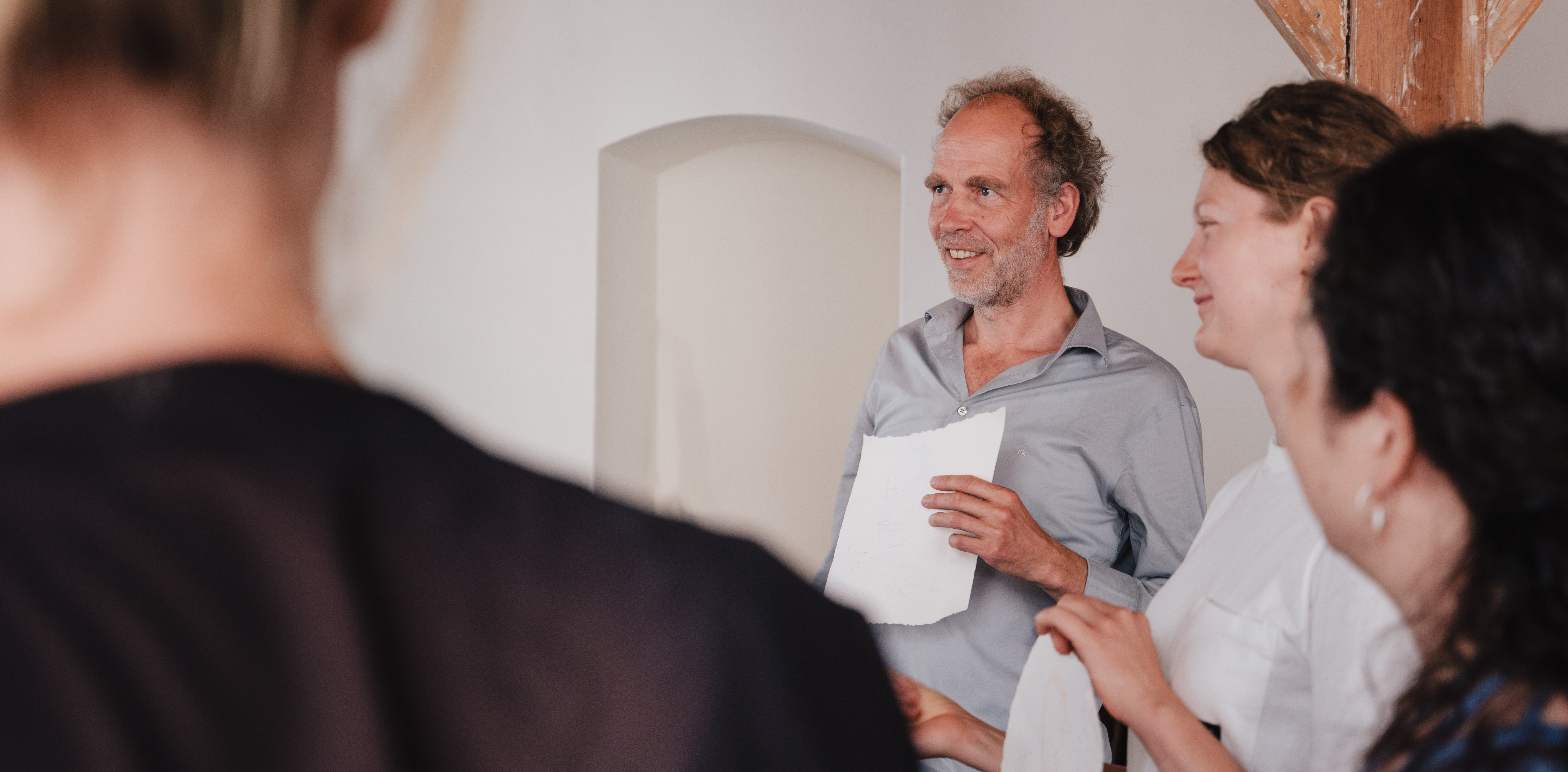
The Summer School was first piloted in June of 2023. AiHG’s program director Kirsten Krans said, “We made 15 spaces available for students, and all of them were filled right away. So many people want to learn how the arts can support care in hospitals, long-term care, and in our communities!” In 2024, the Summer School was awarded support from the University of Groningen, and officially listed in the University’s portfolio of summer school courses.
Enrollment is capped at 25 students, for which the Summer School regularly receives more than twice that number of applications. Students include visual and performing artists, doctors, nurses, social workers, university research and teaching staff, cultural managers and program makers, undergraduates students, administrators, and policy makers. Lewis says, “In the Netherlands and EU, the Arts in Health field needs people from a variety of backgrounds, all learning and working together. The Summer School was created to facilitate that”.
The Summer School’s organisational partners include the Aletta Jacobs School of Public Health; University College Groningen; the Faculty of Religion, Culture & Society at the University of Groningen; and the Vrije Universiteit Amsterdam.
Learn more about the Arts in Health Summer School and how to apply.
To gain insight into how arts in health can support the healthcare transition in the Netherlands, it can be useful to see how similar initiatives have been proposed, and implemented in other countries. All the countries discussed here recognise that transformation is needed in healthcare systems. They all argue for the support that the arts can offer.
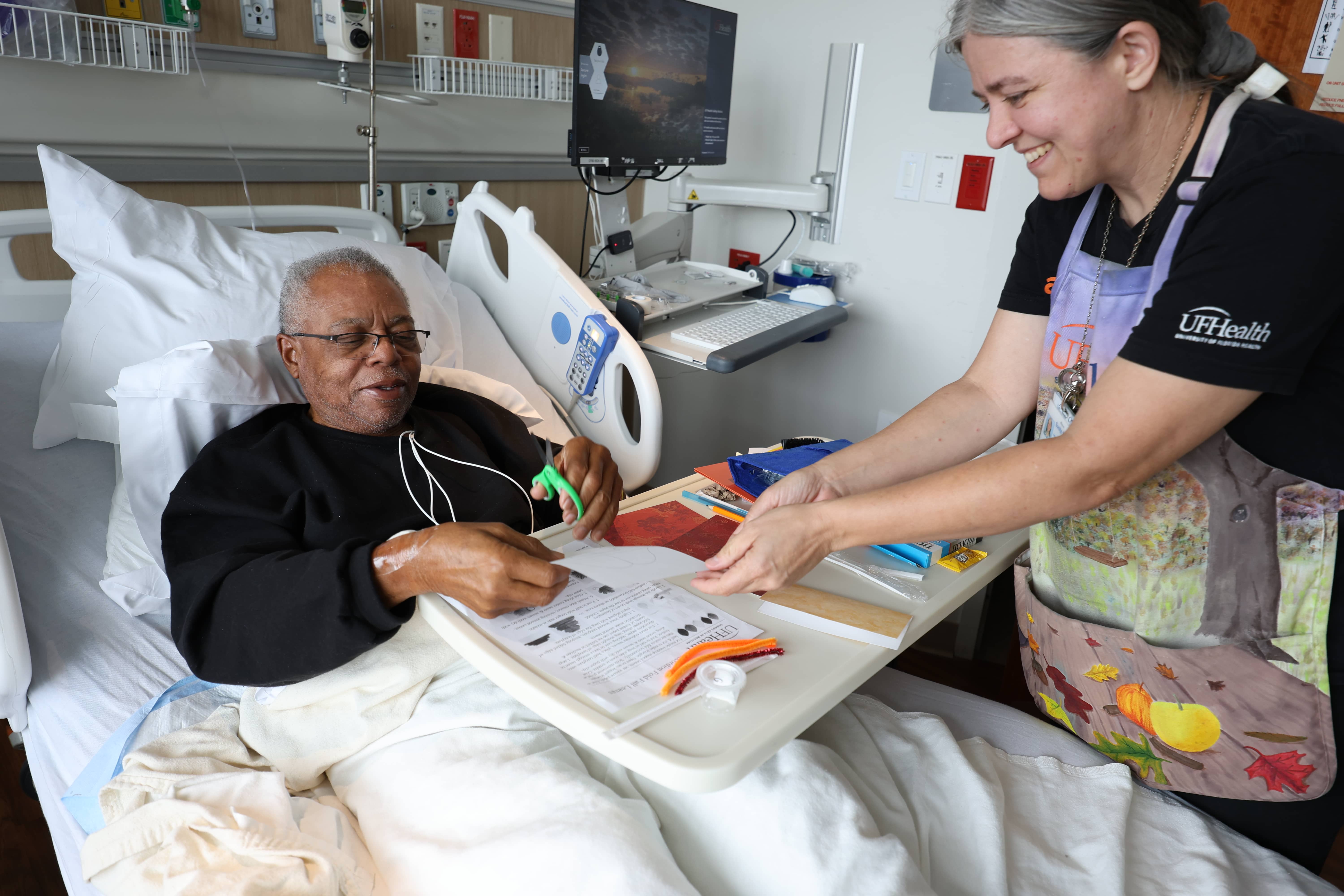
The modern field of arts in health had its start more or less in the United Kingdom in the 1960’s. Initially driven by countercultural social movements, it took some time to gain a place in mainstream institutions and policy. It is only in the last couple of decades that the field really blossomed.
A number of important projects were developed in the UK between 2004 and 2007. For example, a project called Invest to Save; Arts in Health had the goal to “develop the capacity of the North West Region’s arts and health communities, and research the impact of creativity, culture and the arts on health and economic outcomes” (Parkinson, 2009, p.43). Amongst other things, this project involved visual arts and creative writing activities for older people in rehabilitation.
Around the same time, the Arts Council England and the Department of Health published a report on the prospectus of arts and health. Although this report did not initially receive a great deal of notice, over time the cultural change it recognised began to emerge.
The Arts Council has continued its work on Creative Health and Wellbeing. The National Centre for Creative Health has further supported the development of policies and research. In recent years the London Arts in Health movement has found some success hosting an annual Creativity and Wellbeing Week, which has seen tens of thousands of active participants. This celebration of the field includes talks, film screenings and workshops. Because that event is attended by people with a variety of backgrounds, it also encourages the intersectoral collaboration that is integral to arts in health programmes.
The arts in health field has seen some developments in other regions of the UK. The Arts Council of Wales, for example, has partnered with the Welsh NHS confederation to raise awareness of the how the arts support wellbeing. The partnership set out to “embed arts and health initiatives across the NHS in Wales”.
In 2019 the WHO commissioned a report in which they scoped over 3500 articles about the role of the arts in supporting health and wellbeing. Since then, the WHO has begun issuing policy materials and strategies for the use of arts in health for use by the member states. Importantly, these emphasise intersectoral decision-making and planning, for example between the cultural and culture sectors.
In 2023, the WHO launched the Jameel Arts & Health Lab, to encourage research and disseminate findings on arts in health. The Lab also organises events that celebrate, and advocate for, the introduction of national and regional arts in health initiatives around the world.
A report by European Commission recognises the societal value of the arts and culture for wellbeing. Policy recommendations and briefs have been issued which argue for the positive impact of the arts on wellbeing, recommending that member states implement policies to promote “long-term collaboration and mutual learning partnerships between cultural practitioners, healthcare professionals, and community organisations”. The Commission-funded organisation Culture for Health commissions research and publishes reports on culture for health, including strategic recommendations for facilitating intersectoral dialogue and action.
Other countries in Europe are introducing arts in health plans and programmes. The arts in health field has gained a strong foothold in Ireland, for instance: The Irish ‘Healthy Ireland Strategic Action Plan’ for 2021-2025 includes a commitment for local authorities to plan long-term cultural and arts involvement in promoting wellbeing.
As early as 2004, the Irish Arts Council wrote a practical handbook for setting up projects and networking for arts in health, and that handbook is still useful today. It outlines a step by step approach to developing an arts in health project, from initial ideas to project implementation.
Other EU countries working on arts and health projects and policy include Bulgaria, France, Luxembourg and Portugal. Scandinavian countries are particularly active in integrating arts in health into social systems. Finland, for instance, has a “coordinated national effort to publish local cultural wellbeing plans” and a Masters degree is offered in Creativity and Arts in Social and Health Fields. Denmark and Sweden are part of a pilot by the Interreg Baltic Sea Region, to experiment with ‘arts on prescription’, and the Nordic School of Arts and Health also runs many projects.
New Zealand’s national network for creative wellbeing, ‘Te Ora Auaha’ (Creative Wellbeing Alliance), was established in 2019 to help ensure access to arts and culture. New Zealand is also investigating arts on prescription as a way to support arts in health. Australia’s ministries of health and culture have since 2014 committed to improving the health and wellbeing of all Australians by formally recognising the role of the arts in supporting wellbeing. They have an active Arts and Health Network too, with regular meetings and several events.
Canada and the United States have active arts in health programmes and are creating national support networks, along with efforts to focus research and policy for the field.
Canada, like other countries including the UK and Finland, for example, is home to an arts in health-focused research group and offers degree programmes. Efforts to integrate research-based arts in health strategies into public policy are underway in the United States. Organisations like the National Endowment for the Arts and Americans for the Arts are now actively supporting arts in health projects. Several national projects are currently running, however funding for projects is usually not structural.
This brief introduction to arts in health in other countries is not exhaustive, but merely offers a glimpse into some of the strategies, structures, and experiences in other countries, in the hope that they will be of use to Dutch arts in health advocates. Overall, support for arts in health is increasing in many countries and major institutions.
For arts and health movements to become sustainable anywhere, local and national governments must systematically collaborate across sectors and with arts and health professionals.
The level at which strategies and projects are integrated into institutions varies widely. Furthermore, the structural funding for arts in health is not correlated with the wealth of particular countries: While the Greek ministries of Culture and Sports, and of Health, have both signed a memorandum which includes plans for intersectoral collaboration and the implementation of arts in health policies, the United States and Canada struggle to implement national, intersectoral, structural funding for arts in health.
Nor does a long tradition of arts in health funding guarantee ongoing structural support. Although the modern arts in health field largely developed in the UK, changes to healthcare funding in recent years has seriously impacted the field there.
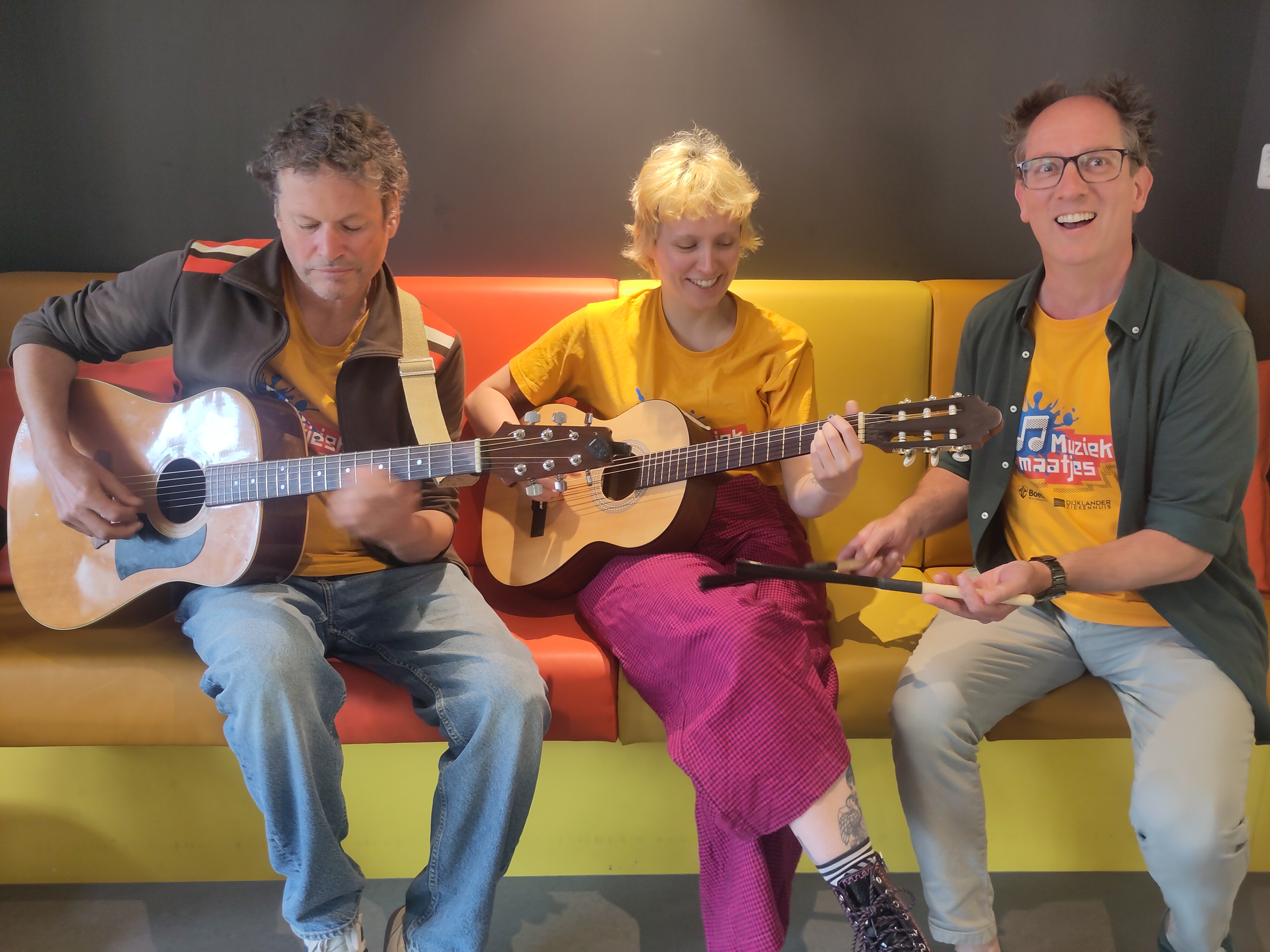
Guitarist Sergio sings the children's song called, ‘Little Fish in the Water’ for a young patient and her father. The song is known to many Dutch children, but this particular patient and her father do not seem to know it. Without stopping, Sergio switches to an improvisation of the melody in an Arabic scale. The patient and her father smile.
"We try to find out what resonates, without asking too many questions," says Ciska Ruitenberg, who leads Muziekmaatjes (Music Buddies), an Arts in Health program at the Dijklander Hospital in Hoorn. The Muziekmaatjes program started over a year and a half ago at Dijklander, with music twice a week in the Neonatology and Pediatric Outpatient Clinics. Recently, the program has been expanded under the name Muziekmaatjes+ to geriatrics, kidney dialysis, oncology, and neurology.
Playing music for patients is a skill, and the Muziekmaatjes musicians are provided with specialised training from a team of three music therapists. The musicians can play any sort of music that patients might want to hear, but they are also trained to be attentive and flexible, and to 'read the room' as a healthcare worker might. “We are not there to perform,” Ruitenberg says. “We’re there to connect with people through music. And if it isn’t the right moment to play, we withdraw.”
Dijklander staff pediatrician Dr. Noud Drewes explains that the musicians always ask permission to enter a room. As he describes it, the musicians do not “Thunder into a department to do their thing and then leave", but rather "are very much looking for interpersonal contact, and tuning in to the situation."
The idea for the Muziekmaatjes program came to Drewes suddenly one evening over a year ago. He was taking a singing lesson in the community, taught by Ruitenberg. Drewes shared his idea cautiously: "I said something like, 'Wouldn't that be something?'" Ruitenberg immediately saw inspiration in the idea, and the program’s potential. Soon, the two were scheduling meetings to develop the Muziekmaatjes pilot.
It might be difficult to imagine musicians in a hospital room, until you picture the experience from the perspective of a child and their parents, suddenly confronted with a diagnosis and living with uncertainty about the future, or from that of a patient lying alone in a hospital room, feeling as though the world outside continues without them. The musicians offer each patient a moment that is 100% for the patient. This can humanise the patient’s experience of healthcare. Although scientific research shows that music can contribute to a number of positive health outcomes, Muziekmaatjes was designed simply to help patients feel comfortable and more fully alive in the alienating atmosphere of a hospital.
When Drewes and Ruitenberg first proposed the program to the hospital, there were skeptics. "Music, fine, as long as it isn't too loud," Drewes recalls one colleague saying. After the first year of Muziekmaatjes, though, his colleagues were convinced. "When employees see that the people in their care are comfortable, smiling, and interacting, it lifts the mood for everyone," Drewes says.
These days the musicians play for the staff almost as often as the patients, Ruitenberg says, adding that being there every week helps to build relationships with staff. "The musicians and staff have to know what they can expect of one another," Ruitenberg says. "Building that trust takes time."
Looking back on the first year of the program, Drewes sees the role of art in care within the transition currently underway in Dutch healthcare. 21st-century healthcare must encompass more than just the treatment of illness: it must also provide space for prevention and for the well-being of the whole person. For Drewes, Muziekmaatjes helps make that possible. With the program, "I can connect with my patients in a much more human way."
The first year of the Muziekmaatjes program was evaluated in a report created by Arts in Health Groningen. Here you find both the executive summary (ENG) and the full report (NL). The staff at Dijklander Hospital and the musicians were pleased to hear that the program has been extended by two years and expanded to four other departments. Drewes says of Muziekmaatjes: "They are truly part of what we are doing now, and we miss them on their days off."
Back on the pediatric ward, the father and daughter are still smiling while Sergio and the other musician finish their improvised song. The patient and her father ask the musicians to come back tomorrow.
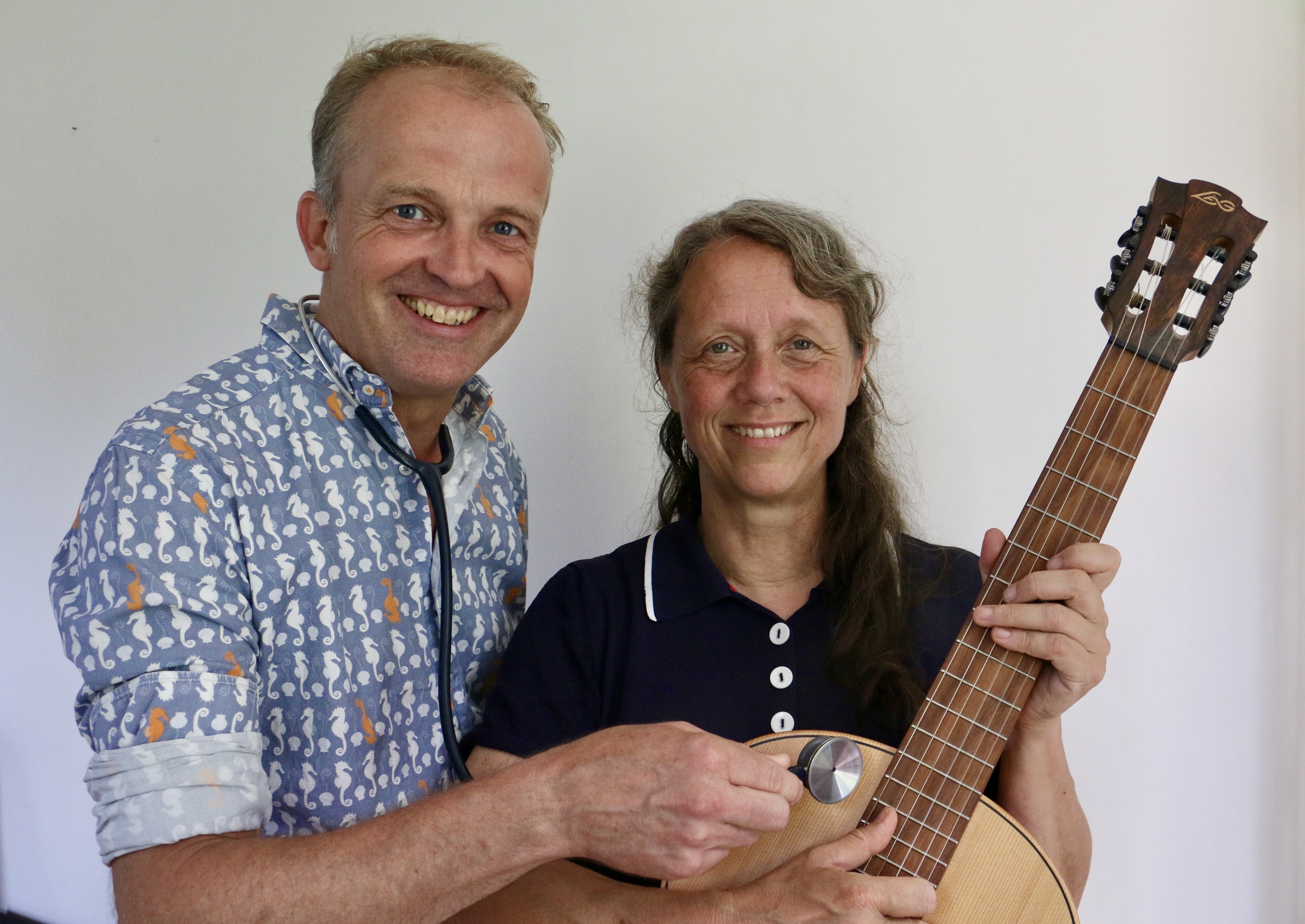
The Muziekmaatjes project brings live music to children and their families at the Dijklander Hospital in Hoorn. Launched in November 2024 as a pilot on the pediatric ward, the programme has expanded to the geriatrics, dialysis, oncology and neurology departments. Specially trained music teachers from Boedijn Music School in Hoorn make music ‘with and for’ children and their families in the wards.
The music sessions take place twice a week. With advice from staff in the hospital wards, the music and interactions are personalized for each patient. For example, gentle sounds for a newborn, or an upbeat and fun song for an eight-year-old, or a ukulele lesson for a teenager. Throughout, parents are encouraged to join in making music.
The Muziekmaatjes programme supplements the care provided by medical and nursing staff, supporting the wellbeing of both children and their families. Read more about Muziekmaatjes in an article by the Noordhollands Dagblad.
Project leader Ciska Ruitenberg says that the idea for the programme was already brewing when she participated in the Arts in Health Summer School in 2024. “As a teacher I know how live music can lift the spirits of young people,” she says, “The idea of a hospital pilot program takes that to the next level”.
An experienced musician and music teacher, Ruitenberg had been in conversation with Dijklander pediatrician Noud Drewes, who wanted to use live music to help his young patients feel more human during treatment and recovery. Working with Drewes and hospital staff, Ruitenberg developed a proposal for the Muziekmaatjes pilot and submitted it to the VSB fund, which specializes in social domain projects. VSB partnered with Arts in Health Groningen to evaluate the pilot.
Directed by Arts in Health Groningen science director Ferdinand Lewis, and conducted by research associate Nina van den Berg, the study explored the implementation and outcomes of the Muziekmaatjes pilot, offering recommendations for strengthening the programme and supporting its long-term sustainability.
Read also our interview with Dijklander pediatrician Noud Drewes and Muziekmaatjes project leader Ciska Ruitenberg here.

.png)
Curious about what books are out there in the field of arts in health? Below is a short list of popular and academic books to get you started. These introduce the research, practice, and inspiration for Arts in Health, from authors around the world — from designing interventions to understanding how creativity supports wellbeing. Whether you’re an artist, researcher, healthcare professional, or simply curious about how art and care intersect, these books invite you to explore, learn, and connect. If you have any suggestions for books that should definitely be included, please let us know!
In her latest book Daisy Fancourt, presents the latest scientific evidence on how the arts and creativity contribute to health and wellbeing. It explores how engagement with the arts can support mental and physical health outcomes across different clinical contexts, and highlights global challenges faced by the arts sector. Art Cure invites readers to reconsider the role of the arts, not as a luxury, but as an essential part of individual and societal wellbeing.
In I Heard There Was a Secret Chord, neuroscientist and best-selling author Daniel J. Levitin explores the powerful relationship between music and healing, inviting readers to see music not only as art, but also as a form of care. Levitin draws on research from neuroscience and music therapy, arguing for how music can ease suffering, promote recovery, and calm the mind. The book connects scientific findings with stories of the experiences of musicians and patients, illustrating how rhythm and sound support mental and physical health. A fascinating read for anyone interested in the science and art of music as medicine.
Your Brain on Art explores the emerging field of NeuroArts—the study of how the arts and aesthetic experiences can change the body, brain, and behaviour. The authors show how creativity affects our biology and emotions, supporting health, wellbeing, and learning. Through stories from artists and scientists, this book invites readers to see the arts not as a luxury, but as an essential part of being human. Learn more at yourbrainonart.com.
Authored by one of the leading academics in the field, Designing and Researching Interventions provides a great introduction to the history, research, and practice of Arts in Health. Whether you are building an Arts in Health program, developing a research design, or want to understand the meaning of quality in this field, Designing and Researching Interventions will be a useful guide.
Arts, Health and Wellbeing, offers many useful descriptions and examples from the field of arts in health. The book covers topics such as arts on prescription and music therapy, for example, exploring their application in both hospital and community settings. If you are a researcher, or a practitioner in the field, or simply looking to learn more about the growing dialogue around arts and health, this book could be a valuable resource.
Drawing on scientific research, conversations with experts, and her own personal experiences, Sanneke Langendoen explores how music can support health and wellbeing in everyday life. The book highlights growing evidence showing that music can help reduce stress, improve sleep, support recovery and grief, enhance creativity, and strengthen focus. Combining research with practical insights, Soundtrack voor een beter leven invites readers to use music more intentionally as a tool for resilience, balance, and wellbeing. An accessible read for anyone interested in the connection between music, health, and wellbeing.
Arts in health education is growing in the Netherlands. So is the demand.
Online courses are also available from University College London, King's College London, and the Royal Society for Public Health.
The Creating Cultures of Care consortium is mapping the educational landscape in the Netherlands. Their work will describe what programs already exist, and what is needed.
Universities and universities of applied sciences are developing more modules and minors in arts in health. Arts in health projects and courses can be found in the visual arts, care ethics, nursing, spiritual care, and the medical humanities.
Arts in health needs people who are at home in two worlds. You do not need to know everything, but you are curious about all of it.
Thinking about studying arts in health?
Look for programmes that connect to care, art, or welfare. Nursing, arts education, or social studies are good starting points. From there, you can go deeper into areas of arts in health that are of special interest to you.
Do you teach or develop programmes?
Arts in health is interdisciplinary. It needs collaboration between arts and healthcare educators. Help students learn to work safely with vulnerable people, and learn about self-care from the start.
Want to contribute to the development of arts in health education in the Netherlands? The alliance is coming. Sign up for our newsletter to stay informed.
Arts in health is studied from several scientific traditions.
Life sciences research asks what art does for health. For instance, what live music means to a patient recovering from surgery, or what creative movement can offer someone living with dementia.
Social sciences research asks what arts in health means in people's lives. How does a group museum visit shape the way someone with chronic pain experiences that pain? What does joining a choir do for people living with dementia, and for those who care for them?
Humanities research focuses on reflection and meaning, for example: the role of the artist in care; questions of ethics and aesthetics; and what it means to make art when you are ill or caring for someone you love.
In 2024, the long-term care provider organisation Cordaan, with the Museum van de Geest, funded a chair of arts in health at the Erasmus School of Health Policy & Management. Later that year, another appointment was established at the Erasmus School of History, Culture and Communication, focused on Arts & Wellbeing.
Researchers across the Netherlands are working on a national research agenda for the coming decade. The questions driving it: how can programmes survive beyond an initial project phase? How do you make effects visible? And what does arts in health mean for healthcare staff and medical education?
Research in this field is supported by ZonMw, the SPRONG Creating Cultures of Care project, the Fonds voor Cultuurparticipatie, Lang Leve Kunst, and Welzijn op Recept.
For researchers
Are you a researcher? Connect with what is already happening in your field, and outside your discipline. Can your expertise catake an existing question further, or open up a new one? Collaborating across disciplines, and connecting research and practice, can make for a richer body of research.
Read more and get involved
A great deal is published internationally on arts in gealth. These resources can help you explore the field further:
Want to contribute to the development of arts in health research in the Netherlands? The alliance is coming. Sign up for our newsletter to stay informed.