Thank you! Your submission has been received!
Oops! Something went wrong while submitting the form.
.jpg)
Buur & Boek was a pilot project by NOORDWOORD and Arts in Health Groningen, focused on the joy of shared reading and creative writing. From October 2025 to March 2026, residents from different neighbourhoods and villages across the province of Groningen came together to read, write, talk, and reflect on short stories, poetry and novels. These gatherings took place in five local communities in familiar and accessible places within each neighbourhood. The groups met bi-weekly in the Korrewegwijk, Beijum, Finsterwolde, Noordlaren and Feerwerd. The groups were guided by four workshop leaders who each bring their own unique background and approach to creative reading and writing.
The goal of the project is to use reading and writing to inspire connection and care in the communities, and encouraging new groups to form. No previous literary experience or nor is preparation necessary to join the groups. Participants from a wide variety of backgrounds join in experiencing ‘shared reading’, creative writing, deep listening, and reflective conversations.
Arts in Health Groningen lead a bi-weekly learning community to support the four group leaders and project coordinator. The learning community involved peer discussion, reflection, planning, and coaching as needed. The group also discussed scientific literature on the health benefits of reading and writing, to inform practice. Self-care was also addressed, and the ethics of community-based work.
The Buur & Boek sessions created space for community members to meet one another in new ways. Reading and writing become starting points for reflective conversations, deep attention, and sharing inspiration. Along the way, social connections are built or strengthened. “We meet with neighbours to talk about life through literature and poetry,” one of the workshop leaders explains. “We read and talk, and if people wish, also create. Everything is allowed, nothing is required.” Another workshop leader adds, “It is not about having the same opinion, but about daring to speak and to listen.”
The workshop leaders – Charlotte Beerda, Gemma Jissink, Lieke van den Krommenacker and Willemijn van de Walle – each brought their own experience in literature, performance and community-based work. Curious to learn more about who they are and how they work?
At the end of the pilot, the groups came together for four mini-festivals in their own communities, organized by Boer & Boek’ project coordinator. At the mini-festivals, participants and leaders shared their experience and discoveries. The mini-festivals were all quite different, with activities ranging from interviews with Dutch authors to poetry readings in open fields, poetry walks, and writing haiku in a cowshed. These moments created space to reflect on the conversations, experiences and connections that had developed over the months.
For Arts in Health Groningen, Buur & Boek is part of a broader programme in which the arts are used to support reflection, dialogue and social connection, and in doing so contribute to well-being. By creating spaces where people can meet around shared curiosity and creativity, Buur & Boek contributes to imagination and a sense of community in everyday life.
Participation in Buur & Boek was free of charge. The project ran from October 2025 to March 2026 and was organised by NOORDWOORD in collaboration with Arts in Health Groningen and local partners in the participating communities. The pilot was made possible with support from the Dutch Foundation for Literature (Nederlands Letterenfonds), VSBfonds, Fonds voor Cultuurparticipatie, the Municipality of Groningen, the Province of Groningen, the Aletta Jacobs School of Public Health, the University of Groningen, and the National Programme Groningen.

The effects of reading on wellbeing have been investigated for decades by researchers from the humanities, social sciences and health sciences. Findings suggest that reading is not only a source of knowledge and entertainment, but also contributes to psychological and social health. Reading fiction is often described as a form of mental simulation that exercises social cognition, empathy, and Theory of Mind [1, 2]. These contribute to people's social and psychological wellbeing. For such effects on wellbeing, it is important that people engage with, and reflect on, what they read [3]. Inspired by such research, shared reading programmes have been used to reduce loneliness, start conversations and strengthen the sense of belonging, especially among people from different backgrounds or generations [e.g. 4; 5].
Expressive and reflective writing—such as diaries, short stories, or letters—can improve both mental and physical health as research in psychology and the health sciences highlights [6, 7, 8]. There is even evidence that points to writing reducing depressive [9] and PTS(D) symptoms [10] and that it allows people to better deal with grief [11]. For writing workshops to support wellbeing, it is important to create a trusting environment[12].

Interest in sustainable arts in health programming is growing in the Netherlands. The increasing number of successful Arts in Health projects is encouraging administrators, funders, governments, researchers, and artists to explore the role that the arts can play in care and illness prevention.
Arts in Health Netherlands initiated a white paper to survey the current situation and set the agenda for the future. The white paper considers the structures that are needed in the Netherlands, to systematically support Arts in Health programming, to train practitioners, and to encourage research and policy formulation. The white paper is a first step toward a sustainable arts in health field.
The white paper is:
Arts in Health Netherlands assembled a steering committee of front runners in the field, including representatives from the University of Groningen, Leyden Academy on Vitality and Ageing, University Medical Center Groningen, Vrije Universiteit Amsterdam and Landelijk Kennisinstituut Cultuureducatie en Amateurkunst (LKCA).
To create awareness of the initiative and to involve a wider network of partners, the steering committee organized a kick-off meeting at the Ministry of Health, Welfare and Sport (VWS) in October 2022.
The first draft of the white paper was created by the steering committee and co-authors. That draft served as a focal point for reflection and discussion with a wider national network, gathered in three roundtables in different parts of the country. At each roundtable, participants contributed to discussion and brainstorming on the practice, education, research, and policy of arts in health.
Participants included healthcare professionals, artists, researchers, policy makers, managers, educators, practitioners and directors, all discussing how to make arts in health a sustainable field in the Netherlands. The roundtables were co-presented by Leyden Academy, Kunstloc Brabant, and University Medical Center Groningen in June and July 2023.

Each of the three roundtables focussed on a different domain; hospital care, long-term care and the social domain. For impressions of the roundtables conversations, please read the summaries (in Dutch):
More than 200 people contributed to the final version of the white paper.
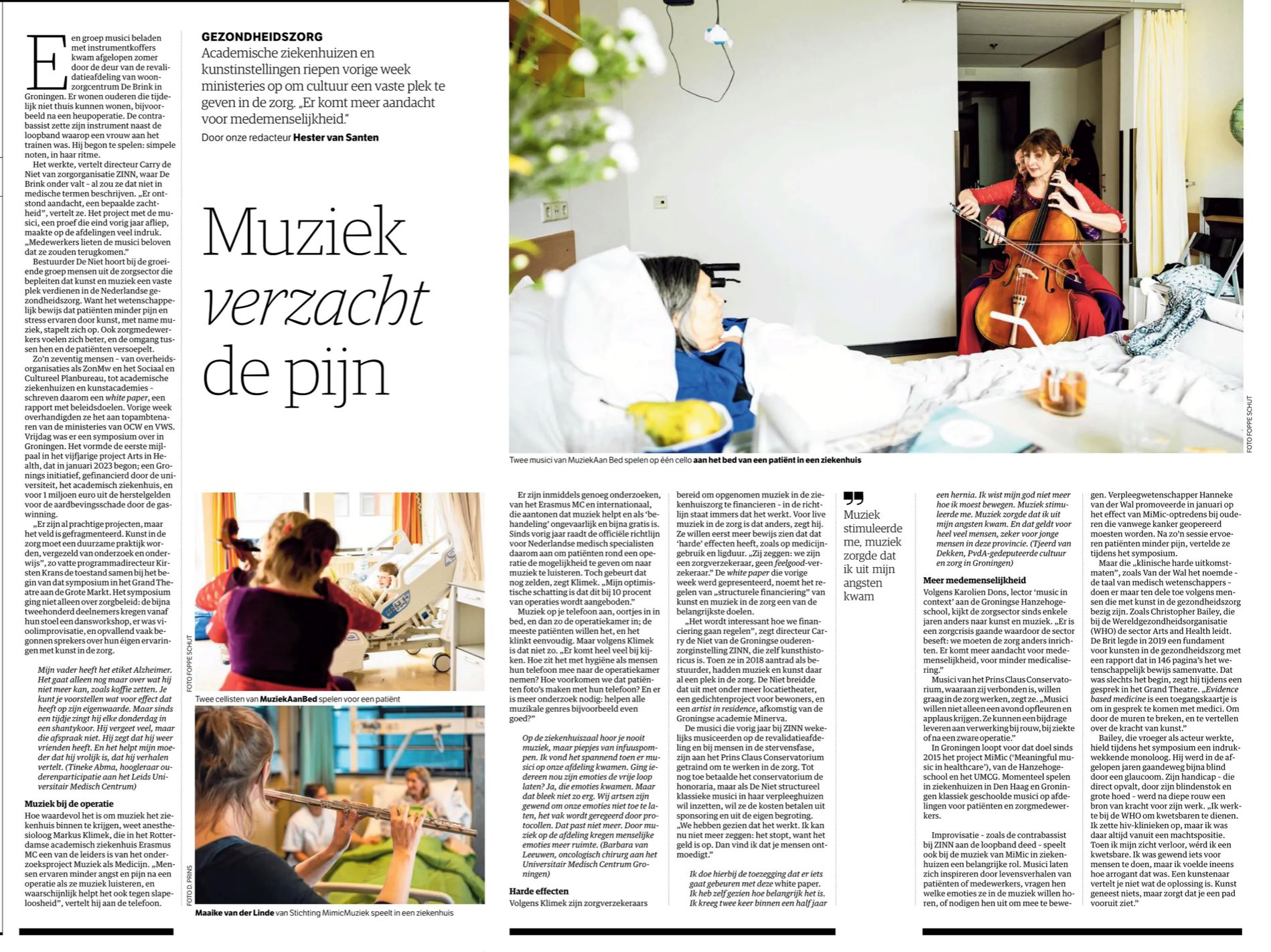
The publication was designed by the design firm JUST, which also created the Arts in Health Netherlands identity and website. The white paper was published by the University of Groningen Press, and given a public launch at the Care through Creativity event at the Grand Theatre in Groningen on 16 February 2024. That festive event included presentations and performances and inspiring examples from practice and research. The national newspaper NRC wrote an article about the event.

At the Care Through Creativity event, the white paper was officially handed over by the WHO Arts in Health lead, Christopher Bailey, to the Province of Groningen alderman responsible for Arts & Culture, as well as Health & Wellbeing. At a separate event in Den Haag, the white paper was handed over to the director-general of curative care at the Ministry of Health, Welfare and Sport (VWS) and the director of Heritage & Arts at the Ministry of Education, Culture and Science (OCW).

The white paper Arts in health in the Netherlands: A national agenda is available via the University of Groningen Press (open access), in both Dutch and English.
Thanks in part to a grant from the Ministry of Education, Culture and Science, a national network of partners has joined forces to structurally integrate arts and culture into the Dutch healthcare and welfare sector. The financial support enables the network to begin realizing the ambitions outlined in the white paper, Arts in Health in the Netherlands: A Nationala Agenda.
"This is what we've been working towards for years," says Kirsten Krans, a founding member of Arts in Health Netherlands. "It's wonderful to be able to take the next step together to structurally integrate arts and culture into our healthcare system." The national agenda of Arts in Health Netherlands aligns with the transition from cure to care, with a focus on person-centered care and positive health.
The national network brings together a unique coalition of organizations from healthcare, social welfare, arts and culture, education, and research.
Representatives from organizations include Kunsten '92, the University Medical Center Groningen, Codarts, Erasmus University Rotterdam, the National Knowledge Centre for Cultural Education and Amateur Arts (LKCA) , AxionContinu, Kunstloc Brabant, ROC Amsterdam, the Municipality ofTilburg, Vilans, Cultuur Oost, Raad van Twaalf, Vrije Universiteit Amsterdam, the Amsterdam University of Applied Sciences, the University of Groningen, and the Aletta Jacobs School of Public Health.
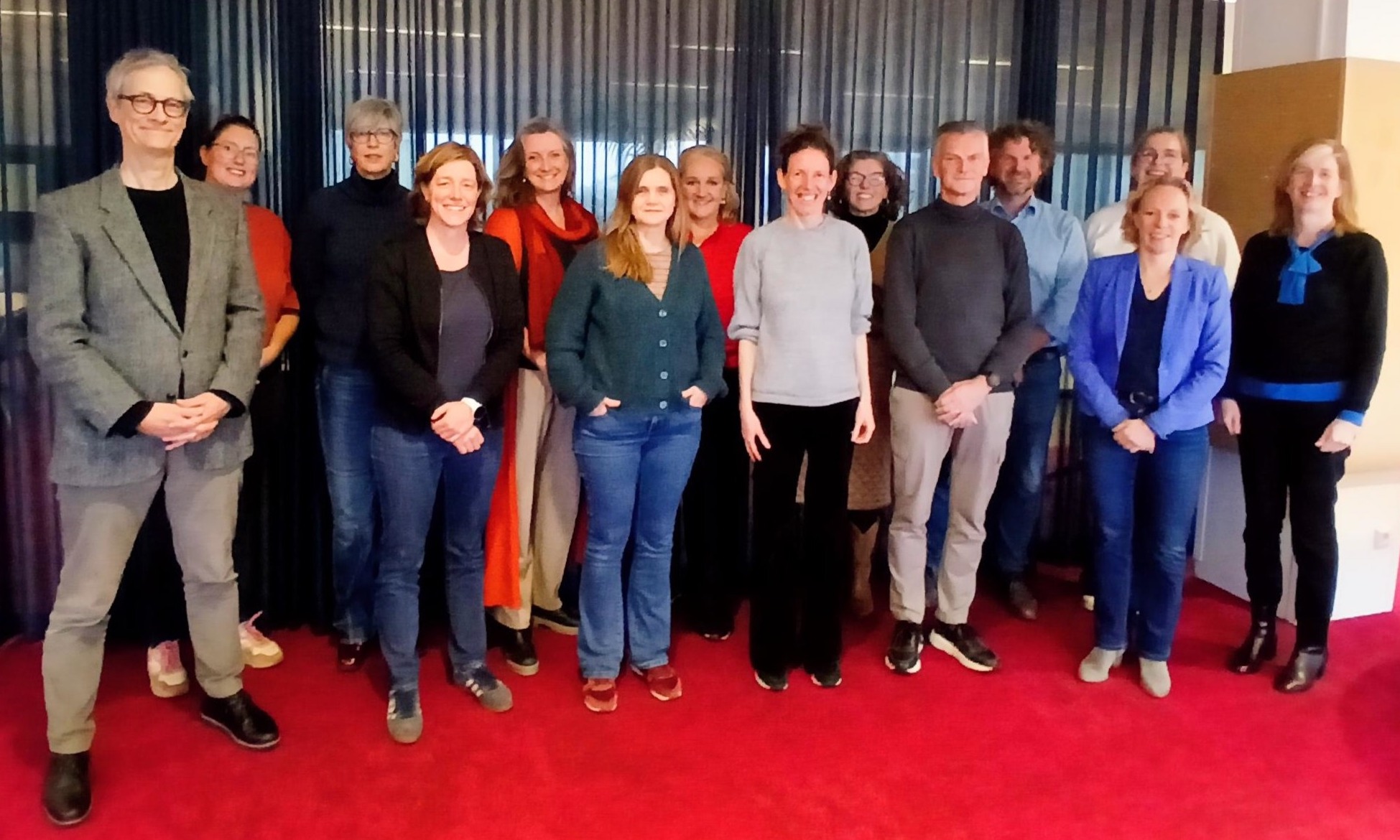
At a launch meeting on November 28th 2025, the focus was on developing a shared vision for the future of the field. The diverse range of experts involved—from healthcare professionals and artists to researchers and policymakers––will support the ‘four pillars’ of the Arts inHealth field in the Netherlands: policy, practice, education, and research.
The participants particularly emphasized the need for intersectoral collaboration between health and culture. As the healthcare sector transitions toward more human and compassionate care, and the cultural sector argues for greater social relevance for the arts, the Arts in Health Netherlands network will help to strengthen both sectors and build bridges between them.
The network’s long-range goal is to sustainably embed the arts in our national healthcare system. To accomplish this, four work packages have been created to address each of the four goals of the national agenda (policy, practice, education, and research). The work packages will: establish a national knowledge platform; define professional competencies and a training network; formulate policy to promote Arts in Health; and establish a national research agenda for the field.
Organizations interested in joining the national Arts in Health network can contact: info@artsinhealth.nl
Social prescribing is a strategy to help people with health conditions that do not require clinical treatment. A person suffering from grief, loneliness, addiction, or unemployment (for example), can be referred to a trained ‘wellbeing coach’ who helps that person make a personalized plan to engage in activities, events or training with community groups, non-profits, workshops, cultural institutions, and others. Participatory arts practice can be one of the ‘prescriptions’.
The UK is widely implementing social prescribing programmes, and the Netherlands and other countries are exploring it as well. The Dutch pilot programmes was implemented nationwide with some promising results and encouragement from insurers, primary care physicians, and patients. Read more about the Dutch version of social prescribing within the project Welzijn op Recept.
Social prescribing
The social prescribing strategy shows promise for supporting certain arts in health practices in the community. However, that is only one aspect of the field, and does not address the role that arts in health can plan in care institutions, for example.
One of the goals of the National Agenda is to “Develop a diverse and unified field of education and practice”. An action item attached to that goal is to build ‘consensus on a common terminology’ for the arts in health field. To that end, we offer a set of glossary terms. Note that many of these terms have quite different implications or meanings in different sub-areas of arts in health. This list is offered as a starting point for developing a common terminology.
Administrators - These are the directors or managers of programmes, organisations, and institutions that have a health interest. Administrators could come from the private sector, though most often they are in public-focused institutions and organisations.
AiH continuum of practices - This refers to the diversity of practices that make up the field of arts in health, all of which focus on care and support for wellbeing. This includes participatory arts, arts therapy, design for health, and others.
Arts in health - The use of creative art-making to support health and wellbeing.
Bedside art-making - Facilitating active art-making with patients with patients who are in bed, in care facilities. This can be either a non-therapeutic participatory activity, or a creative arts therapeutic intervention. The term distinguishes this type of practice from staff-focused art-making, and community-based arts in health, and others.
Care - This important term refers to the support for a person’s wellbeing that is provided or supported by arts in health practice. Care is the characteristic distinguishing arts in health from other types of arts activities. In creative arts therapies, care can focus on treatment and predictable health outcomes, whereas in participatory arts in health, care focuses more on general support for wellbeing or supporting care by some other provider. Care is delivered not only in the creative practice, but also in the ethics and professionalism of the practitioner.
Care aesthetics - The study of the aesthetic aspects of care.
Compassion fatigue - Emotional and/or physical exhaustion experienced by formal and informal caregivers leading to diminished ability to empathise, inability to work, depression and other negative health outcomes.
Community-based arts - Arts activities based in community settings, most often projects and programmes directly involving community members.
Creative expression - The use of various art forms to express oneself creatively, sometimes used in describing arts support for mental and emotional wellbeing.
Creative arts therapies - Art-making as a medium for healing and self-expression, practiced by licensed therapists with specialised therapeutic training.
Cultural participation - Community participation in cultural activities, for example attending concerts or festivals, museums, community events, as well as participation in amateur art-making.
Cultural programmes in long-term care - Arts and cultural activities designed to enhance the quality of life of residents in long-term care.
Ethical and care protocols - Guidelines and standards for ethical behavior and care practices in care settings. These are likely different depending on whether the professional is doing participatory arts or arts therapies.
Expressive or creative movement - Similar to dance, these are movement-based arts activities supporting health and wellbeing.
Funders - These may include governments at any level, institutions (for example schools, insurers, etc.) and organisations (e.g., non-profits or community organisations). Funders include some private sector organisations (health insurers, for instance) as well as the public sector.
Intersectoral collaboration - Efforts between public institutions (healthcare, arts education, etc.) to achieve common goals. May take the form of projects, programmes, or policies to address issues and pursue goals across social sectors, for example the arts and healthcare.
Medical humanities - An interdisciplinary humanities field (arts, literature, philosophy, etc.) in medical education and practice.
Participatory arts - In AiH practice, activities that actively involve both participants and artists in art-making. Participatory practice also has implications for the inclusion of marginalised people.
Patient activation - Encouraging patients to engage actively in their own wellbeing and health care.
Person-centred care - Healthcare that focuses on the individual's specific health needs and desired health outcomes.
Positive health - A health concept that emphasizes the ability to adapt and self-manage in the face of social, physical, and emotional challenges.
Practitioners - Arts in health practitioners are skilled in using arts practices to support wellbeing. Practitioners build participation in art-making, working with participants who have no experience in art-making, or helping people who want to make art at higher levels of skill.
Resilience - The ability to resist illness or harm, and/or the capacity to recover from illness or harm. Resilience can be applied to individual wellbeing, or to groups, places, or populations.
Resources - This might refer to person hours, money, useful physical things like office space or equipment, but also experience, ideas, useful documents, databases, etc.
Science - This term refers to existing and recent literature, most often in peer-reviewed journals. The terms could refer to health sciences research, but also social sciences, and also humanities research.
Scientific research - This most often refers to the production of new knowledge, and peer-reviewed publications. The term ‘research’ is technically appropriate to describe programme evaluation, though in practicethis can be confusing.
Social inclusion - Activities in support of including marginalised individuals or groups.
Spiritual care - A holistic, person-centred approach to care, allied with arts in health, that supports psychological, social, and existential wellbeing.
Support for caregivers - Arts in health strategies aimed at providing relief and support to both formal and informal caregivers.
Support for care recipients - Arts activities aimed at improving the wellbeing of individuals receiving care, in hospitals, long-term care facilities, and home care.
Therapeutic goals - Specific health outcomes that are goals in creative arts therapies.
Value-based healthcare - An economic model of healthcare delivery that attempts to shift the value of healthcare from the healthcare provider to the patient, emphasizing outcomes and patient satisfaction as goals.
We are excited to launch the Arts in Health Netherlands (AiHN) website! Our graphic identity, our publications, and our website were all developed by the Den Haag design agency JUST.
The idea of participation inspired the design process. “Arts in health is a whole continuum of practices, and participation is key to them all,” says AiHN Director of Science and Education Ferdinand Lewis. “Participation is what makes creativity good for you, when you say ‘Yeah, okay, I’ll jump in, I’ll try that.”
But how to approach AiHN’s identity and website with that core idea in mind? “We knew we needed professional design, but we also needed to find designers who understood the spirit of arts in health”, Lewis adds.
After a long search, the design firm JUST was chosen. “These are experienced designers with serious corporate clients, but they also have this commitment to the public interest,” Lewis says. “Plus, everyone on the team is quite passionate about how arts in health works, and how to embody it.”
The team concluded that the experience of using the website, for instance, “Should not be only about consuming information” according to designer Tizian Fendt, “but instead should be like participating in a conversation”.
The website design invites its users into the participatory experience of drawing on the landing page, also interacting with the site’s page layouts and color palette, and organising information it is most useful to the user. Fendt adds that the website rewards inquisitive users with ‘easter eggs’ ––like the ticklish AiHN logo.
Lewis concludes, “The field of arts in health is a balance between healthcare and art, and the balance point is active engagement. The feel of the website is an invitation to experience a bit of that.”


In her thesis, Emma Schönborn studied how the youth creativity programme Digital Art Factory (DAF), uses creativity to support the wellbeing of teenagers at three locations in Assen, Gieten, and Appingedam. Launched in 2016, today DAF is a successful and highly valued programme in its communities.
DAF’s early success was due to inspiration, intense creativity, and the hard work of its staff. It was not, however, guided by a clearly defined programme model. “The program had always operated intuitively, but without a clear structure,” Schönborn explains. “So it was difficult for them to evaluate or replicate the program,” she explains. In 2024, DAF’s directors wanted to prepare a strategy for the organisation’s future, and they turned to Schönborn to investigate the program’s workings.
Schönborn used methods from the ‘research-based programme evaluation’ field to interview staff, review programme documents, and observe the instructors (called “coaches”) at work. In her fieldwork she found that inspiration, creativity, and collaboration were at the heart of the program: “The instructors prioritise collaboration between the participants, and autonomy, over traditional instruction,” she explains, adding that participants “can engage with others and explore their mutual interests without fear of judgment”. Each participant sets their own learning goals and works at their own pace, pushing their imagination as far as they can.
Using the data, Schönborn developed a detailed ‘logic model’ of the programme that articulated how DAF’s inputs —skilled coaches, creative equipment, and partnerships— and its creative process, lead to enhanced social skills and emotional well-being for young people. She existing social scientific literature on mental health and creativity to inform the study. “The DAF program model is particularly effective at fostering creativity, and it also provides a foundation for social and emotional development in its participants,” she asserts.
The study, titled, Modeling a Youth Creativity and Engagement Programme for Mental Health: A Case Study of the Digital Art Factory was part of Schönborn’s 2024 thesis for University College Groningen. She hopes that the research and the programme modeling method will not only help DAF, but also other small arts-based community organisations that need to develop an evaluation strategy, or make plans for extending or expanding a programme.
“With a programme like this, it’s all about the creative process,” she says, concluding, “That encourages young people to find a sense of control, feel less isolation, and make social connections.”
It is very important that research on arts in health is studied by scholars in other fields. Arts in health research is found in journals of medicine, social work, nursing, fine arts, community development, and others. Alongside that, we have our own interdisciplinary research identity, for example in two international, peer-reviewed journals publish specificallyl devoted to arts in health.
Arts & Health: An International Journal for Research, Policy and Practice
This peer-reviewed journal publishes international research from the arts in health field, including clinical studies on the health benefits of the arts as well as best practices, policy analysis, and investigations of institutional issues. The journal pays special attention to the transformative role that the arts can play in public health, community care, and clinical settings. The editorial board targets a diverse audience of international researchers, policy makers, artists, healthcare professionals, and community workers. Read here.
The Journal of Applied Arts & Health
Although this journal is supported by the International Expressive Arts Therapy Association, they use the term ‘arts & health’ very broadly to include therapeutic practice as well as non-therapeutic participatory arts, artistic research, and a range of other wellbeing-related arts studies. First published in 2010, this peer-reviewed journal publishes evaluations of programmes, as well as interdisciplinary issues, policy, and editorials. Read the journal here.