Thank you! Your submission has been received!
Oops! Something went wrong while submitting the form.
Former president of Chile Dr. Michelle Bachelet has written an article for the Lancet’s Comment section arguing that the arts should be treated as a public good. Arguing that arts in health can support healthier, fairer, and more humane societies, Dr. Bachelet calls on governments to consider equitable cultural participation as part of the social infrastructure of health.
In the journal’s Viewpoint section, Dr. Nisha Sajnani and her colleagues lay out an agenda for policy research for arts in health. To make sure policymakers can effectively formulate arts in health policies, they need a rich, high-quality evidence base. In this article, the authors outline four challenge areas that they recommend researchers to prioritize. These are: strengthening ethics and safeguarding, enhancing empirical rigour and economic evaluation, embracing methodological pluralism, and addressing the uneven global distribution of evidence.
A peer-reviewed study by Professor Daisy Fancourt and colleagues offers a series of ‘roadmaps’ to guide the integration of the arts into healthcare practice, policy, and research. Along with the recent publication of her book, The Art Cure, Fancourt is also part of the “European Culture and Health Hub” of Horizon Europe, a 14-country investigation into the effectiveness of arts in health programs across the EU. Arts in Health Groningen represents the Netherlands on that project, conducting field research and helping to develop tools for arts in health policymakers.
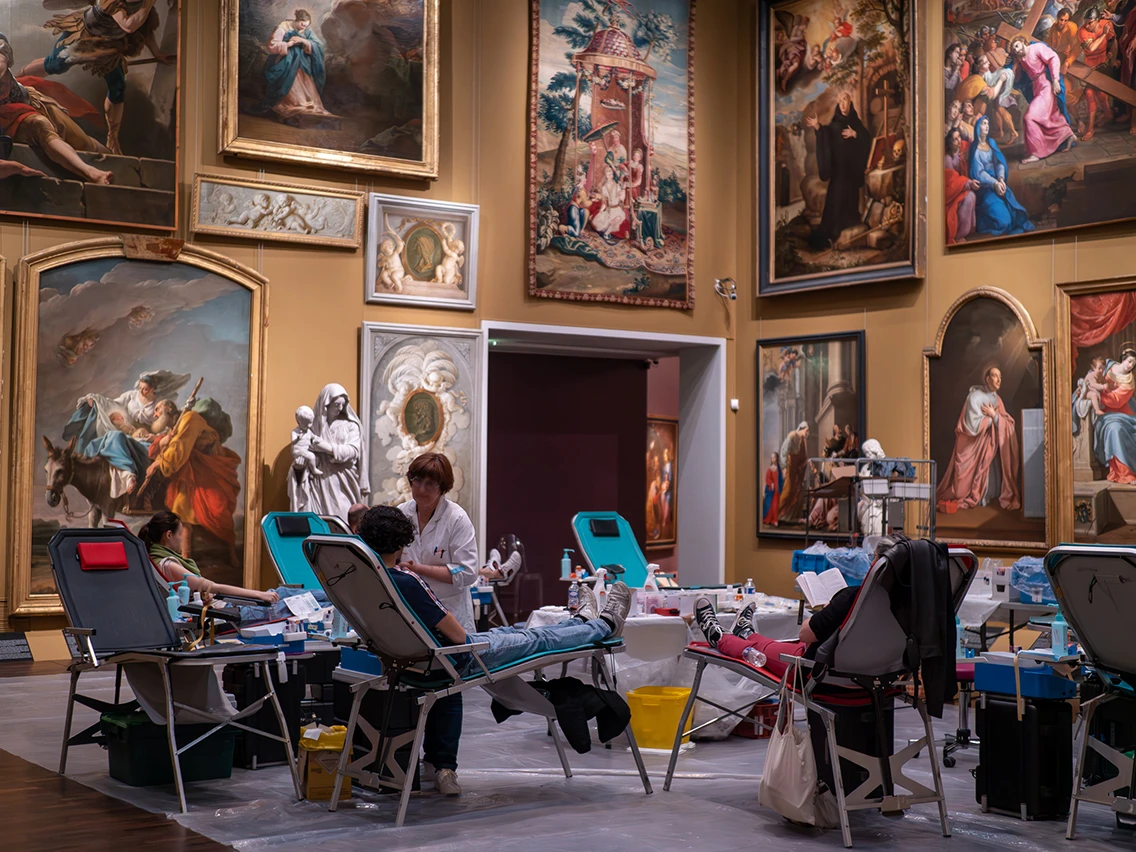
The Jameel Arts & Health Lab also launched a photo essay alongside the Lancet Global Series. The event took place at the Guggenheim Museum in New York on September 24, 2025, as part of UNGA Healing Arts Week. The photo essay brings together images of arts and health initiatives from around the world. It highlights the potential of the arts to support health and well-being, including in under-represented communities and complex care environments. The launch brought together representatives from the Guggenheim, The Lancet, WHO, and Community Jameel, alongside artists, researchers, and health practitioners.
The digital versions of the four articles are now available at no cost to account holders, and accounts can be created by anyone.
There are several ways to explore arts in health in the Netherlands. Some programs offer brief introductions to the field, while others offer minors, electives, or practice-based projects. For artists, healthcare professionals, educators, and social care professionals who want to deepen their expertise in arts in health, there are further opportunities. In several courses, training programs, and summer schools you can expand your knowledge and skills.
In arts in health programs, you can learn, for example, how to:
Maybe you want to become an artist or designer. Or perhaps a healthcare professional, researcher, or educator. Maybe you’re not yet sure which direction you want to take, but you’re excited by the idea that creativity can support health and well-being. Arts in health brings those worlds together.
Through a course, a degree program, a summer school, a minor, or a practice-based academic project, you can discover how the arts contribute to recovery, resilience, and quality of life. You can collaborate with students from other disciplines, gain hands-on experience in healthcare and social care settings, and explore how creativity is becoming part of the future of care.
Courses | Would you like to explore arts in health before committing to a degree program? A course or summer school is a great place to start. You’ll be introduced to the field and discover how the arts and healthcare collaborate to support quality of life.
Arts in Health Groningen Summer School
Bachelor’s programs | Looking for a bachelor’s program where the arts and healthcare come together? These programs offer opportunities to collaborate with healthcare organizations, develop creative interventions, and conduct practice-based research.
Master’s programs | Already have a bachelor’s degree and looking to specialize in the intersection of the arts and health care? Consider one of these master’s programs:
A range of organizations offer courses, training programs, and other professional development opportunities, including:
Arts in health is a rapidly evolving field. More and more artists and health care professionals are working together to support health and wellbeing. This requires not only expertise within your own discipline, but also an understanding of each other’s ways of working, the ability to collaborate across disciplines, and knowledge of the healthcare context.
Professional development helps you build that expertise, which helps to further professionalise the field in the Netherlands, and make arts in health education more widely available.
This is just a selection of the available programs for students and professionals. The overview is authored by Marie-José Kommers, Advisor at LKCA, and reflects the first version, up to date as of October 2026. Download the complete overview for all bachelor’s and master’s programs, courses, locations, and study load.
Is your program missing from this overview? We’d love to hear from you. Contact us at info@artsinhealth.nl.
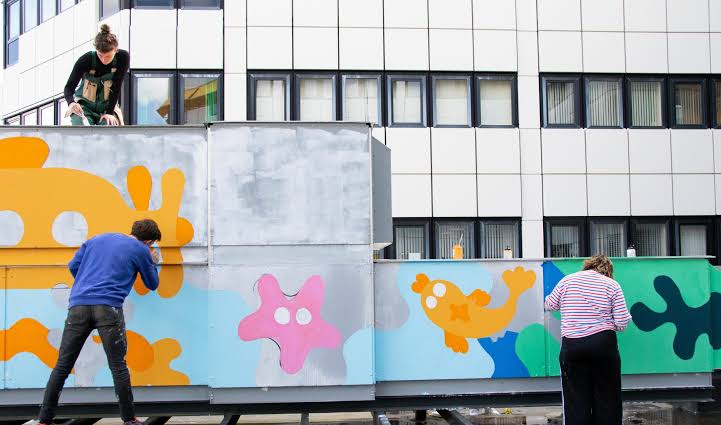
What does arts in health look like in practice? Students from Minerva Art Academy created four artworks for the University Medical Center Groningen (UMCG), including the rooftop mural on the Beatrix Children’s Hospital. These artworks contribute to an environment that supports children and their families with moments of distraction, hope, and comfort.

Thanks in part to a grant from the Ministry of Education, Culture and Science, a national network of partners has joined forces to structurally integrate arts and culture into the Dutch healthcare and welfare sector. The financial support enables the network to begin realizing the ambitions outlined in the white paper, Arts in Health in the Netherlands: A Nationala Agenda.
"This is what we've been working towards for years," says Kirsten Krans, a founding member of Arts in Health Netherlands. "It's wonderful to be able to take the next step together to structurally integrate arts and culture into our healthcare system." The national agenda of Arts in Health Netherlands aligns with the transition from cure to care, with a focus on person-centered care and positive health.
The national network brings together a unique coalition of organizations from healthcare, social welfare, arts and culture, education, and research.
Representatives from organizations include Kunsten '92, the University Medical Center Groningen, Codarts, Erasmus University Rotterdam, the National Knowledge Centre for Cultural Education and Amateur Arts (LKCA) , AxionContinu, Kunstloc Brabant, ROC Amsterdam, the Municipality ofTilburg, Vilans, Cultuur Oost, Raad van Twaalf, Vrije Universiteit Amsterdam, the Amsterdam University of Applied Sciences, the University of Groningen, and the Aletta Jacobs School of Public Health.
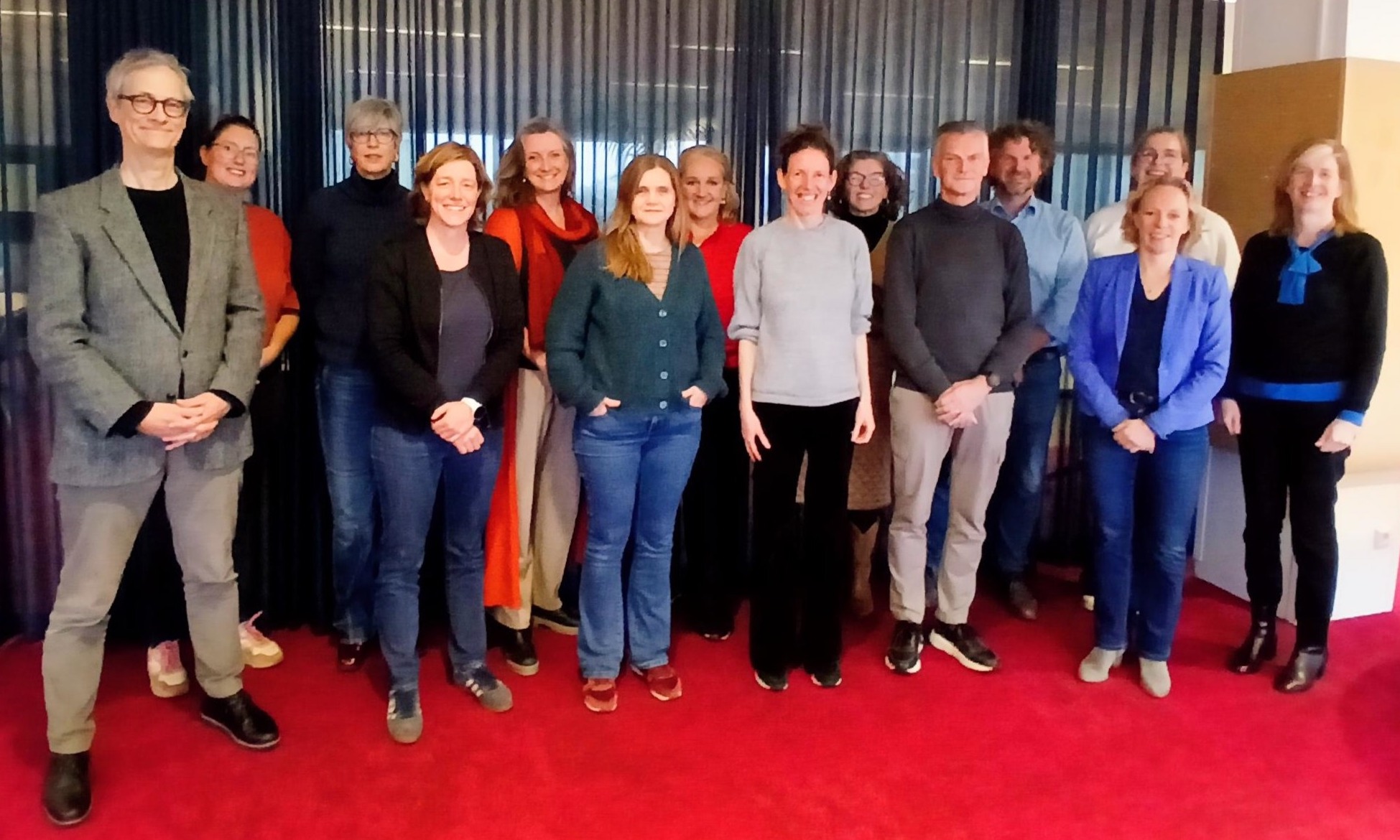
At a launch meeting on November 28th 2025, the focus was on developing a shared vision for the future of the field. The diverse range of experts involved—from healthcare professionals and artists to researchers and policymakers––will support the ‘four pillars’ of the Arts inHealth field in the Netherlands: policy, practice, education, and research.
The participants particularly emphasized the need for intersectoral collaboration between health and culture. As the healthcare sector transitions toward more human and compassionate care, and the cultural sector argues for greater social relevance for the arts, the Arts in Health Netherlands network will help to strengthen both sectors and build bridges between them.
The network’s long-range goal is to sustainably embed the arts in our national healthcare system. To accomplish this, four work packages have been created to address each of the four goals of the national agenda (policy, practice, education, and research). The work packages will: establish a national knowledge platform; define professional competencies and a training network; formulate policy to promote Arts in Health; and establish a national research agenda for the field.
Participatory arts in health projects focus on supporting well-being. The goal is to help people relax, feel less alone, and to live in an active, curious, and engaged way. For example, artists encourage art-making among patients in hospitals, among healthcare workers, and with people in the community. While there is some training for participatory arts in health practice in the Netherlands, it currently has no national certification or professional register.
Creative arts therapy can be a form of treatment as well as support for general wellbeing. Most often, creative arts therapies have specific health goals. Creative arts therapists use art-making as treatment, for example, for psychological issues or rehabilitation. Creative arts therapists can do participatory arts as well, but they are trained and nationally registered as therapists.
More and more arts practices are finding a place in the lives of long-term care residents, and numerous wonderful initiatives are under way. Other examples include the work of artists Sjaak Langenberg and Rose de Beer, who are setting up unique initiatives across the Netherlands. Dutch arts in health initiatives vary in form, but they all create space for contact, imagination and wellbeing.
There are plenty of examples at the organisational level too. Vitalis in Eindhoven has worked with an art coordinator for 25 years and currently employs three. AxionContinu has 15 years of experience working with an art coordinator. In Amsterdam, Cordaan's Ambulant Kunstteam brings artists into neighbourhoods, where they make art together with residents. Art programmes can also be found in mental healthcare and in care for people with disabilities, such as at Lister and Reinaerde.
Arts in Health Groningen is using pilot projects to build a permanent place for the arts in healthcare in the North, for example with arts programs for staff at the University Medical Center Groningen (UMCG) and through the Buur & Boek community program with NOORDWOORD, using shared reading and creative writing to bring neighbourhood residents together. At Dijklander Hospital too, live music is becoming a regular part of in-patient care.
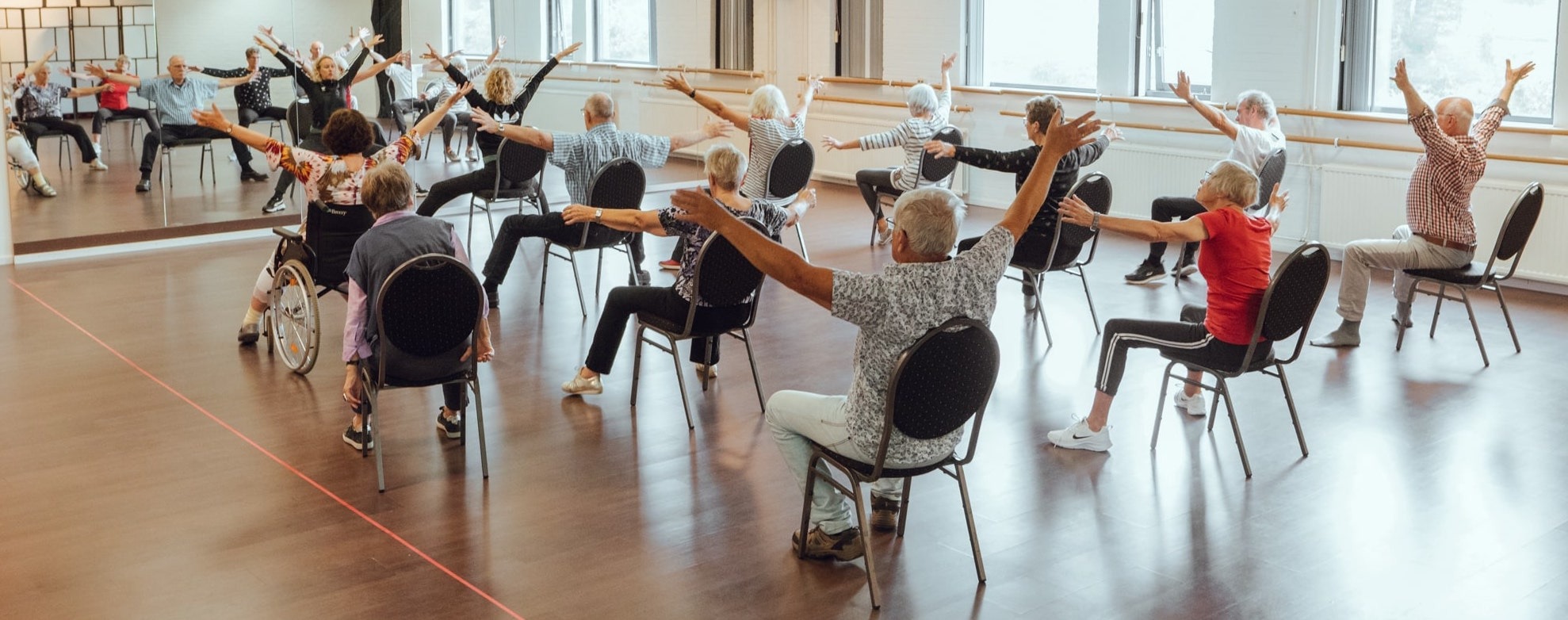
Arts in health programmes often begin as pilots, which are opportunities to make visible what effects the arts can have on people’s wellbeing. Arts in health pilots answer the questions of sceptics, and help planning for permanent, sustainable programmes.
If you are thinking about creating a participatory arts in health pilot in an organisation or institution, begin by taking note of where the arts might support well-being as part of the regular day. Find others who are excited by the idea, and who can help you make connections. Decide who the pilot’s participants will be. Start small, create a budget, and document all of your work.
If you want to propose a project in a community, long-term care facility, or hospital, begin by finding out as much as you can about what activities already happen there, and learn how existing programs shape the lives and work of people there. Are there particular challenges being addressed there that you could support? What types of care do the people there actually need? Find people who are open to your idea and who will connect you to others in the community or organisation.
You don't have to develop an arts in health project from scratch. A good way to begin is to imagine how the work that you already do could give care and support to people who need it. Whatever art form or approach you use, it should be appropriate for the participants and the setting.
Arts in Health Netherlands connects people and organisations committed to building the field in this country. Our work is organised around four themes: practice, research, policy, and education. Our members bring their experience, knowledge, and networks to one or more of those themes. This is building a solid field in the Netherlands, step by step. While practitioners from many organisations are involved in AiHN, three organisations are currently taking the lead in building content for the practice theme:
To gain a better understanding of practice in the Netherlands, the practice group has developed an inventory of practices that assembles over 220 arts in health initiatives. The report shows where initiatives have taken place, the types of collaborators involved, and the themes, target groups, and types of funding. It also shows which factors contribute to successful and sustainable arts in health practices. Together, they offer an initial overview of where the field currently stands and what is needed to develop it further.
Which factors make arts in health successful? Based on a survey of professionals from the care, well-being, and culture sectors, this report describes effective elements, preconditions, and recommendations for sustainable practice.
Want to actively contribute to Arts in Health? Soon you will be able to join the alliance. Sign up for our newsletter to stay informed.
Arts in health is a new and fast-growing field in the Netherlands. The field needs professionals who are creative, entrepreneurial, and with a passion for both the arts and care. The emerging generation of Dutch arts in health professionals must work across disciplinary boundaries, and in a variety of care environments. A growing number of educational institutions are bringing students from the arts, healthcare, and social work together to share learning, conduct research, and gain practical experience to build the field.
Arts in health professionals work at the intersection of the arts, healthcare, and social care. Because the field is multi-disciplinary and still evolving here, there is no single profile for a Dutch arts in health professional. A competency framework was drafted by a group of educators from around the country as a starting point for discussions about what an arts in health professional needs to know. Read more about the framework and download the full document in our article on arts in health competencies.
Because the arts in health field is growing in the Netherlands, more and more universities, HBO’s and MBO’s are offering degree programs, minors, modules, and certificates on arts in health topics. These can be found in fields such as the visual arts, care ethics, nursing, spiritual care, and the medical humanities.
Examples include:
The Dutch arts in health education landscape has been documented, identifying both existing opportunities and the remaining educational gaps. Here you will find an overview of the current offerings (last updated: July 2026).
Arts in Health Netherlands connects people and organizations working to strengthen the field across the Netherlands. To help the field grow, we focus on four themes: practice, research, policy, and education. Each theme brings together people who contribute their expertise, experience, and networks. Together, we are building a strong foundation for arts in health in the Netherlands.
The Education Working Group currently includes representatives from:
Want to contribute to the development of arts in health education in the Netherlands? The alliance is coming. Sign up for our newsletter to stay informed.
More and more artists, healthcare professionals, and educators are working together in arts in health. This calls for professionals who can work at the intersection of the arts, health care, and social care. But what knowledge, skills, and attitudes does that require?
To explore this question, members of the Education Working Group of Arts in Health Netherlands drafted an initial competency framework for arts in health professionals. The document is based on practical experience and conversations with professionals from the arts, healthcare, social care, creative arts therapies, and education. Rather than serving as a definitive professional profile, it is intended as a shared guide to support conversations about education and professional development
Arts in health is a young and rapidly evolving field in the Netherlands. More and more educational programs are exploring the connection between the arts, healthcare, and social care, and the practice of arts in health is creating a growing demand for professionals who understand both worlds.
Yet, there is no shared language for describing the competencies that arts in health professionals need. This framework identifies competencies that practitioners consider most important, and provides a starting point for the further development of education and professional development.
The competency framework was developed by researchers using qualitative methods to analyse three national roundtable discussions with Dutch professionals working in arts in health, the arts, healthcare, social care, creative arts therapies, and education. An initial analysis of the data was conducted, then shared with the Education Working Group of Arts In Health Netherlands for expert panel review and comment.
The framework is grounded in professional experience and reflects what practitioners across the Netherlands have identified as essential to their work.
The framework is intended as a practical resource and a starting point for discussion for anyone involved in arts in health, whether in education, practice, or research.
It can be used to:
These competencies are meant as a conversation starter rather than a checklist or a definitive profile for arts in health professionals. They provide a shared foundation that will continue to evolve as the field itself develops.
What competencies does an arts in health professional need in practice? Below, we explore the five interconnected competency domains, illustrated with examples from practice.
Working at the intersection of the arts, healthcare, and social care requires more than artistic or clinical expertise alone. It calls for professionals who can move between different worlds, collaborate across disciplines, and see the person behind the patient or participant.
To provide greater guidance, the Education Working Group of Arts in Health Netherlands drafted a competency framework. The framework is intended as a conversation starter rather than a definitive professional standard, and it will continue to evolve with the field.
The competencies are organized into five interconnected domains that together describe what the profession requires:
1. Put people first
An arts in health professional does not start with a method or art form, but with the person. This requires curiosity, careful attention, and the ability to respond to another’s needs. Ethics, relational practice, empathy, and a broad understanding of health form the foundation of the arts in health profession.
2. Make space for the creative process
Working with the arts in healthcare contexts means embracing uncertainty. Situations can change quickly in healthcare contexts, and so a creative session cannot be planned to the last detail. Professionals should be prepared to improvise and respond to what emerges during the process. That openness can be a strength, creating space for new insights and more meaningful professional encounters.
3. Self-care is part of professional practice
Working with people who are ill, vulnerable, or facing life-changing experiences can be emotionally demanding. That is why self-reflection is just as important as creativity. Knowing your own boundaries, reflecting on your practice, and seeking support from colleagues are not optional - they are essential for sustaining your work over time.
4. Working safely and responsibly
Arts in health often takes place in healthcare settings. This means professionals need more than artistic skills; they also need to understand how to work safely and responsibly. This includes respecting privacy, making ethical decisions, understanding any relevant healthcare protocols, and recognizing when situations require additional care and caution.
5. Help build the field
Arts in health is a rapidly evolving field. Professionals therefore contribute not only to practice, but also to the continued development of the field itself. This requires collaboration with others, curiosity, an inquiring mind, a sense of entrepreneurship, and understanding of the strengths and limits of arts in health practice.
The five competencies above are not intended as a checklist or a definitive professional profile. Instead, they are offered as the basis for a professional language to be shared across arts in health education, research and practice, and in healthcare and the social domain. As the field continues to evolve, these competencies will evolve along with it.
Interested in arts in health education and training? Explore the available programmes and courses for students and professionals.

Arts in health professionals use a variety of approaches to support the wellbeing of healthcare patients and staff, in hospitals and also in long-term care facilities. This might include anything from listening to recordings to a live performance at a patient’s bedside, or getting staff and families to sing and play along, and even improvising new music with patients and families.
In hospitals
Music for health projects are enhancing the well-being of patients and staff in hospitals around the Netherlands. For instance, the Boedijn music school and Dijklander Hospital are collaborating on a multi-year partnership called Muziekmaatjes (Music Buddies), using live music to create moments of relaxation, escape, and joy, among pediatric patients and their parents. Another initiative specifically designed for children is "De Liedjesfabriek’" (The Song Factory), in which children write their own songs under the guidance of a music professional. Children from all over The Netherlands get to write and record their own song on the topic they choose and in the style of music they want.
Music for health can even be found in hospital intensive care units. One example of this is the organisation MuzIC that works with interested hospitals throughout The Netherlands, supporting the recovery of patients, which can minimize the health impacts of an ICU stay. Also the organisation ‘Muziek aan bed’ (Music at the bedside) provides musical interventions on all hospital wards.
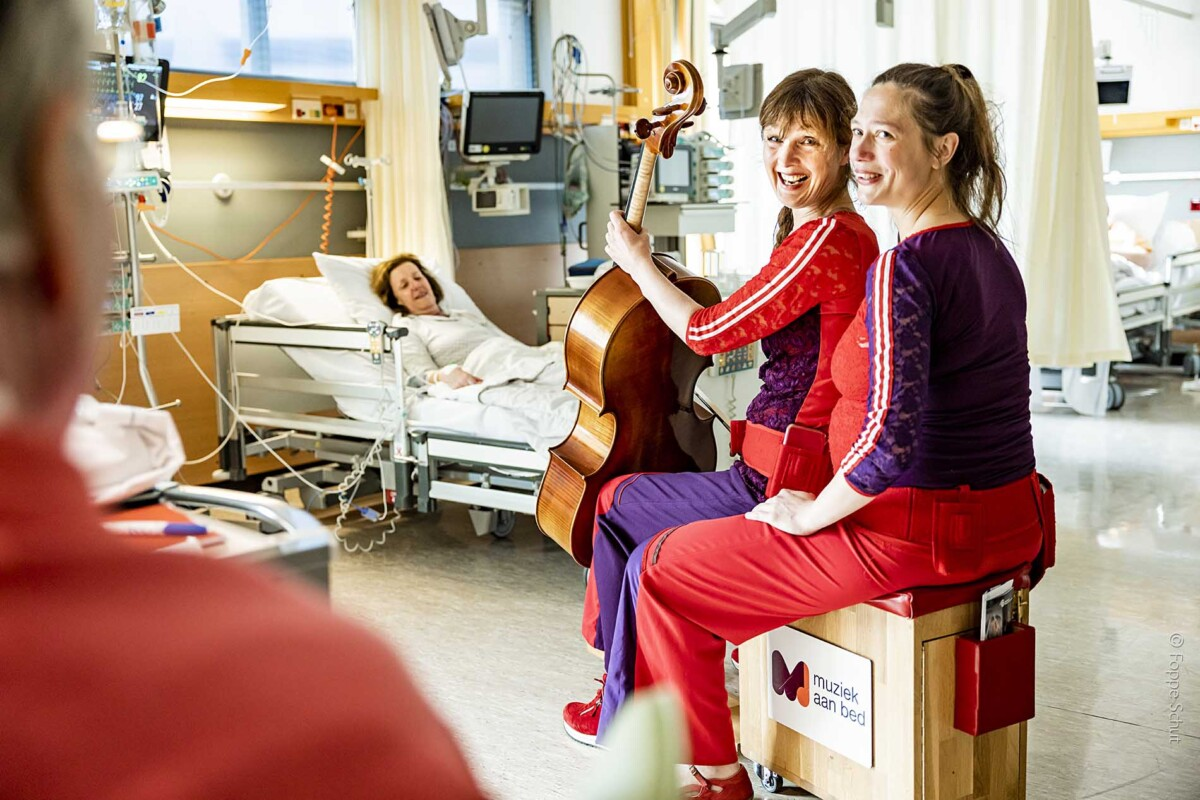
Outside the hospital
Music in health is also found in rehabilitation centers and hospices. For example, the organization Muziek aan Bed brings live music to people living with dementia in nursing homes through its Muziek aan tafel (Music at the Table) program, where everyone sings along, conducts, or moves. Professional Arts in Health organizations such as Mimic and Embrace Nederland encourage music-making in institutions as well as in private homes. Embrace Nederland also works to build social cohesion in the social domain, for example, with its "Slagkracht" project. Both Embrace Nederland and Mimic provide workshops for healthcare professionals and informal caregivers, teaching them to incorporate music into their daily interactions with patients and families.

What the science says
There is evidence that music contributes to recovery from illness, reducing pain, stress, anxiety, and depression. There are even indications that music can positively influence the immune system's responses.
In private homes, music in health professionals provide real support for people living with neurological conditions such as stroke, Parkinson's disease, or dementia.
Music appears to have positive effects on people with neurological disorders, activating the areas of the brain involved in thinking, feeling, movement, and emotion.
Research suggests that music can be a powerful tool to support the wellbeing of healthcare professionals and informal caregivers, by encouraging relaxation, building social connection, and helping staff to reflect on their work in new ways.
A study by Mimic suggests that music leads to stronger, positive contacts between patients and nurses, as well as an increase in compassion in nurses.
Professors Dick Swaab and Erik Scherder gave a lecture on Music and the Brain, which beautifully explains the positive health effects of music.
Organizations in the Netherlands in the field of Music in Health
There are many more organizations offering music in health services in hospitals, long-term care, and the social domain. Below is an overview:
The arts and culture are an ongoing part of programming for AxionContinu’s clients in the Utrecht area. In addition to an extensive music programme — including a choir and the popular “apple pie concerts” — residents can take part in numerous cultural activities such as the Museum on Friday program. AxionContinu also collaborates with students from the Utrecht University of the Arts (HKU) on We Heart Society, in which music students and residents create new songs together.
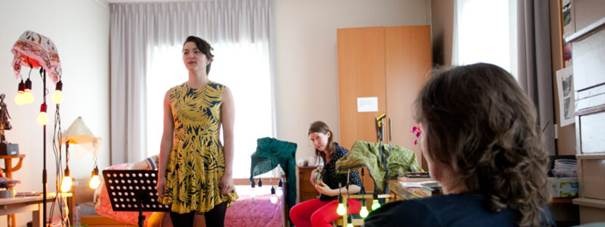
Vitalis (Eindhoven region) also offers a rich arts programme. The theatre project Trotse kameraden (“Proud Companions”) brings together residents, young people and local neighbourhood members to create a performance. Furthermore, there is AtelierSkon, a working place where care home residents, neighbours and other interested people upcycle cast-off materials to make beautiful arts and crafts.
In Amsterdam, Cordaan provides care for people with intellectual disabilities, and also for older adults living with dementia. Cordaan’s Art in Care program focuses on improving quality of life, for example with the ambulant kunstteam (mobile art team) in which visual artists, writers, dancers and others use creativity to engage with Cordaan clients in the community, for example by visiting a museum together or making an artwork. Cordaan’s Mulltimedia digitale kunst (Digital Multimedia Art) program brings artists and people with intellectual disabilities together, to practice photography, filmmaking and graphic design.
Dans op Recept (Northern Netherlands and Limburg) provides classes and workshops in creative movement and dance for older adults and people with chronic conditions, often within residential care settings. Dans op Recept also trains care professionals to integrate dance into their work. The dance company Leefmeesters, a part of Dans op Recept, creates dance pieces for public performance, in which professional dancers collaborate with people living with chronic illnesses.
Meerdandans (North Holland) offers dance lessons for people with Parkinson’s disease and acquired brain injury. Requests from other regions are referred to teachers within their network.
Het Huiskamerdanspaleis (Living Room Dance Palace) organises dance ‘moments’ for adults with dementia in their own, warmly decorated, surrounding. Instructors are present to guide participants. The work of Het Huiskamerdanspaleis also includes a special program for fall prevention: Het Danspaleis Valpreventie.
Even when they do not aim to produce therapeutic outcomes, participatory arts programs can provide positive support for wellbeing. Marc Vlemmix Dance offers creative movement classes for people living with MS, rheumatism and Parkinson’s. Participants are prepared for creative movement by teachers who help people with chronic conditions to build strength, balance and flexibility.
Switch2Move combines music and movement for people with Parkinson's disease, dementia, MS or other chronic illnesses. People can join the lessons in the regions of Amsterdam, Tilburg and Den Bosch. People who are not able to leave their homes can join the dance lessons through video recordings.
Theatre Veder performs shows in care homes, especially for demented elderly people, and using the Veder Contactmethode. In their performances, artists use poetry, music and theater to engage the long term memory of participants. Staff at Theatre Veder also train care professionals to use the Veder Contactmethode to improve communication with clients.
Cliniclowns is the longest-running Arts in Health program in the Netherlands, with ongoing programs in nearly every hospital in the country. Cliniclowns’ highly trained professional performers use play and music to engage children and healthcare staff find a sense of fun even in tense care environments. Cliniclowns has also developed a successful program for adults living with dementia.
Many museums have special programs at the intersection of art, healthcare, and well-being, see for example the Museum van de Geest, Rijksmuseum and Mauritshuis. For more information, you can also contact the Museum Association.
There are also initiatives that older adults with health issues to experience visual art in a meaningful way, such as the MuseumPlusBus. The program brings traveling exhibitions of high-quality reproductions to care homes. The program also arranges transport that brings elderly people to museums.
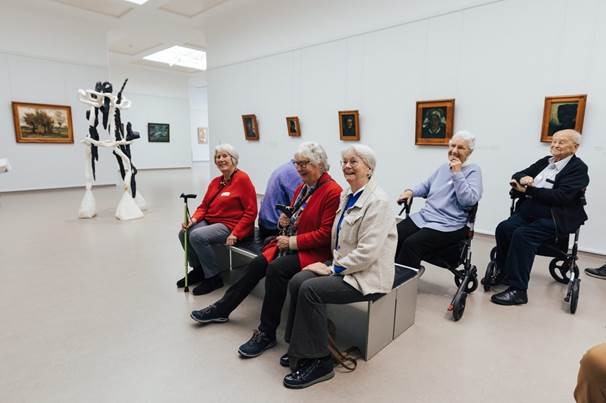
KOO (The Hague) uses multiple arts strategies to engage elderly people living with chronic illnesses. Kleurenparade is a series of five workshops that introduce seniors to a variety of art forms. During the creative activities, participants are encouraged to discuss their experiences and inspirations. Kunstknuffel uses creative activities to “encourage meaningful artistic experiences where memories can take shape.” All activities are guided by specially trained instructors.
Amphion Cultuurbedrijf is part of the programme Long Live Art, which offers a wide range of activities for residents of care facilities in the Achterhoek region. Their Cultuur met zorg (Culture with Care) program places resident artists in care centers, leading small-scale activities such as felting, dancing and photography, and theatre.
In 2019, the World Health Organization (WHO) published an extensive review of research regarding the impact of the arts on well-being. 30+ years of research on Arts in Health supports a compelling argument that the arts support wellbeing.
A selection of the findings:
The Dutch Ministries of Education, Culture & Science (OCW) and Health, Welfare & Sport (VWS) collaborate with Stichting RCOAK, Fonds Sluyterman Van Loo in the programme Arts and Culture in Long-Term Care and Support. One of the goals is to map existing art initiatives in order to identify the success factors that contribute to an effective and sustainable offer. Amsterdam UMC and the Leyden Academy on Vitality and Ageing also joined forces in an Art in Health program to research the value of art in long-term care by describing existing art initiatives and evaluating their impact.