Art and creativity have become an integral part of many nursing homes, rehabilitation centres, home-care organisations and hospices. Elsewhere on this website we describe musical offerings that support wellbeing in long-term care, but dance, theatre, literature and visual arts are also supporting health in Dutch care institutions. Arts programs in long term care take a variety of forms. There are art-organisations providing broad art programming for both community-dwelling older adults and residents of care facilities. In other cases long-term care facilities develop programs tailor-made to their situation.
Institutions Offering Art Programmes
The arts and culture are an ongoing part of programming for AxionContinu’s clients in the Utrecht area. In addition to an extensive music programme — including a choir and the popular “apple pie concerts” — residents can take part in numerous cultural activities such as the Museum on Friday program. AxionContinu also collaborates with students from the Utrecht University of the Arts (HKU) on We Heart Society, in which music students and residents create new songs together.
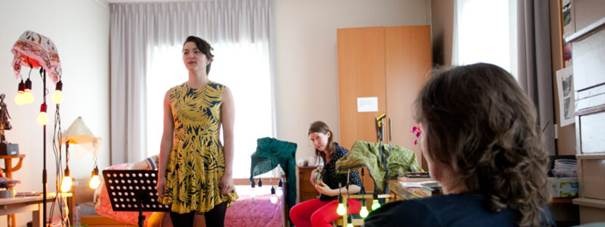
Vitalis (Eindhoven region) also offers a rich arts programme. The theatre project Trotse kameraden (“Proud Companions”) brings together residents, young people and local neighbourhood members to create a performance. Furthermore, there is AtelierSkon, a working place where care home residents, neighbours and other interested people upcycle cast-off materials to make beautiful arts and crafts.
In Amsterdam, Cordaan provides care for people with intellectual disabilities, and also for older adults living with dementia. Cordaan’s Art in Care program focuses on improving quality of life, for example with the ambulant kunstteam (mobile art team) in which visual artists, writers, dancers and others use creativity to engage with Cordaan clients in the community, for example by visiting a museum together or making an artwork. Cordaan’s Mulltimedia digitale kunst (Digital Multimedia Art) program brings artists and people with intellectual disabilities together, to practice photography, filmmaking and graphic design.
Organisations Offering Art Activities
Dance
Dans op Recept (Northern Netherlands and Limburg) provides classes and workshops in creative movement and dance for older adults and people with chronic conditions, often within residential care settings. Dans op Recept also trains care professionals to integrate dance into their work. The dance company Leefmeesters, a part of Dans op Recept, creates dance pieces for public performance, in which professional dancers collaborate with people living with chronic illnesses.
Meerdandans (North Holland) offers dance lessons for people with Parkinson’s disease and acquired brain injury. Requests from other regions are referred to teachers within their network.
Het Huiskamerdanspaleis (Living Room Dance Palace) organises dance ‘moments’ for adults with dementia in their own, warmly decorated, surrounding. Instructors are present to guide participants. The work of Het Huiskamerdanspaleis also includes a special program for fall prevention: Het Danspaleis Valpreventie.
Even when they do not aim to produce therapeutic outcomes, participatory arts programs can provide positive support for wellbeing. Marc Vlemmix Dance offers creative movement classes for people living with MS, rheumatism and Parkinson’s. Participants are prepared for creative movement by teachers who help people with chronic conditions to build strength, balance and flexibility.
Switch2Move combines music and movement for people with Parkinson's disease, dementia, MS or other chronic illnesses. People can join the lessons in the regions of Amsterdam, Tilburg and Den Bosch. People who are not able to leave their homes can join the dance lessons through video recordings.
Theatre
Theatre Veder performs shows in care homes, especially for demented elderly people, and using the Veder Contactmethode. In their performances, artists use poetry, music and theater to engage the long term memory of participants. Staff at Theatre Veder also train care professionals to use the Veder Contactmethode to improve communication with clients.
Cliniclowns is the longest-running Arts in Health program in the Netherlands, with ongoing programs in nearly every hospital in the country. Cliniclowns’ highly trained professional performers use play and music to engage children and healthcare staff find a sense of fun even in tense care environments. Cliniclowns has also developed a successful program for adults living with dementia.
Visual Arts & Museums
Many museums have special programs at the intersection of art, healthcare, and well-being, see for example the Museum van de Geest, Rijksmuseum and Mauritshuis. For more information, you can also contact the Museum Association.
There are also initiatives that older adults with health issues to experience visual art in a meaningful way, such as the MuseumPlusBus. The program brings traveling exhibitions of high-quality reproductions to care homes. The program also arranges transport that brings elderly people to museums.
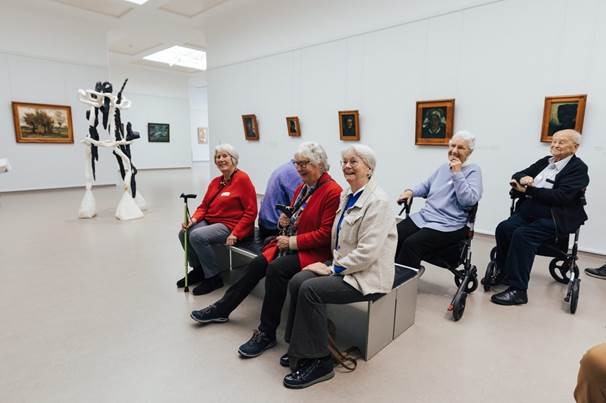
KOO (The Hague) uses multiple arts strategies to engage elderly people living with chronic illnesses. Kleurenparade is a series of five workshops that introduce seniors to a variety of art forms. During the creative activities, participants are encouraged to discuss their experiences and inspirations. Kunstknuffel uses creative activities to “encourage meaningful artistic experiences where memories can take shape.” All activities are guided by specially trained instructors.
Amphion Cultuurbedrijf is part of the programme Long Live Art, which offers a wide range of activities for residents of care facilities in the Achterhoek region. Their Cultuur met zorg (Culture with Care) program places resident artists in care centers, leading small-scale activities such as felting, dancing and photography, and theatre.
What Does the Science Say?
In 2019, the World Health Organization (WHO) published an extensive review of research regarding the impact of the arts on well-being. 30+ years of research on Arts in Health supports a compelling argument that the arts support wellbeing.
A selection of the findings:
- Stroke rehabilitation: Dance improves muscle strength, posture and balance, and may stimulate memory and executive function.
- Parkinson’s disease and MS: Dance strengthens muscles and improves posture, mobility and quality of life.
- Psychogeriatrics: Drama activities improve contact between residents and care staff. Dance appeared to have a positive effect on speech. Literary activities can improve memory, listening skills and attention in people with dementia, and also reduce feelings of loneliness and social isolation.
- Palliative care: Art activities improve physical and psychological well-being and support conversations about illness and end-of-life.
- Anxiety and depression: Art can reduce feelings of anxiety and depressive symptoms related to illness, such as cancer.
Research programs in the Netherlands
The Dutch Ministries of Education, Culture & Science (OCW) and Health, Welfare & Sport (VWS) collaborate with Stichting RCOAK, Fonds Sluyterman Van Loo in the programme Arts and Culture in Long-Term Care and Support. One of the goals is to map existing art initiatives in order to identify the success factors that contribute to an effective and sustainable offer. Amsterdam UMC and the Leyden Academy on Vitality and Ageing also joined forces in an Art in Health program to research the value of art in long-term care by describing existing art initiatives and evaluating their impact.