Thank you! Your submission has been received!
Oops! Something went wrong while submitting the form.
Social prescribing is a strategy to help people with health conditions that do not require clinical treatment. A person suffering from grief, loneliness, addiction, or unemployment (for example), can be referred to a trained ‘wellbeing coach’ who helps that person make a personalized plan to engage in activities, events or training with community groups, non-profits, workshops, cultural institutions, and others. Participatory arts practice can be one of the ‘prescriptions’.
The UK is widely implementing social prescribing programmes, and the Netherlands and other countries are exploring it as well. The Dutch pilot programmes was implemented nationwide with some promising results and encouragement from insurers, primary care physicians, and patients. Read more about the Dutch version of social prescribing within the project Welzijn op Recept.
Social prescribing
The social prescribing strategy shows promise for supporting certain arts in health practices in the community. However, that is only one aspect of the field, and does not address the role that arts in health can plan in care institutions, for example.
One of the goals of the National Agenda is to “Develop a diverse and unified field of education and practice”. An action item attached to that goal is to build ‘consensus on a common terminology’ for the arts in health field. To that end, we offer a set of glossary terms. Note that many of these terms have quite different implications or meanings in different sub-areas of arts in health. This list is offered as a starting point for developing a common terminology.
Administrators - These are the directors or managers of programmes, organisations, and institutions that have a health interest. Administrators could come from the private sector, though most often they are in public-focused institutions and organisations.
AiH continuum of practices - This refers to the diversity of practices that make up the field of arts in health, all of which focus on care and support for wellbeing. This includes participatory arts, arts therapy, design for health, and others.
Arts in health - The use of creative art-making to support health and wellbeing.
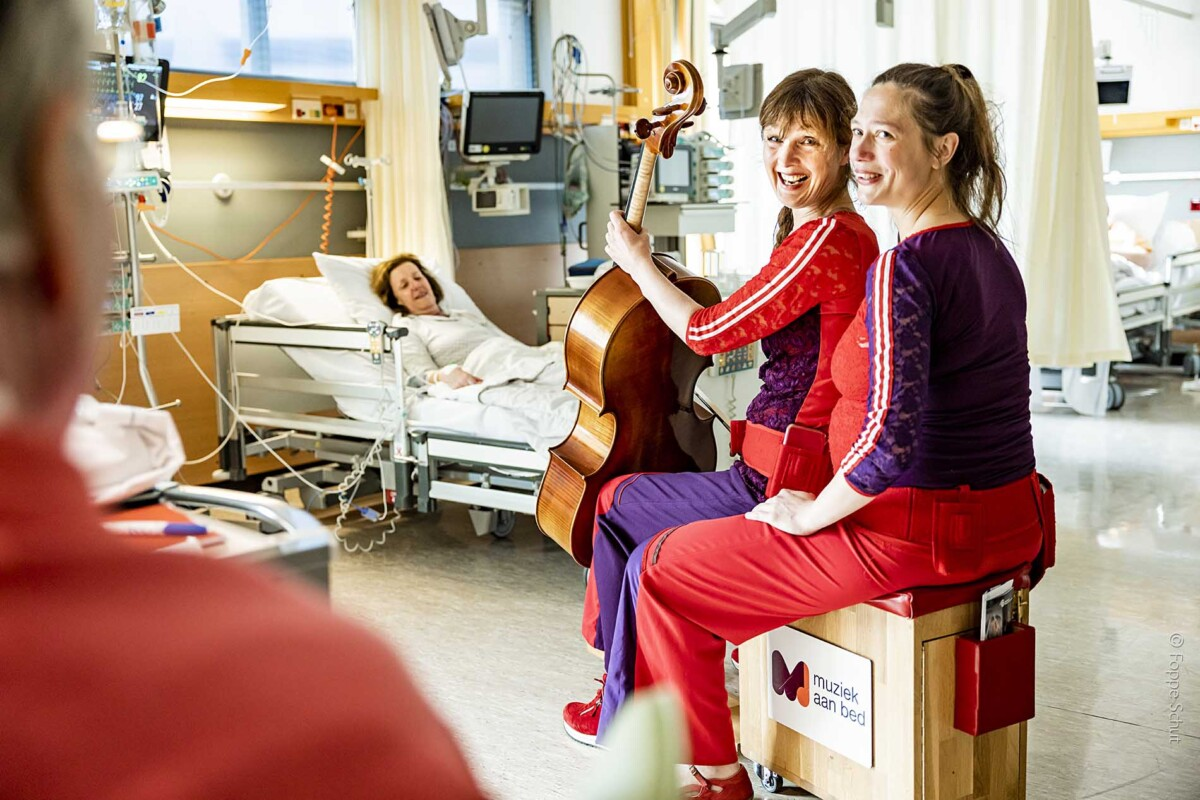
Bedside art-making - Facilitating active art-making with patients with patients who are in bed, in care facilities. This can be either a non-therapeutic participatory activity, or a creative arts therapeutic intervention. The term distinguishes this type of practice from staff-focused art-making, and community-based arts in health, and others.
Care - This important term refers to the support for a person’s wellbeing that is provided or supported by arts in health practice. Care is the characteristic distinguishing arts in health from other types of arts activities. In creative arts therapies, care can focus on treatment and predictable health outcomes, whereas in participatory arts in health, care focuses more on general support for wellbeing or supporting care by some other provider. Care is delivered not only in the creative practice, but also in the ethics and professionalism of the practitioner.
Care aesthetics - The study of the aesthetic aspects of care.
Compassion fatigue - Emotional and/or physical exhaustion experienced by formal and informal caregivers leading to diminished ability to empathise, inability to work, depression and other negative health outcomes.
Community-based arts - Arts activities based in community settings, most often projects and programmes directly involving community members.
Creative expression - The use of various art forms to express oneself creatively, sometimes used in describing arts support for mental and emotional wellbeing.
Creative arts therapies - Art-making as a medium for healing and self-expression, practiced by licensed therapists with specialised therapeutic training.
Cultural participation - Community participation in cultural activities, for example attending concerts or festivals, museums, community events, as well as participation in amateur art-making.
Cultural programmes in long-term care - Arts and cultural activities designed to enhance the quality of life of residents in long-term care.
Ethical and care protocols - Guidelines and standards for ethical behavior and care practices in care settings. These are likely different depending on whether the professional is doing participatory arts or arts therapies.
Expressive or creative movement - Similar to dance, these are movement-based arts activities supporting health and wellbeing.
Funders - These may include governments at any level, institutions (for example schools, insurers, etc.) and organisations (e.g., non-profits or community organisations). Funders include some private sector organisations (health insurers, for instance) as well as the public sector.
Intersectoral collaboration - Efforts between public institutions (healthcare, arts education, etc.) to achieve common goals. May take the form of projects, programmes, or policies to address issues and pursue goals across social sectors, for example the arts and healthcare.
Medical humanities - An interdisciplinary humanities field (arts, literature, philosophy, etc.) in medical education and practice.
Participatory arts - In AiH practice, activities that actively involve both participants and artists in art-making. Participatory practice also has implications for the inclusion of marginalised people.
Patient activation - Encouraging patients to engage actively in their own wellbeing and health care.
Person-centred care - Healthcare that focuses on the individual's specific health needs and desired health outcomes.
Positive health - A health concept that emphasizes the ability to adapt and self-manage in the face of social, physical, and emotional challenges.
Practitioners - Arts in health practitioners are skilled in using arts practices to support wellbeing. Practitioners build participation in art-making, working with participants who have no experience in art-making, or helping people who want to make art at higher levels of skill.
Resilience - The ability to resist illness or harm, and/or the capacity to recover from illness or harm. Resilience can be applied to individual wellbeing, or to groups, places, or populations.
Resources - This might refer to person hours, money, useful physical things like office space or equipment, but also experience, ideas, useful documents, databases, etc.
Science - This term refers to existing and recent literature, most often in peer-reviewed journals. The terms could refer to health sciences research, but also social sciences, and also humanities research.
Scientific research - This most often refers to the production of new knowledge, and peer-reviewed publications. The term ‘research’ is technically appropriate to describe programme evaluation, though in practicethis can be confusing.
Social inclusion - Activities in support of including marginalised individuals or groups.
Spiritual care - A holistic, person-centred approach to care, allied with arts in health, that supports psychological, social, and existential wellbeing.
Support for caregivers - Arts in health strategies aimed at providing relief and support to both formal and informal caregivers.
Support for care recipients - Arts activities aimed at improving the wellbeing of individuals receiving care, in hospitals, long-term care facilities, and home care.
Therapeutic goals - Specific health outcomes that are goals in creative arts therapies.
Value-based healthcare - An economic model of healthcare delivery that attempts to shift the value of healthcare from the healthcare provider to the patient, emphasizing outcomes and patient satisfaction as goals.
We are excited to launch the Arts in Health Netherlands (AiHN) website! Our graphic identity, our publications, and our website were all developed with the Den Haag design agency JUST.
The idea of participation inspired the design process. “Arts in health there is a whole continuum of practices, and participation is key to them all,” says AiHN Director of Science and Education Ferdinand Lewis. “Participation is what makes creativity good for you, when you say ‘Yeah, okay, I’ll jump in, I’ll try that.”
But how to design with that core idea in mind? “We knew we needed professional design, but we needed to find designers who understood the participatory spirit of arts in health”, Lewis adds.
After a long search process Just was chosen, but they were the clear frontrunners. “These are experienced designers with serious corporate clients, but they also have this commitment to the public interest,” Lewis says. “Plus, everyone on the team was quite passionate about how arts in health works, and how to embody it, especially in the website.”
The team concluded that the experience of using the website, for instance, “Should not be only about consuming information” according to designer Tizian Fendt, “but instead should be like participating in a conversation”. The website design invites its users into the participatory experience of drawing on the landing page, of interacting with the page layout and color palette, and organising information in ways that are most useful to the user. The website also rewards inquisitive users with what Fendt calls “easter eggs” ––like the ticklish AiHN logo–– that reward curiosity.
“The field of arts in health is a balance between healthcare and art,” Lewis suggests. “But the balance point is active participation, which is what the website tries to embody.”


In 2025 vond in het UMCG een pilot plaats op het gebied van Arts in Health. Vijf professionele kunstenaars werkten hierin samen met medewerkers van vijf verschillende afdelingen aan participatieve kunstprojecten, gericht op het versterken van welzijn op de werkvloer. De pilot was een initiatief van Arts in Health Groningen, in samenwerking met het UMCG en theatergezelschap Peergroup.
In het groeiende vakgebied Arts in Health gebruiken kunstenaars creatieve methoden om het welzijn van zorgverleners en patiënten te ondersteunen en een gezonde levensstijl te stimuleren. Het is geen vervanging van zorg, maar een waardevolle aanvulling.
In deze pilot ligt de nadruk op het ondersteunen van medewerkers van het UMCG. Als reactie op de toenemende druk op zorgmedewerkers – hoge werkdruk, burn-out en compassiemoeheid – creëerden de projecten ruimte voor verbinding, inspiratie en het herontdekken van betekenis in het werk. Het centrale thema van de pilot was Zie de mens.
Kunstenaars en afdelingen werden zorgvuldig geselecteerd en aan elkaar gekoppeld. Gedurende vijf maanden maakten de kunstenaars deel uit van hun respectievelijke afdelingen binnen het UMCG:
De medewerkers van elke afdeling leerden hun kunstenaar kennen door haar te betrekken bij het werk en de dagelijkse routines. Naarmate de kunstenaars hun afdelingen beter leerden kennen, introduceerden ze creatieve activiteiten die medewerkers tijdens pauzes, rustige momenten op de werkdag en zelfs na werktijd konden doen. Medewerkers gaven aan dat deze creatieve activiteiten hen hielpen hun collega's op een andere manier te leren kennen, los van hun professionele rol.
De kunstenaars en het pilotteam - programmamakers, coördinator en onderzoekers - kwamen gedurende het traject wekelijks samen in een learning community. Deze bijeenkomsten boden ruimte voor reflectie, uitwisseling en onderlinge ondersteuning.
Parallel aan de pilot werd een evaluatie uitgevoerd om inzicht te krijgen in de ervaringen van de deelnemers en de betekenis van het project voor het personeel in de context van hun werk.

Als eindresultaat van de pilot is, in samenwerking met theatergezelschap Peergroup, een audio-ervaring door het UMCG ontwikkeld. De audiowandeling, getiteld Adrenaline, biedt medewerkers en publiek de mogelijkheid om het thema van de pilot 'Zie de mens' zelf te ervaren, dolend door de gangen en kamers van het ziekenhuis zelf.
Bezoekers worden individueel, met een koptelefoon op, door het UMCG geleid en krijgen toegang tot ruimtes die normaal gesproken niet toegankelijk zijn voor het publiek. Het ziekenhuis zelf fungeert als verteller en deelt verhalen over patiënten en medewerkers, beleidsmakers die worstelen met transities en renovaties, en zorgprofessionals die onder immense druk werken.
Adrenaline nodigt bezoekers uit om het ziekenhuis vanuit een ander perspectief te beleven en na te denken over het menselijke aspect van zorg.
Adrenaline is te bezoeken in het UMCG van 25 februari tot en met 22 maart 2026.
Pilotteam
De pilot wordt geleid door programmamakers Kirsten Krans en Dirk Bruinsma, onderzoeker/trainer Ferdinand Lewis, en projectcoördinator & onderzoeker Nina van den Berg.
Stuurgroep
De stuurgroep van het UMCG zorgt voor strategische begeleiding en supervisie, onder voorzitterschap van Michiel Kahmann, met de volgende leden: Barbara van Leeuwen, Hanneke van der Wal-Huisman, Jaap Tulleken, Bertrand de Jong, Edwina Doting, Joke Fleer en Mark Dessing.
Partners
Universitair Medisch Centrum Groningen, Rijksuniversiteit Groningen, Aletta Jacobs School of Public Health, Peergroup en Nationaal Programma Groningen.

In her thesis, Emma Schönborn studied how the youth creativity programme Digital Art Factory (DAF), uses creativity to support the wellbeing of teenagers at three locations in Assen, Gieten, and Appingedam. Launched in 2016, today DAF is a successful and highly valued programme in its communities.
DAF’s early success was due to inspiration, intense creativity, and the hard work of its staff. It was not, however, guided by a clearly defined programme model. “The program had always operated intuitively, but without a clear structure,” Schönborn explains. “So it was difficult for them to evaluate or replicate the program,” she explains. In 2024, DAF’s directors wanted to prepare a strategy for the organisation’s future, and they turned to Schönborn to investigate the program’s workings.
Schönborn used methods from the ‘research-based programme evaluation’ field to interview staff, review programme documents, and observe the instructors (called “coaches”) at work. In her fieldwork she found that inspiration, creativity, and collaboration were at the heart of the program: “The instructors prioritise collaboration between the participants, and autonomy, over traditional instruction,” she explains, adding that participants “can engage with others and explore their mutual interests without fear of judgment”. Each participant sets their own learning goals and works at their own pace, pushing their imagination as far as they can.
Using the data, Schönborn developed a detailed ‘logic model’ of the programme that articulated how DAF’s inputs —skilled coaches, creative equipment, and partnerships— and its creative process, lead to enhanced social skills and emotional well-being for young people. She existing social scientific literature on mental health and creativity to inform the study. “The DAF program model is particularly effective at fostering creativity, and it also provides a foundation for social and emotional development in its participants,” she asserts.
The study, titled, Modeling a Youth Creativity and Engagement Programme for Mental Health: A Case Study of the Digital Art Factory was part of Schönborn’s 2024 thesis for University College Groningen. She hopes that the research and the programme modeling method will not only help DAF, but also other small arts-based community organisations that need to develop an evaluation strategy, or make plans for extending or expanding a programme.
“With a programme like this, it’s all about the creative process,” she says, concluding, “That encourages young people to find a sense of control, feel less isolation, and make social connections.”
Dit tijdschrift publiceert verschillende subonderwerpen en soorten onderzoeken over de waarde van kunst in de samenleving. Specifieke programma's worden geëvalueerd en actuele of interdisciplinaire kwesties, evenals beleid, worden onderzocht.

Arts in Health professionals gebruiken verschillende benaderingen om het welzijn van patiënten en personeel in de gezondheidszorg te ondersteunen, zowel in ziekenhuizen als in instellingen voor langdurige zorg. Dit kan variëren van het luisteren naar opnames tot een live optreden aan het bed van een patiënt, of het laten meezingen en spelen van personeel en familie, tot het improviseren van nieuwe muziek met patiënten en naasten.
In het ziekenhuis
Livemuziek in ziekenhuizen is een prachtig voorbeeld van hoe kunst welzijn en gezondheid kan versterken. Het project Muziekmaatjes, waar muziekschool Boedijn en Dijklander Ziekenhuis een meerjarige samenwerking zijn aangegaan, zorgt door livemuziek op de kinderafdeling voor momenten van ontspanning, ontsnapping en plezier bij kinderen en hun ouders. Een ander mooi initiatief specifiek voor kinderen is De Liedjesfabriek waar kinderen onder begeleiding van een muziekprofessional hun eigen liedje schrijven en opnemen. Kinderen uit heel Nederland kunnen bij De Liedjesfabriek een nummer maken over het onderwerp dat zij kiezen en in de muziekstijl die bij hen past.
Muziek wordt ingezet op meer afdelingen in het ziekenhuis, bijvoorbeeld op de Intensive Care door het initiatief MuzIC. MuzIC werkt in ziekenhuizen door heel Nederland. Samen met de aangesloten ziekenhuizen streeft MuzIC naar een sneller herstel en het beperken van de impact die een IC-opname kan hebben op patiënten Ook de organisatie ‘Muziek aan bed’ verzorgt muzikale interventies op verschillende afdelingen van ziekenhuizen verspreid over Nederland.
In langdurige zorginstellingen en thuis
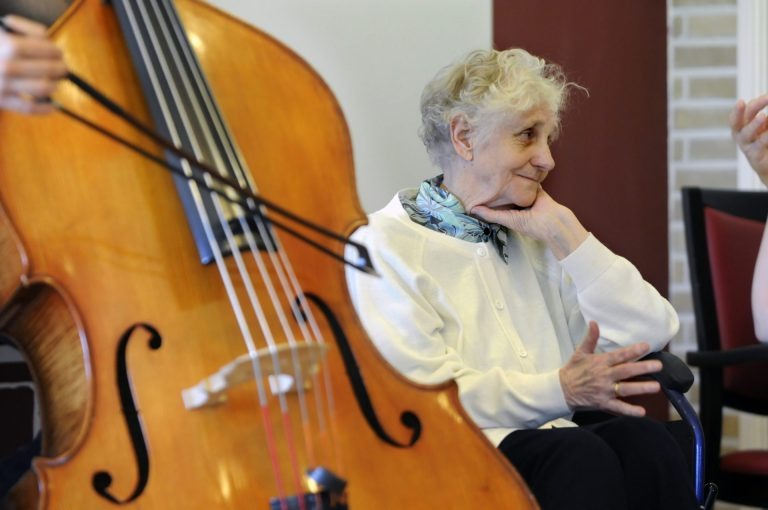
Muziek voor gezondheid en welzijn is er ook bij mensen thuis en bij bewoners van verpleeghuizen, revalidatiecentra en hospices. Zo brengt ‘Muziek aan Bed’ met het programma ‘Muziek aan tafel’ livemuziek bij dementerende bewoners van verpleeghuizen om samen te zingen, bewegen, dirigeren of luisteren.
Ook Mimic en Embrace zijn voorbeelden van organisaties die muziek in instellingen en in de thuissituatie aanbieden. Embrace richt zich bovendien op doelgroepen binnen het sociaal domein, bijvoorbeeld met het project ‘Slagkracht’ om sociale cohesie te vergroten. Zowel Embrace Nederland als Mimic verzorgen daarnaast workshops voor zorgprofessionals en mantelzorgers, waarbij zij leren hoe ze muziek kunnen integreren in de dagelijkse omgang met patiënten en familieleden.
Wat de wetenschap zegt
Er zijn aanwijzingen dat muziek bijdraagt aan herstel van ziekte, vermindering van pijn, stress, angst en depressie. Er zijn zelfs aanwijzingen dat muziek de reacties van het afweersysteem ten gunste kan beïnvloeden. In de thuissituatie kan muziek veel betekenen voor mensen met onder andere neurologische aandoeningen, zoals mensen die een beroerte hebben doorgemaakt, mensen met de ziekte van Parkinson of mensen met dementie.Specifiek bij mensen met neurologische aandoeningen lijkt muziek positieve effecten te hebben op de activatie van gebieden in de hersenen die betrokken zijn bij denken, voelen, beweging en emotie. In coronatijd gaven de hoogleraren Dick Swaab en Erik Scherder een interessant publiekscollege over ‘Muziek en het brein’ waarin de positieve effecten van muziek mooi uitgelegd worden. Muziek kan ook een krachtig middel zijn voor zorgmedewerkers en mantelzorgers: muziek geeft hen ontspanning en zorgt dat je even op een andere manier als zorgprofessionals samen bent en reflecteert. Onderzoeksresultaten van Mimic tonen verder dat muziek leidt tot een versterkt contact tussen patiënten en verpleegkundigen en een toename van compassie van verpleegkundigen.
Organisaties in Nederland op het gebied van muziek in de gezondheidszorg
Er zijn nog veel meer organisaties die muziek aanbieden in de gezondheidszorg, zoals ziekenhuizen, de langdurige zorg en het sociale domein. Zie bijvoorbeeld:
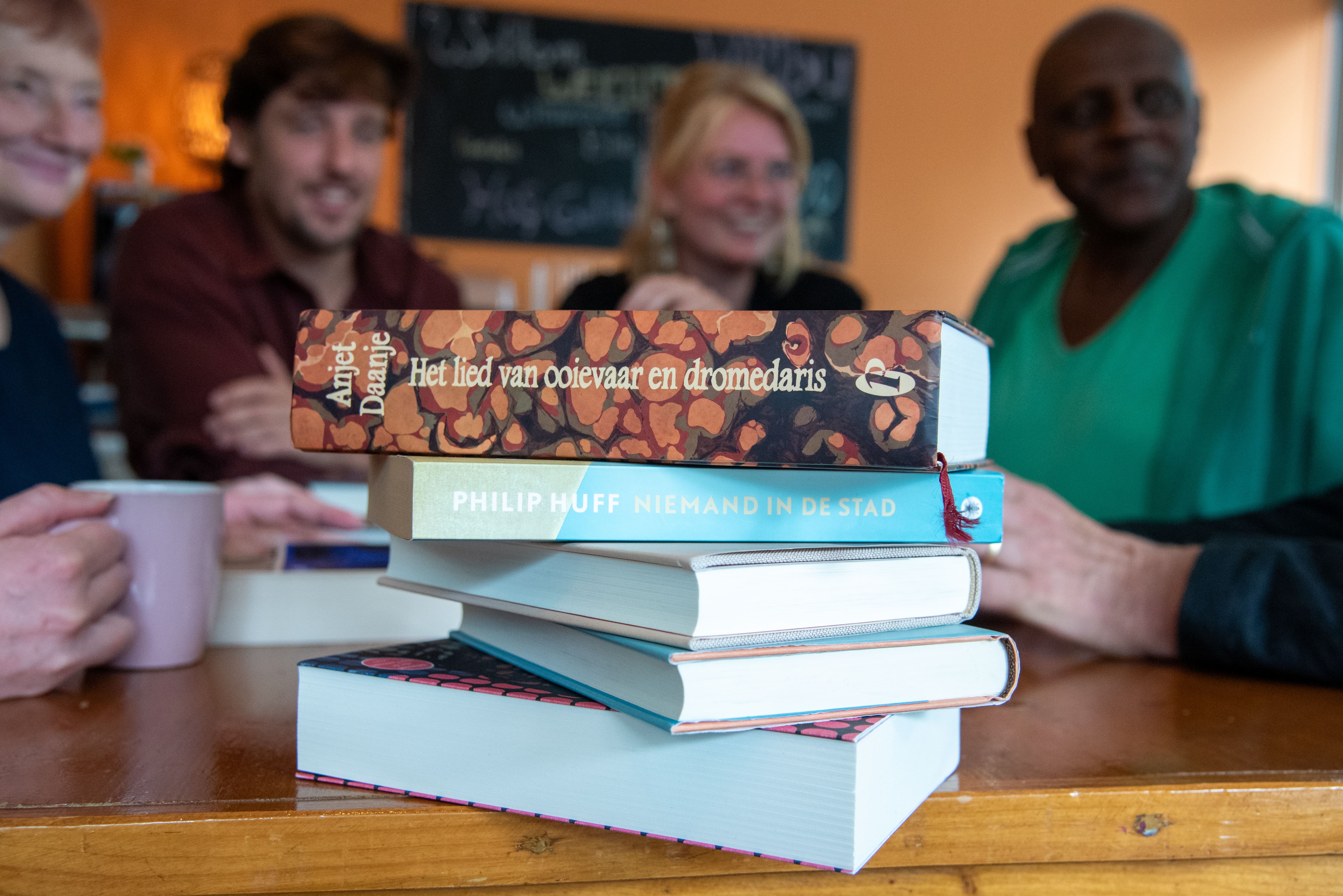
Over community: “De groep in de Korrewegwijk weerspiegelt de stad: divers, meertalig en voortdurend in beweging. Deelnemers verschillen in leeftijd en achtergrond en hebben uiteenlopende relaties met lezen en taal. Die verschillen zijn zichtbaar en bespreekbaar. Vragen uit de literatuur — zoals waar iemand nu écht vandaan komt — openen vaak gesprekken waarin meerdere perspectieven naast elkaar kunnen bestaan.”
Over veiligheid:
“Binnen de groep is er een bereidheid om verder te gaan dan het oppervlak. Als één iemand zich open uitspreekt, volgen anderen vaak vanzelf. Door kleine, aandachtige gebaren — samen thee drinken, luisteren zonder te onderbreken — ontstaat er een veilige ruimte waarin persoonlijke verhalen gedeeld kunnen worden.”
Over verbinding: “Op dinsdagavond is de groep een plek om samen even stil te staan. Mensen komen op zoek naar rust en verbinding. Met behulp van literatuur en poëzie richten we onze aandacht en maken we ruimte voor echte ontmoetingen.”
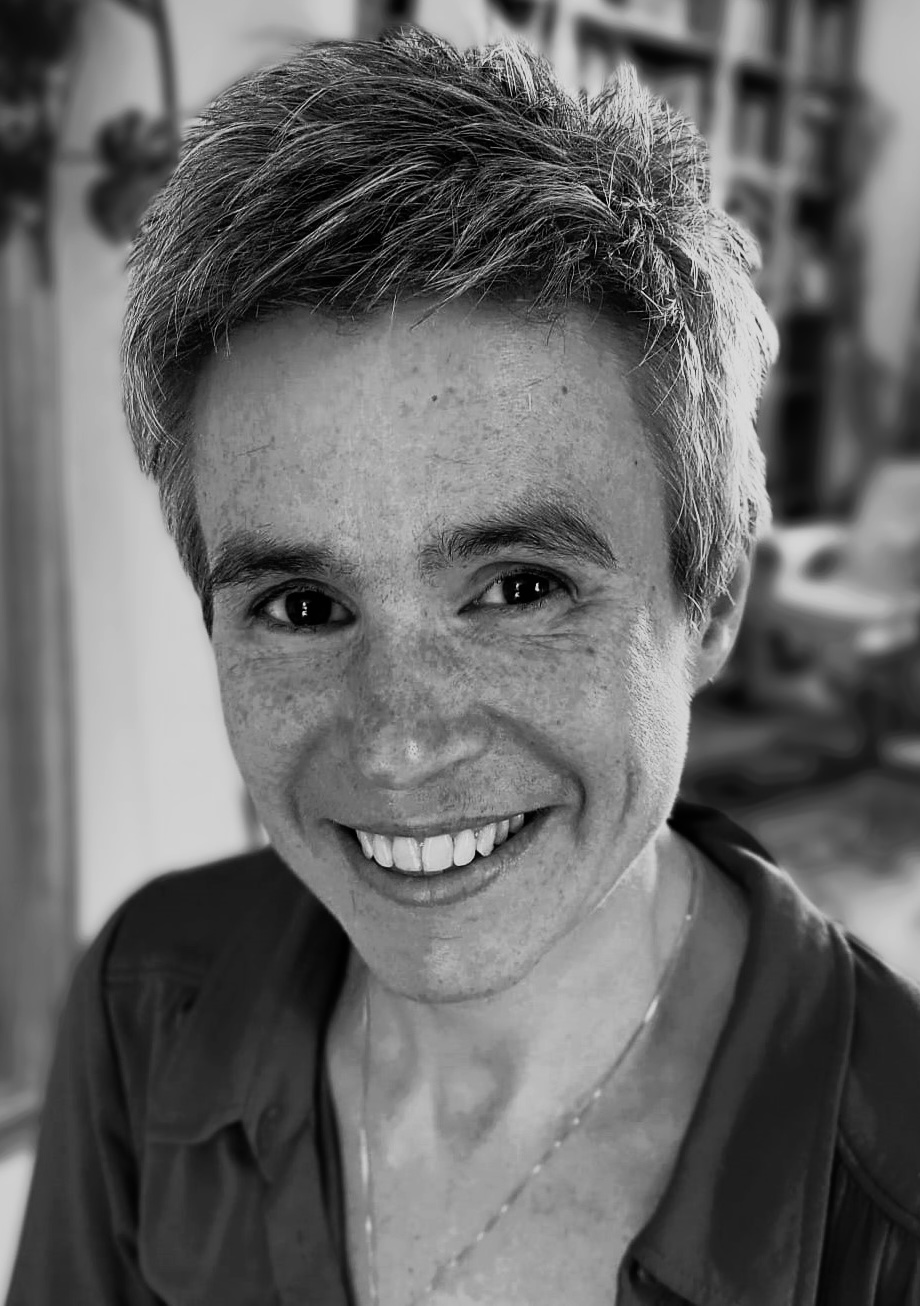
Over gedeelde interesses: “Noordlaren kent veel overlappende netwerken. Buur & Boek voegt daar een nieuw netwerk aan toe: een groep mensen die elkaar vindt in hun liefde voor verhalen en gedichten, en in hun nieuwsgierigheid om samen te ontdekken.”
Over betrokkenheid: “Veel deelnemers kennen elkaar al, maar het samen lezen en bespreken van verhalen en poëzie zorgt voor een andere vorm van nabijheid. Die nabijheid is waardevol, terwijl de sfeer open en licht blijft. Mensen voelen zich betrokken bij zowel de praktische kant van het project als bij de inhoud, en blijven daardoor actief meedoen.”
Over gedeelde ervaring: “In deze groep beleven we literatuur echt samen. Verhalen en persoonlijke reflecties blijven opduiken en verrassen — ook mij, als begeleider.”
.png)
Over het alledaagse: “We werken met een kleine groep zeer betrokken lezers die elkaar regelmatig ontmoet. De leeftijden lopen uiteen van begin dertig tot eind zeventig. Verhalen en poëzie vormden het vertrekpunt, maar gesprekken bewegen nu moeiteloos tussen literatuur en het dagelijks leven.”
Over delen: “In de loop van de tijd zijn de onderlinge relaties verdiept. Deelnemers delen meer van zichzelf, wisselen boeken uit en geven elkaar leestips. Sommigen zijn zelf gaan schrijven en delen hun teksten met de groep.”
Over zorg: “Na een paar bijeenkomsten zie je een vorm van zorgzaamheid ontstaan. Door gezamenlijke aandacht en samen werken groeit er een gevoel van samen zijn, dat steeds betekenisvoller wordt naarmate we blijven lezen en reflecteren.”
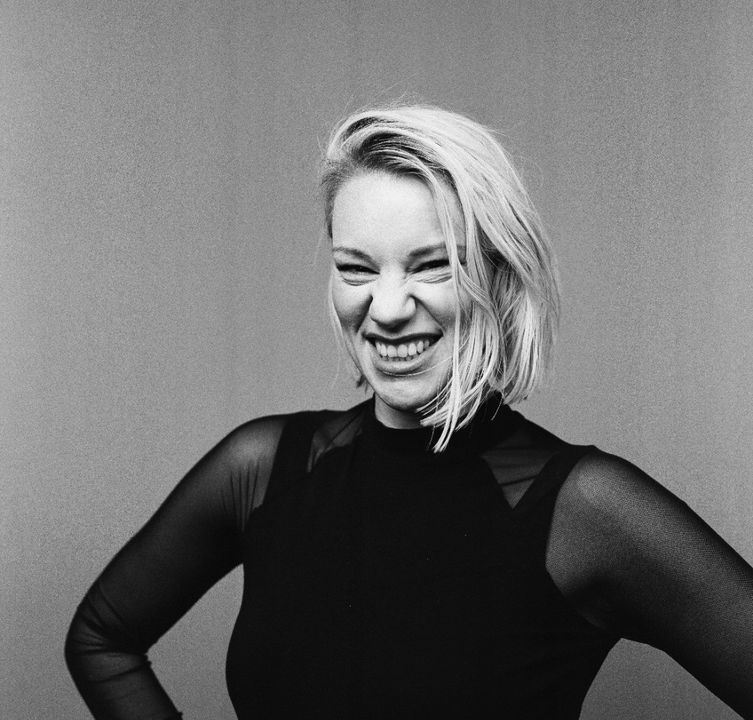
Over elkaar kennen: “Veel deelnemers in Finsterwolde kennen elkaar al jarenlang. De groep is warm, maar ook wat terughoudend. Persoonlijke verhalen komen geleidelijk op gang. Humor speelt een belangrijke rol en er wordt veel gelachen.”
Over kwetsbaarheid: “Kwetsbaarheid is geen doel op zich. Het gaat om samen zijn en delen. Vertrouwen wordt hier niet zozeer uitgesproken, maar gevoeld — in de sfeer, en in de manier waarop mensen geduldig, aandachtig en waarderend met elkaar omgaan.”
Over het onverwachte: “Er ontstaan onverwachte momenten: iemand leest een gedicht voor, of twee mensen die getrouwd zijn ontdekken dat ze allebei zijn gaan schrijven, zonder dat de ander dat wist. Zulke momenten worden met zorg ontvangen, en langzaam ontstaat er meer ruimte om te schrijven en te delen, in het ritme van de groep.”
KoffieCo | Koffie bij de coassistent is de podcast voor en door studenten Medische Wetenschappen van het UMC Utrecht.
Gewapend met een kop koffie gaan coassistenten Tessa, Tiara en Doris het hele land door om artsen te interviewen. In deze aflevering gaan ze in gesprek met Daphne Voormolen, foetaal geneeskundige en groot kunstliefhebber, over de door haar zelf opgezette Stichting Kunst Salon en haar boodschap over hoe waardevol het is om de link te leggen tussen gezondheidszorg en de culturele sector en kunst in te zetten voor het medisch onderwijs, behandeling en gezondheid en welzijn in het algemeen.
Aflevering 127: Kunst in de zorg

Podcastserie Amsterdam UMC | Waarom kunst in het ziekenhuis?
9 afleveringen
Waarom raakt een kunstwerk je als je in het ziekenhuis bent, kan een gedicht je tot tranen roeren, troost muziek of roept een verhaal fijne herinneringen op? Word je een betere dokter als je naar kunst kijkt? Waarom wil een kunstenaar graag een werk voor het ziekenhuis maken? En waarom betrekken wetenschappers kunst in hun onderzoek? Ook na een lange loopbaan als curator in het Amsterdam UMC kon Sabrina Kamstra lang niet al die vragen zelf beantwoorden. Daarom vroeg ze patiënten, kunstenaars, curatoren, artsen, wetenschappers en studenten te reageren vanuit hun eigen invalshoek en achtergrond. Dit monde uit in het boek Waarom kunst in het ziekenhuis? met essays van verschillende auteurs en hun reflecties in de gelijknamige podcastserie.
In deze podcastserie komen patiënten, medewerkers, bezoekers en kunstenaars aan het woord. De geselecteerde kunstenaars hebben allen in opdracht een werk voor het Amsterdam UMC gemaakt.
Luister via
Spotify
Apple podcasts
Springcast
.webp)
London Arts and Health | 6 episodes on social prescribing
The series from London Arts and Health uncovers arts in health practices across the city of London, speaking to practitioners, funders, artists and participants about how they are working and benefitting from arts and health. The podcast has been created to celebrate the launch of the Arts and Culture: Social Prescribing Myth Buster. The myth buster aims to help everyone understand the role of arts and culture in social prescribing.
Listen via
Spotify
Apple podcasts

The Arts for the Health of it podcast features more than 90 episodes.
Why do humans turn to the arts in times of crisis? How do the arts impact our health and well-being? What role do the arts play in the future of society?
Hosts Catherine Particini and Andrea Sanderson (VOCAB) help you integrate the arts into everyday health and wellness practices through information, tips, how-to’s, and expert-led interviews on the subject.
The show explores the role of the arts in society, with special attention to the function of the arts in wellbeing. In one episode you might hear a lighthearted discussion about the health benefits of laughter; another introduces you to a local programme that brings artists together for community projects. Especially if you want to learn more about projects in America, or you are interested in the workings of ‘arts on prescription’ programmes for instance, then this show is for you!
Listen via
Spotify

Creative Health Stories | 20 episodes
This series conveys what ‘creative health’ means to different people and in different contexts; how creativity helps to keep us well at a general, preventative level and how it supports chronic and long term health conditions. It highlights creative practices – professional, amateur and those we can do at home – which are helping to keep us well, and what needs to happen so that creativity, the arts and culture are more widely accessible.
This podcast series consists of interviews with professionals and scholars about their arts in health projects, findings, and experiences. The series also takes on the larger policy and ethical issues of arts in health, for example during the July 2024 episode in which Sir Michael Marmot was interviewed. Sir Michael discussed his work on the social determinants of health, and explains his argument that health equality requires creativity be available to everyone.
Listen to the podcast series
.webp)
Kunststof aflevering - NTR - NPO Radio 1
Neuroloog en expert op het gebied van de ziekte van Parkinson, Bas Bloem, gaat in gesprek met hoogleraar ouderenparticipatie, Tineke Abma, over de heilzame werking van kunst op onze gezondheid. Het onderzoek naar kunst-als-medicijn heeft de laatste jaren een enorme boost gekregen. Nu is het volgens Abma tijd om kunst een veel grotere plek toe te kennen in de medische opleiding, in de spreekkamer en in zorginstellingen. Maar hoe?

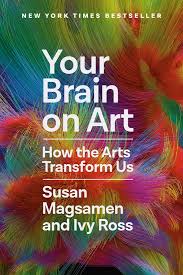
Do arts interventions and creative engagement really make a difference in our lives and our brains? Recently, Susan Magsamen, the author of Your Brain on Art: How the Arts Transform Us, and Director of The International Arts and Mind Lab at John Hopkins University School of Medicine, was interviewed to discuss this exact question.
Listen via
This episode of When Science Finds a Way explores the science behind the arts as a tool for wellbeing, from research on singing to lived stories of healing and empowerment. In 40 minutes, we hear from leading scholar Daisy Fancourt, from a mother who participated in Breathe Melodies for Mums, and from the ever-inspiring artist Kunle Adewale.
Listen via
In deze documentaire vertellen zorgprofessionals, makers, onderzoekers en organisaties hoe kunst in de praktijk bijdraagt aan gezondheid en welzijn. De film laat zien hoe Arts in Health op lokaal niveau verbinding brengt tussen zorg, welzijn en cultuur.
Meer dan dertig jaar internationaal onderzoek laat zien dat kunst bijdraagt aan positieve gezondheid en welzijn. Het werkt preventief tegen ziektes en versterkt de sociale kwaliteit van leven.
Meer informatie vind je op: De kracht van Arts in Health

This short and informative video from the UK discusses several arts in health projects, and research about the relationship between singing and mental wellbeing. The video features the experience of people with Parkinson’s disease who are part of a project that brings them on museum visits. The video includes clips from a music and movement workshop for people with Parkinson’s. We see them singing and dancing, and exploring what they can do rather than what illness prevents them from doing.
In this TEDx talk, Jill Sonke explores the relationship between creativity and care. As a practitioner, and current Director of the Center for Arts in Medicine at the University of Florida, Sonke brings nearly three decades of experience to describing the impact of artistic expression on wellbeing. Using many engaging examples, she masterfully lays out the case for the introduction of the arts in healthcare. Dancing, live-music, and powerful anecdotes are followed up by a straightforward summary of the evidence for arts in health.
This BBC News report interviews a patient at the Bethlem Royal Hospital psychiatric institution, about the art collection made by patients. The interviewee explores how drawing helps the patient to express themselves, and even points the way toward the end of treatment. "What arts does is give somebody free reign just to go into themselves and say this is what's like for me".
The Bethlem Royal Hospital continues to use art-making activities and hosts its own art gallery now too. The art gallery connects professional artists with patients and patients with art.
One critique of arts in health research is that study sample sizes are too small, and so cannot represent a broader population. In this video, Daisy Fancourt, a leading scholar in the field, discusses her large-scale quantitative study of a range of effects of arts engagement on wellbeing. Her team’s longitudinal analysis of national data showed improved mental, physical and cognitive outcomes.