Thank you! Your submission has been received!
Oops! Something went wrong while submitting the form.

Arts in health professionals use a variety of approaches to support the wellbeing of healthcare patients and staff, in hospitals and also in long-term care facilities. This might include anything from listening to recordings to a live performance at a patient’s bedside, or getting staff and families to sing and play along, and even improvising new music with patients and families.
In hospitals
Music for health projects are enhancing the well-being of patients and staff in hospitals around the Netherlands. For instance, the Boedijn music school and Dijklander Hospital are collaborating on a multi-year partnership called Muziekmaatjes (Music Buddies), using live music to create moments of relaxation, escape, and joy, among pediatric patients and their parents. Another initiative specifically designed for children is "De Liedjesfabriek’" (The Song Factory), in which children write their own songs under the guidance of a music professional. Children from all over The Netherlands get to write and record their own song on the topic they choose and in the style of music they want.
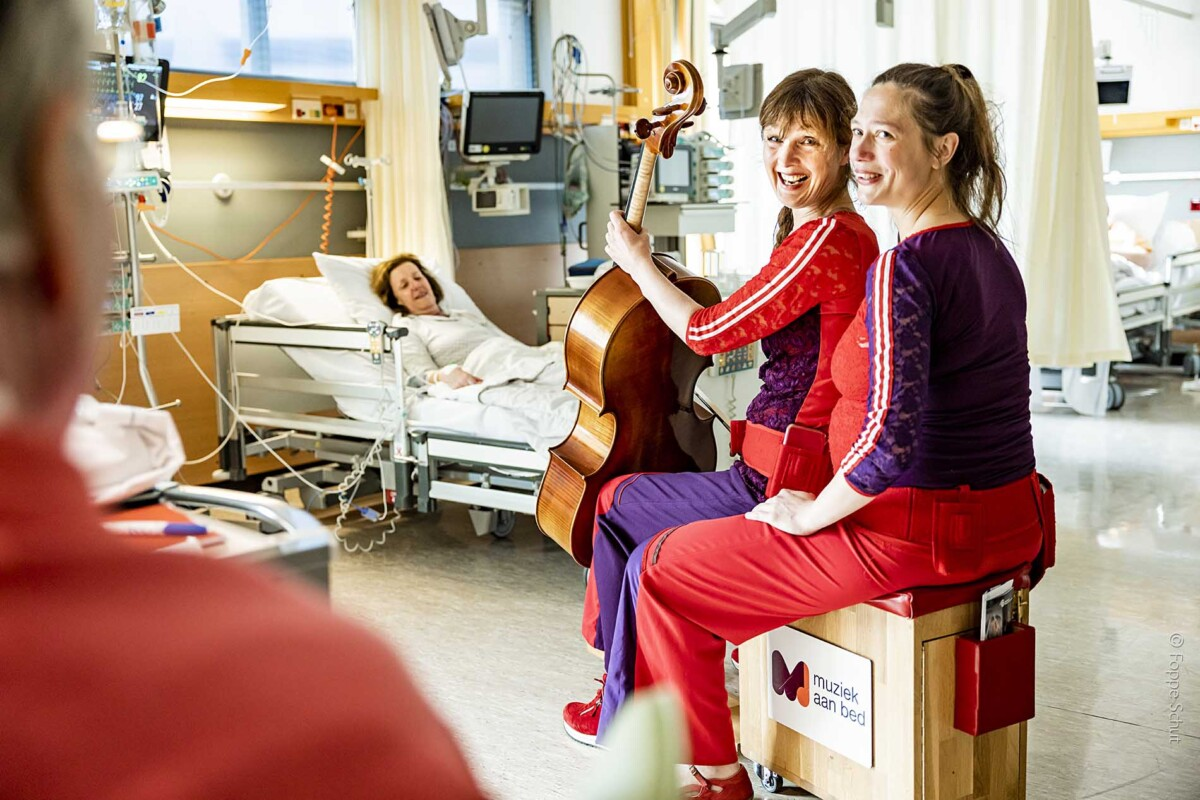
Music for health can even be found in hospital intensive care units. One example of this is the organisation MuzIC that works with interested hospitals throughout The Netherlands, supporting the recovery of patients, which can minimize the health impacts of an ICU stay. Also the organisation ‘Muziek aan bed’ (Music at the bedside) provides musical interventions on all hospital wards.
Outside the hospital
Music in health is also found in rehabilitation centers and hospices. For example, the organization Muziek aan Bed brings live music to people living with dementia in nursing homes through its Muziek aan tafel (Music at the Table) program, where everyone sings along, conducts, or moves. Professional Arts in Health organizations such as Mimic and Embrace Nederland encourage music-making in institutions as well as in private homes. Embrace Nederland also works to build social cohesion in the social domain, for example, with its "Slagkracht" project. Both Embrace Nederland and Mimic provide workshops for healthcare professionals and informal caregivers, teaching them to incorporate music into their daily interactions with patients and families.

What the science says
There is evidence that music contributes to recovery from illness, reducing pain, stress, anxiety, and depression. There are even indications that music can positively influence the immune system's responses.
In private homes, music in health professionals provide real support for people living with neurological conditions such as stroke, Parkinson's disease, or dementia.
Music appears to have positive effects on people with neurological disorders, activating the areas of the brain involved in thinking, feeling, movement, and emotion.
Research suggests that music can be a powerful tool to support the wellbeing of healthcare professionals and informal caregivers, by encouraging relaxation, building social connection, and helping staff to reflect on their work in new ways.
A study by Mimic suggests that music leads to stronger, positive contacts between patients and nurses, as well as an increase in compassion in nurses.
Professors Dick Swaab and Erik Scherder gave a lecture on Music and the Brain, which beautifully explains the positive health effects of music.
Organizations in the Netherlands in the field of Music in Health
There are many more organizations offering music in health services in hospitals, long-term care, and the social domain. Below is an overview:
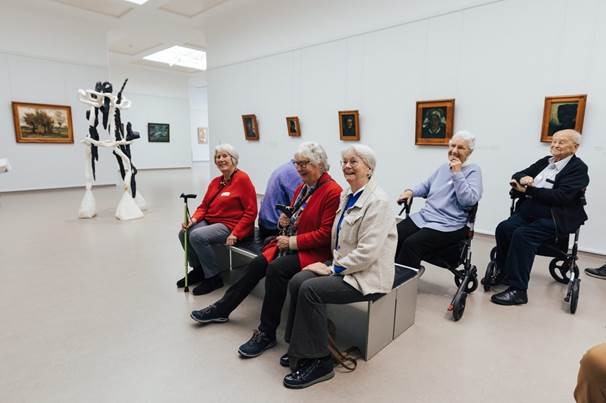
The arts and culture are an ongoing part of programming for AxionContinu’s clients in the Utrecht area. In addition to an extensive music programme — including a choir and the popular “apple pie concerts” — residents can take part in numerous cultural activities such as the Museum on Friday program. AxionContinu also collaborates with students from the Utrecht University of the Arts (HKU) on We Heart Society, in which music students and residents create new songs together.
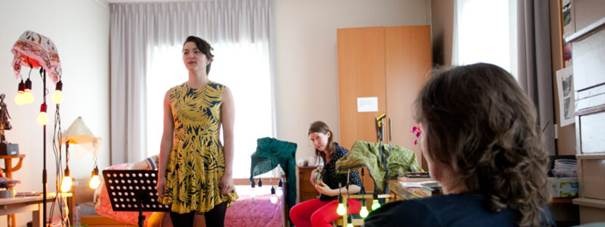
Vitalis (Eindhoven region) also offers a rich arts programme. The theatre project Trotse kameraden (“Proud Companions”) brings together residents, young people and local neighbourhood members to create a performance. Furthermore, there is AtelierSkon, a working place where care home residents, neighbours and other interested people upcycle cast-off materials to make beautiful arts and crafts.
In Amsterdam, Cordaan provides care for people with intellectual disabilities, and also for older adults living with dementia. Cordaan’s Art in Care program focuses on improving quality of life, for example with the ambulant kunstteam (mobile art team) in which visual artists, writers, dancers and others use creativity to engage with Cordaan clients in the community, for example by visiting a museum together or making an artwork. Cordaan’s Mulltimedia digitale kunst (Digital Multimedia Art) program brings artists and people with intellectual disabilities together, to practice photography, filmmaking and graphic design.
Dans op Recept (Northern Netherlands and Limburg) provides classes and workshops in creative movement and dance for older adults and people with chronic conditions, often within residential care settings. Dans op Recept also trains care professionals to integrate dance into their work. The dance company Leefmeesters, a part of Dans op Recept, creates dance pieces for public performance, in which professional dancers collaborate with people living with chronic illnesses.
Meerdandans (North Holland) offers dance lessons for people with Parkinson’s disease and acquired brain injury. Requests from other regions are referred to teachers within their network.
Het Huiskamerdanspaleis (Living Room Dance Palace) organises dance ‘moments’ for adults with dementia in their own, warmly decorated, surrounding. Instructors are present to guide participants. The work of Het Huiskamerdanspaleis also includes a special program for fall prevention: Het Danspaleis Valpreventie.
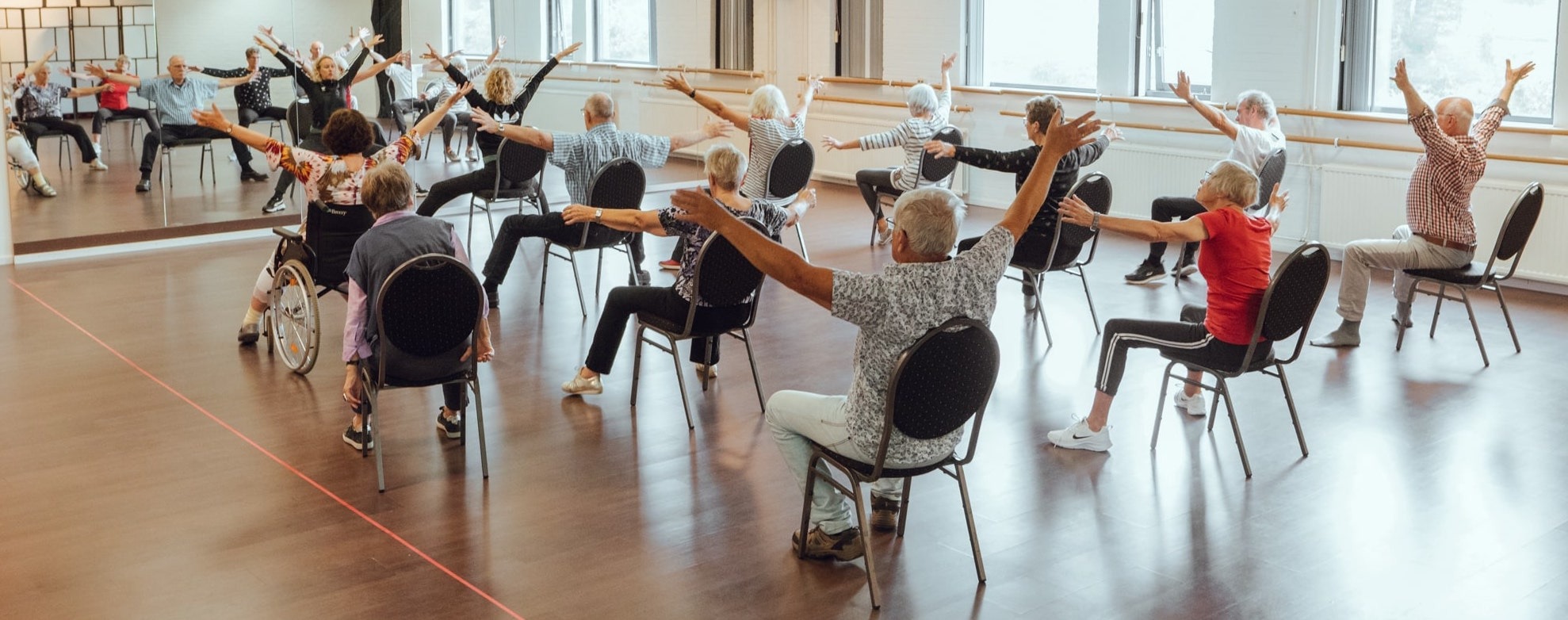
Even when they do not aim to produce therapeutic outcomes, participatory arts programs can provide positive support for wellbeing. Marc Vlemmix Dance offers creative movement classes for people living with MS, rheumatism and Parkinson’s. Participants are prepared for creative movement by teachers who help people with chronic conditions to build strength, balance and flexibility.
Switch2Move combines music and movement for people with Parkinson's disease, dementia, MS or other chronic illnesses. People can join the lessons in the regions of Amsterdam, Tilburg and Den Bosch. People who are not able to leave their homes can join the dance lessons through video recordings.
Theatre Veder performs shows in care homes, especially for demented elderly people, and using the Veder Contactmethode. In their performances, artists use poetry, music and theater to engage the long term memory of participants. Staff at Theatre Veder also train care professionals to use the Veder Contactmethode to improve communication with clients.
Cliniclowns is the longest-running Arts in Health program in the Netherlands, with ongoing programs in nearly every hospital in the country. Cliniclowns’ highly trained professional performers use play and music to engage children and healthcare staff find a sense of fun even in tense care environments. Cliniclowns has also developed a successful program for adults living with dementia.
Many museums have special programs at the intersection of art, healthcare, and well-being, see for example the Museum van de Geest, Rijksmuseum and Mauritshuis. For more information, you can also contact the Museum Association.
There are also initiatives that older adults with health issues to experience visual art in a meaningful way, such as the MuseumPlusBus. The program brings traveling exhibitions of high-quality reproductions to care homes. The program also arranges transport that brings elderly people to museums.
KOO (The Hague) uses multiple arts strategies to engage elderly people living with chronic illnesses. Kleurenparade is a series of five workshops that introduce seniors to a variety of art forms. During the creative activities, participants are encouraged to discuss their experiences and inspirations. Kunstknuffel uses creative activities to “encourage meaningful artistic experiences where memories can take shape.” All activities are guided by specially trained instructors.
Amphion Cultuurbedrijf is part of the programme Long Live Art, which offers a wide range of activities for residents of care facilities in the Achterhoek region. Their Cultuur met zorg (Culture with Care) program places resident artists in care centers, leading small-scale activities such as felting, dancing and photography, and theatre.
In 2019, the World Health Organization (WHO) published an extensive review of research regarding the impact of the arts on well-being. 30+ years of research on Arts in Health supports a compelling argument that the arts support wellbeing.
A selection of the findings:
The Dutch Ministries of Education, Culture & Science (OCW) and Health, Welfare & Sport (VWS) collaborate with Stichting RCOAK, Fonds Sluyterman Van Loo in the programme Arts and Culture in Long-Term Care and Support. One of the goals is to map existing art initiatives in order to identify the success factors that contribute to an effective and sustainable offer. Amsterdam UMC and the Leyden Academy on Vitality and Ageing also joined forces in an Art in Health program to research the value of art in long-term care by describing existing art initiatives and evaluating their impact.
Participatory arts in health projects focus on supporting well-being. The goal is to help people relax, feel less alone, and to live in an active, curious, and engaged way. For example, artists encourage art-making among patients in hospitals, among healthcare workers, and with people in the community. While there is some training for participatory arts in health practice in the Netherlands, it currently has no national certification or professional register.
Creative arts therapy can be a form of treatment as well as support for general wellbeing. Most often, creative arts therapies have specific health goals. Creative arts therapists use art-making as treatment, for example, for psychological issues or rehabilitation. Creative arts therapists can do participatory arts as well, but they are trained and nationally registered as therapists.
More and more arts practices are finding a place in the lives of long-term care residents, and numerous wonderful initiatives are under way. Other examples include the work of artists Sjaak Langenberg and Rose de Beer, who are setting up unique initiatives across the Netherlands. Dutch arts in health initiatives vary in form, but they all create space for contact, imagination and wellbeing.
There are plenty of examples at the organisational level too. Vitalis in Eindhoven has worked with an art coordinator for 25 years and currently employs three. AxionContinu has 15 years of experience working with an art coordinator. In Amsterdam, Cordaan's Ambulant Kunstteam brings artists into neighbourhoods, where they make art together with residents. Art programmes can also be found in mental healthcare and in care for people with disabilities, such as at Lister and Reinaerde.
Arts in Health Groningen is using pilot projects to build a permanent place for the arts in healthcare in the North, for example with arts programs for staff at the University Medical Center Groningen (UMCG) and through the Buur & Boek community program with NOORDWOORD, using shared reading and creative writing to bring neighbourhood residents together. At Dijklander Hospital too, live music is becoming a regular part of in-patient care.
Arts in health programmes often begin as pilots, which are opportunities to make visible what effects the arts can have on people’s wellbeing. Arts in health pilots answer the questions of sceptics, and help planning for permanent, sustainable programmes.
If you are thinking about creating a participatory arts in health pilot in an organisation or institution, begin by taking note of where the arts might support well-being as part of the regular day. Find others who are excited by the idea, and who can help you make connections. Decide who the pilot’s participants will be. Start small, create a budget, and document all of your work.
If you want to propose a project in a community, long-term care facility, or hospital, begin by finding out as much as you can about what activities already happen there, and learn how existing programs shape the lives and work of people there. Are there particular challenges being addressed there that you could support? What types of care do the people there actually need? Find people who are open to your idea and who will connect you to others in the community or organisation.
You don't have to develop an arts in health project from scratch. A good way to begin is to imagine how the work that you already do could give care and support to people who need it. Whatever art form or approach you use, it should be appropriate for the participants and the setting.
Arts in Health Netherlands connects people and organisations committed to building the field in this country. Our work is organised around four themes: practice, research, policy, and education. Our members bring their experience, knowledge, and networks to one or more of those themes. This is building a solid field in the Netherlands, step by step. While practitioners from many organisations are involved in AiHN, three organisations are currently taking the lead in building content for the practice theme:
To gain a better understanding of practice in the Netherlands, the practice group has developed an inventory of practices that assembles over 220 arts in health initiatives. The report shows where initiatives have taken place, the types of collaborators involved, and the themes, target groups, and types of funding. It also shows which factors contribute to successful and sustainable arts in health practices. Together, they offer an initial overview of where the field currently stands and what is needed to develop it further.
Which factors make arts in health successful? Based on a survey of professionals from the care, well-being, and culture sectors, this report describes effective elements, preconditions, and recommendations for sustainable practice.
Want to actively contribute to Arts in Health? Soon you will be able to join the alliance. Sign up for our newsletter to stay informed.
Arts in Health often starts in practice, but the decisions around it determine whether initiatives can continue to grow. Many projects show how art can contribute to health, wellbeing, and quality of life. At the same time, long-term integration remains difficult because funding, collaboration, and responsibilities are often fragmented.
The report Kunst in zorg – wegen naar verankering explores where existing laws and regulations offer opportunities to organise Arts in Health in a more sustainable way. From municipalities and health insurers to welfare organisations and long-term care, the report shows that there is often more possible than people expect. It also highlights where collaboration between healthcare, culture, and policy still runs into challenges in practice.
This report was carried out by VitaValley on behalf of Arts in Health Netherlands.

In 2025, an Arts in Health pilot took place at the University Medical Centre Groningen (UMCG). Five professional artists collaborated with staff from five different departments to develop participatory art projects aimed at supporting wellbeing in the workplace.
The pilot was initiated by Arts in Health Groningen (AiHG) in collaboration with UMCG and theatre company Peergroup.
In the growing field of Arts in Health, trained artists use creative methods to support the wellbeing of healthcare workers, patients, and to promote healthy living. Arts in Health does not replace care, but supports it.
This pilot focused on supporting the wellbeing of UMCG staff. In response to the growing pressures on healthcare staff—high workload, burnout, and compassion fatigue—the projects created space for connection, inspiration, and rediscovering meaning in work.
Artists and departments were carefully recruited and matched. For five months, the artists became part of their UMCG departments:
Each of the UMCG departments got to know its artist by bringing them into the staff’s work and routines. As the artists got to know their departments, they introduced artistic activities that staff did on breaks, during quiet times in the work day, and even after hours. Staff reported that the creative activities helped get to know their colleagues beyond their professional roles, as people.
Throughout the pilot, artists, programme makers, the coordinator and researchers met regularly in a learning community. These sessions provided space for reflection, exchange and mutual support.
Alongside the pilot, an evaluation was conducted to understand the experiences of participants, and what meaning the project had for staff in the context of work.

As the final outcome of the pilot, an immersive audiowalk through the UMCG was developed, in collaboration with theatre company Peergroup. Titled Adrenaline, the walk gives staff and the general public the opportunity to experience the pilot’s theme of, ‘see the human being’ first hand, while exploring the actual halls and rooms of the hospital.
Wearing headphones, visitors are individually guided through the UMCG and granted access to spaces normally unavailable to the public. The hospital itself acts as the narrator, sharing stories about the patients and staff, policymakers grappling with transitions and renovations, and healthcare professionals working under immense pressure.
Adrenaline invites visitors to experience the hospital from a different perspective and to reflect on the human aspect of care.
Adrenaline can be visited at the UMCG from February 25 to March 22, 2026.
The pilot is led by programme makers Kirsten Krans & Dirk Bruinsma, researcher/trainer Ferdinand Lewis, pilot coordinator and researcher Nina van den Berg, and student assistant Twan Tromp.
Strategic guidance and supervision are provided by the UMCG steering committee, chaired by Michiel Kahmann. Members: Barbara van Leeuwen, Hanneke van der Wal-Huisman, Jaap Tulleken, Bertrand de Jong, Edwina Doting, Joke Fleer, and Mark Dessing.
UMCG, University of Groningen, Aletta Jacobs School of Public Health, Peergroup, and Nationaal Programma Groningen.
An inventory of 220 recent or ongoing arts in health initiatives has been created, providing a first snapshot of the field. The inventory documents where projects happened, who they reached, and how they worked, across a range of settings. The inventory provides a framework for building a nationwide database of arts in health projects, and to forge important alliances across sectors.
Many more projects exist than were included in this report. The relatively strong representation of North Brabant largely reflects the fact that the inventory was conducted by Kunstloc Brabant, where an extensive regional network was already in place.
Arts in health initiatives are everywhere. In community settings, long-term care, and hospitals, but also in places you might not expect: schools, libraries, museums, primary care, hospices, mental health facilities, and refugee centres. The projects engage people of all ages, including adults, older people, young people, and children, and they work with informal caregivers and healthcare professionals.
Arts in health is a very diverse field. Although visual arts and music projects appear most often in the inventory, it also includes theatre, photography, dance, social design, graphic design, literature, textiles, film, new media, and technology. A clown on a children's ward, a poet working with nursing home staff, or people making a quilt together: these are all examples of arts in health.
One of the most striking findings is that successful initiatives often involve collaborations between different sorts of partners. Artists working alongside healthcare organisations, community organisations, and cultural institutions, in a diverse but balanced mix. Only a handful of initiatives reported having no collaborative partners.
This suggests how arts in health really works in collaboration across sectors, in networks where the arts, healthcare, and community wellbeing come together. These are people from different backgrounds, finding new ways to support wellbeing, together.
The inventory also tells another story. Beneath all these initiatives is the reality that many arts in health programs that want to be permanent are dependent upon temporary funding sources.
Most of the initiatives surveyed relied on funding lasting for about a year. This means that grants expire and must be reapplied for, again and again. Only 37 initiatives reported being funded securely for more than three years. The other initiatives move from one funding to the next. It is a cycle of short-term funding: plenty of activity, but little solid ground from which to offer permanent programming.
There is one particularly interesting pattern: initiatives with a cultural coordinator on staff are more likely to have long-term funding. In other words, having someone whose role is to connect the arts and healthcare appears to go hand in hand with practices that last.
The inventory does not evaluate program quality or impacts, since the scientific literature and professional reports have already established that arts in health is a viable field in the Netherlands. Rather, the survey documents how people from diverse sectors are working together to expand and sustain the practice of arts in health in the Netherlands.
Curious to explore the findings? Download the first national inventory by Arts in Health Netherlands to discover where arts in health is happening across the Netherlands, how the field is organised, and what opportunities lie ahead.
Why does art become part of everyday care in one organisation, while in another it remains a temporary project? In one hospital an arts coordinator walks the wards, perhaps leaving a book by a patient’s bed, or bringing a musician onto the ward, or connecting healthcare professionals with an arts workshop. In another hospital, arts activities depend on volunteers. At one nursing home a foundation organises more than a hundred concerts each year for patients and staff, while another nursing home has no budget for it.
For its 2026 report on the key ingredients of successful arts in health practice, the Practice Working Group of Arts in Health Netherlands surveyed people who work in arts in health every day: in nursing, arts coordination, social design, and community arts centre administration. The surveys revealed many differences among programs as well as similarities, providing insight into what helps to make an arts in health program successful.
Almost everyone surveyed reported that arts in health programs need a ‘connector’: someone who can see opportunities for arts in health programming, who can also bring people together to share inspiration and develop a project. Often the connector is without formal authority, promoting new programs in the form of small pilots. A committed and connected team is required to get such pilots off the ground, and to keep them going.
The connector should have an understanding of both the arts and healthcare. Part of the connector’s role is to support a program’s artists while involving healthcare professionals, building relationships across the organisation, and helping leaders to see what arts in Health can bring to care. When progress is slow, the connector stays visible among healthcare staff and administration, advocating for the project.
Successful projects and programs depend upon people who take arts in health to heart. Social designers Sjaak Langenberg and Rosé de Beer describe their approach as “being present”. The connector is an advocate, who always shows up, asks the right questions, and builds connections.
The survey focused on ‘participatory’ Arts in Health practice, rather than creative arts therapies. While therapists use the arts to help patients achieve therapeutic outcomes, participatory artists support wellbeing without predicting health outcomes. One thing that survey respondents all agreed upon was that a strong arts in health practice depends on trained artists who can work in a professional manner. The artist must know how to encourage non-artists to explore their creativity, while also providing challenges and new perspectives.
In the Netherlands, organisations that staff Arts in Health programs understand the need for training. For example, Galerie Atelier Herenplaats, which prefers to work with professionally trained artists. Stichting Appeltaartconcerten carefully selects all its musicians, and invests in their development. CliniClowns provides an extensive training program for its performers, and encourages continued training at later stages of their artists’ careers.
Making room for the arts takes organisational and even community support. Even though arts in health pilot projects can produce inspiring outcomes, the practice only becomes sustainable when it is embedded in its organisation or institution. Embedding looks different in each practice context. For example, the arts coordinator for GGzE has a permanent position in the organisation. Vitalis now has people on its management team who champion arts in health. Amsterdam UMC has its own arts department to support Arts in Health projects.
The survey suggests that arts in health programs also require the support of senior leadership in healthcare organisations and institutions. Moreover, support for programs grows best when leadership sees the arts activities and their outcomes for themselves.
Experience of arts in health changes perspectives. When an organisation’s leaders directly experience how the arts can support wellbeing among staff or patients, they are more likely to recognise the value of arts in health.
Other ways to make arts in health projects visible is through exhibitions, descriptive videos, participants’ stories, and concerts. Participants feel proud, colleagues become engaged, and decision-makers see why the work should continue.
Marike Soeterik, project lead for Arts and Wellbeing in Amsterdam, suggests that a short video often has more impact than a lengthy presentation. When an actual participant shares their own experience at a community meeting, people immediately understand why this work matters.
Artists bring more than creative activities. They also help people see each other in new ways.
One example of this is Progress vs Regress by artist Melanie Bonajo. Bonajo worked with nursing home residents to create a film about their lives, their thoughts on technology, and their hopes for the future. The film focused on the residents themselves––as people––rather than on their care needs.
That shift in perspective can change an organisation, as care teams see residents differently, and leaders begin asking new questions. Because the arts can change perspectives, some artists see themselves not only as makers, but also as agents of change, helping healthcare professionals discover new possibilities, through experimentation, reflection, and learning together in arts programs.
Embedding Arts in Health in an organisation also requires sustainable funding. In practice, a combination of funding sources often proves the most resilient. Healthcare budgets, public and private funders, municipalities, and cultural partners can reinforce one another, making it possible to build a sustainable, lasting project.
The Dutch report ‘Werkzame elementen in kunst, zorg en welzijn’ explores the factors that professionals say help arts in health initiatives succeed and endure. Download the report to explore the insights, practical examples, and recommendations from the field.
The report Key Elements for Embedding the Arts in Health and Care was written by Atty Bax (Kunstloc Brabant), Joyce Vlaming (AxionContinu) and Finn Minke (LKCA) for the Practice working group of Arts in Health Netherlands. It is based on interviews with thirteen professionals working in hospitals, long-term care and community settings.
European Culture and Health Hub brings arts and culture into EU health agenda
The Netherlands and Europe are facing growing pressures on mental health and wellbeing, alongside rising levels of loneliness, social isolation, and the challenges of an ageing population. The arts and culture can play a role in addressing those issues, though that is still overlooked in mainstream health policy. With the launch of the European Culture and Health Hub, a new Horizon Europe project, twenty organizations from thirteen European countries will collaborate over the next three years to strengthen the connection between culture, healthcare, and the social domain. Coordinated by Turku University of Applied Sciences (Finland), the project brings together 20 organisations including 15 project partners and 5 associated partners, across 13 European countries. Arts in Health Groningen will represent the Netherlands in the consortium.
Culture as part of health and wellbeing
The European Commission’s 2025 report, Culture and Health: Time to Act, calls on the EU and Member States to support population health and wellbeing with cultural collaborations across the health, culture, and social domain sectors. A three-year Horizon Europe project called the European Culture and Health Hub launches in June 2026 to facilitate such arts in health collaborations.
According to research from the World Health Organization, the arts can support psychological wellbeing and strengthen community resilience by helping people connect with the places they live, and with each other. Participation in the arts is also linked to improved mental and emotional health and improved health resilience. The Netherlands has begun using that evidence to steer arts in health projects, education, and research that advances the Dutch field.
Project kick-off in Groningen
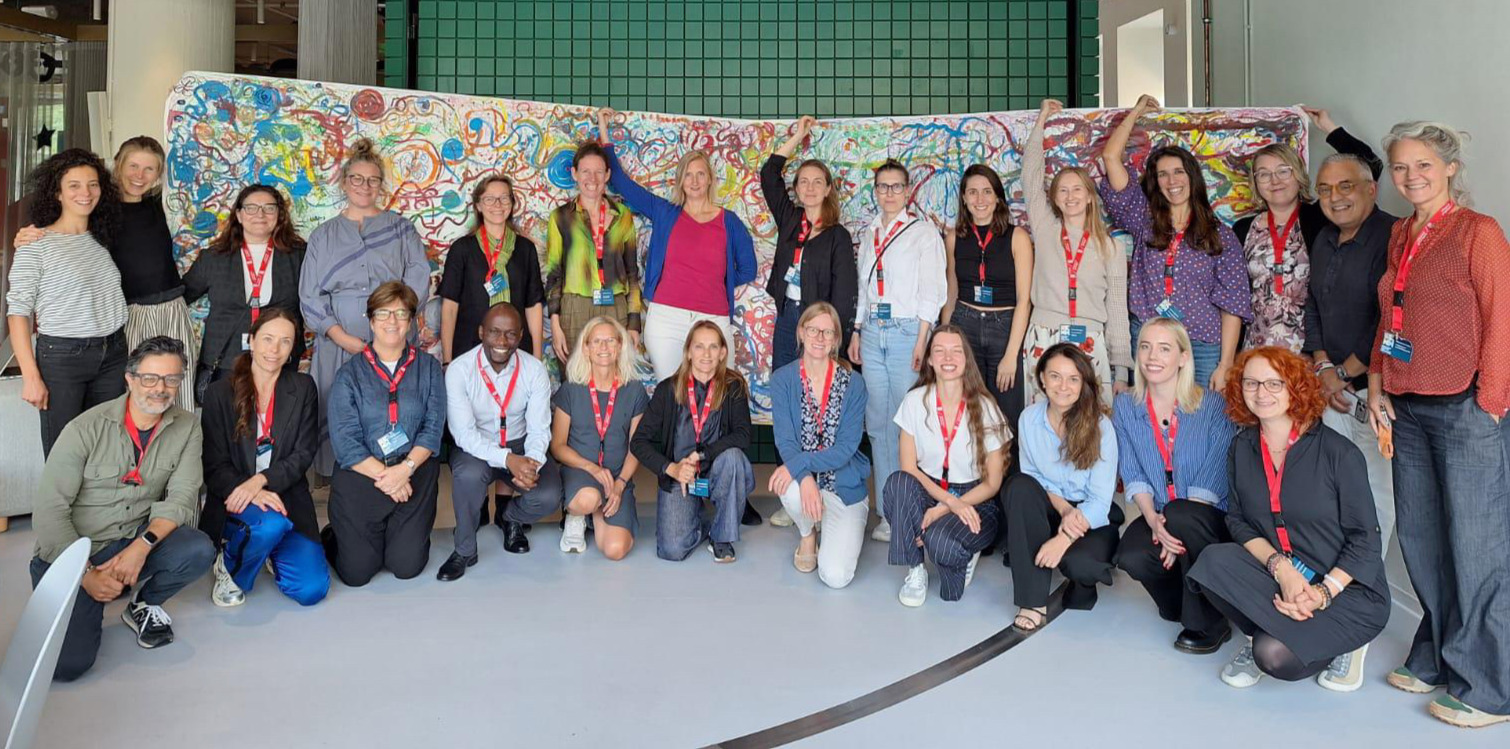
Arts in Health Groningen represents the Netherlands in this European consortium, and will host the kick-off of the European Culture and Health Hub on From September 1-3, Arts in Health Groningen hosted the kick-off of the European Culture and Health Hub (ECHH) in Groningen. The kick-off started on September 1 with a public lecture by Daisy Fancourt, Professor at the UCL Institute of Epidemiology and Health Care, UNESCO Chair in Arts & Global Health, and Director of the World Health Organization Collaborating Centre on Arts and Health. The lecture was organised in collaboration with Studium Generale Groningen.
The following two days, project partners met at the Aletta Jacobs School of Public Health of the . Through workshops, interactive sessions and discussions, partners got to know each other, shared experiences and perspectives, and started building the foundations for collaboration across culture, health and the social sector. Together, they began working on strengthening the evidence base, exploring cross-sectoral practices, and developing practical tools and approaches to support the field.
“Arts engagement is increasingly recognised as a health-promoting behaviour, and there are some fantastic programmes happening across the European region putting the evidence base into practice. ECHH is poised to catalyse the field by synthesising and advancing the evidence base and translating the evidence into new programmes and policy.” says Professor Daisy Fancourt, University College London
An international hub to accelerate national change
The European Culture and Health Hub will build connections among EU arts in health researchers, policy makers, and practitioners, and facilitate innovative health collaborations. The Hub will be developed with policymakers, practitioners, researchers and local communities, to ensure that it responds to real-world needs. The Hub will map the scientific evidence, and gaps in that evidence, for the arts in health field. It will also offer practical policy guidance for national, regional, and local decision makers.
Horizon activities will include evaluating arts in health projects in multiple countries (including the Netherlands), supporting regional capacity-building, and helping stakeholders implement evidence-based practice.
“Decision-makers in the sectors of healthcare and culture were traditionally quite separate, but now recognise that they have shared values, and that they can help each other,” says Dr. Ferdinand Lewis, Director of Science and Education for Arts in Health Groningen. “The Horizon project and the Hub will be a big step toward making real collaborations between researchers, policy makers, and practitioners from both sectors.”
Project partners
The project is supported by various associated partners who contribute expertise, policy engagement, and cross-sector collaboration: Arts + Health Ireland / Réalta (Ireland), Secretariat of the Northern Dimension Partnership on Culture (Latvia), United Cities and Local Governments (Spain), UNESCO (France), and the Northern Dimension Partnership in Public Health and Social Well-being (Sweden).
More information
Interested organisations, professionals and artists are welcome to fill out this form to receive updates about the project.

This episode of The Health Curve Podcast explores the connection between art, creativity, the brain, and health. Host Dr. Jason Arora is joined by Susan Magsamen, a researcher and educator specialising in the relationship between the arts and the brain; Ruth Katz, a health policy expert focused on health, medicine, and society; and Sarah Lyding, President of The Music Man Foundation, which supports the use of music and the arts to improve health and wellbeing. Together, they discuss how music, movement, storytelling, and creative expression can influence brain function, reduce stress, support emotional wellbeing, and contribute to recovery. From dance and Parkinson’s to music and Alzheimer’s, the growing field of NeuroArts is turning something many of us intuitively feel into an area of scientific research. The conversation also asks a bigger question: what if the arts are not simply a luxury, but an essential part of health and wellbeing?
KoffieCo | Koffie bij de coassistent is de podcast voor en door studenten Medische Wetenschappen van het UMC Utrecht.
Gewapend met een kop koffie gaan coassistenten Tessa, Tiara en Doris het hele land door om artsen te interviewen. In deze aflevering gaan ze in gesprek met Daphne Voormolen, foetaal geneeskundige en groot kunstliefhebber, over de door haar zelf opgezette Stichting Kunst Salon en haar boodschap over hoe waardevol het is om de link te leggen tussen gezondheidszorg en de culturele sector en kunst in te zetten voor het medisch onderwijs, behandeling en gezondheid en welzijn in het algemeen.
Aflevering 127: Kunst in de zorg

Podcastserie Amsterdam UMC | Waarom kunst in het ziekenhuis?
9 afleveringen
Waarom raakt een kunstwerk je als je in het ziekenhuis bent, kan een gedicht je tot tranen roeren, troost muziek of roept een verhaal fijne herinneringen op? Word je een betere dokter als je naar kunst kijkt? Waarom wil een kunstenaar graag een werk voor het ziekenhuis maken? En waarom betrekken wetenschappers kunst in hun onderzoek? Ook na een lange loopbaan als curator in het Amsterdam UMC kon Sabrina Kamstra lang niet al die vragen zelf beantwoorden. Daarom vroeg ze patiënten, kunstenaars, curatoren, artsen, wetenschappers en studenten te reageren vanuit hun eigen invalshoek en achtergrond. Dit monde uit in het boek Waarom kunst in het ziekenhuis? met essays van verschillende auteurs en hun reflecties in de gelijknamige podcastserie.
In deze podcastserie komen patiënten, medewerkers, bezoekers en kunstenaars aan het woord. De geselecteerde kunstenaars hebben allen in opdracht een werk voor het Amsterdam UMC gemaakt.
Luister via
Spotify
Apple podcasts
Springcast
.webp)
London Arts and Health | 6 episodes on social prescribing
The series from London Arts and Health uncovers arts in health practices across the city of London, speaking to practitioners, funders, artists and participants about how they are working and benefitting from arts and health. The podcast has been created to celebrate the launch of the Arts and Culture: Social Prescribing Myth Buster. The myth buster aims to help everyone understand the role of arts and culture in social prescribing.
Listen via
Spotify
Apple podcasts

The Arts for the Health of it podcast features more than 90 episodes.
Why do humans turn to the arts in times of crisis? How do the arts impact our health and well-being? What role do the arts play in the future of society?
Hosts Catherine Particini and Andrea Sanderson (VOCAB) help you integrate the arts into everyday health and wellness practices through information, tips, how-to’s, and expert-led interviews on the subject.
The show explores the role of the arts in society, with special attention to the function of the arts in wellbeing. In one episode you might hear a lighthearted discussion about the health benefits of laughter; another introduces you to a local programme that brings artists together for community projects. Especially if you want to learn more about projects in America, or you are interested in the workings of ‘arts on prescription’ programmes for instance, then this show is for you!
Listen via
Spotify

Creative Health Stories | 20 episodes
This series conveys what ‘creative health’ means to different people and in different contexts; how creativity helps to keep us well at a general, preventative level and how it supports chronic and long term health conditions. It highlights creative practices – professional, amateur and those we can do at home – which are helping to keep us well, and what needs to happen so that creativity, the arts and culture are more widely accessible.
This podcast series consists of interviews with professionals and scholars about their arts in health projects, findings, and experiences. The series also takes on the larger policy and ethical issues of arts in health, for example during the July 2024 episode in which Sir Michael Marmot was interviewed. Sir Michael discussed his work on the social determinants of health, and explains his argument that health equality requires creativity be available to everyone.
Listen to the podcast series
.webp)
Kunststof aflevering - NTR - NPO Radio 1
Neuroloog en expert op het gebied van de ziekte van Parkinson, Bas Bloem, gaat in gesprek met hoogleraar ouderenparticipatie, Tineke Abma, over de heilzame werking van kunst op onze gezondheid. Het onderzoek naar kunst-als-medicijn heeft de laatste jaren een enorme boost gekregen. Nu is het volgens Abma tijd om kunst een veel grotere plek toe te kennen in de medische opleiding, in de spreekkamer en in zorginstellingen. Maar hoe?
Kunststof aflevering

Do arts interventions and creative engagement really make a difference in our lives and our brains? Recently, Susan Magsamen, the author of Your Brain on Art: How the Arts Transform Us, and Director of The International Arts and Mind Lab at John Hopkins University School of Medicine, was interviewed to discuss this exact question.
Listen via
This episode of When Science Finds a Way explores the science behind the arts as a tool for wellbeing, from research on singing to lived stories of healing and empowerment. In 40 minutes, we hear from leading scholar Daisy Fancourt, from a mother who participated in Breathe Melodies for Mums, and from the ever-inspiring artist Kunle Adewale.
Listen via
The Evidence Behind Creative Health
Change within the health system is not possible without the buy-in of members of the public. This TEDx talk explores how the arts can improve physical and mental health, how engaging in creative activities can help you live longer, and how everybody is an artist.
Jane Hearst is the Research and Policy Manager at the National Centre for Creative Health (NCCH) in the UK, where she advocates for the role of arts and creativity in healthcare. Her work involves responding to NHS and Government evidence calls and supporting health systems in developing research based strategies.
In this talk, she explores the evidence behind Creative Health and asks a simple but important question: if creativity can help us stay well, why do we so rarely think of it as part of our health toolkit? Combining research, storytelling and a challenge to rethink what counts as a health behaviour. Bringing the conversation to a wider public is important, because "Without you, the culture of health will not change."
In this documentary, healthcare professionals, artists, researchers and organisations share how the arts contribute to health and wellbeing in practice. The film explores how Arts in Health brings together healthcare, wellbeing and culture at a local level.
More than thirty years of international research shows that the arts can contribute to health and wellbeing. It can help prevent illness, strengthen social connection and improve quality of life.
More information: Why arts in health matters

This short and informative video from the UK discusses several arts in health projects, and research about the relationship between singing and mental wellbeing. The video features the experience of people with Parkinson’s disease who are part of a project that brings them on museum visits. The video includes clips from a music and movement workshop for people with Parkinson’s. We see them singing and dancing, and exploring what they can do rather than what illness prevents them from doing.
In this TEDx talk, Jill Sonke explores the relationship between creativity and care. As a practitioner, and current Director of the Center for Arts in Medicine at the University of Florida, Sonke brings nearly three decades of experience to describing the impact of artistic expression on wellbeing. Using many engaging examples, she masterfully lays out the case for the introduction of the arts in healthcare. Dancing, live-music, and powerful anecdotes are followed up by straightforward summaries of the evidence for arts in health.
This BBC News report interviews a patient at the Bethlem Royal Hospital psychiatric institution, about the art collection made by patients. The interviewee explores how drawing helps the patient to express themselves, and even points the way toward the end of treatment. "What arts does is give somebody free reign just to go into themselves and say this is what's like for me".
The Bethlem Royal Hospital continues to use art-making activities and hosts its own art gallery now too. The art gallery connects professional artists with patients and patients with art.
One critique of arts in health research is that study sample sizes are too small, and so cannot represent a broader population. In this video, Daisy Fancourt, a leading scholar in the field, discusses her large-scale quantitative study of a range of effects of arts engagement on wellbeing. Her team’s longitudinal analysis of national data showed improved mental, physical and cognitive outcomes.