Thank you! Your submission has been received!
Oops! Something went wrong while submitting the form.
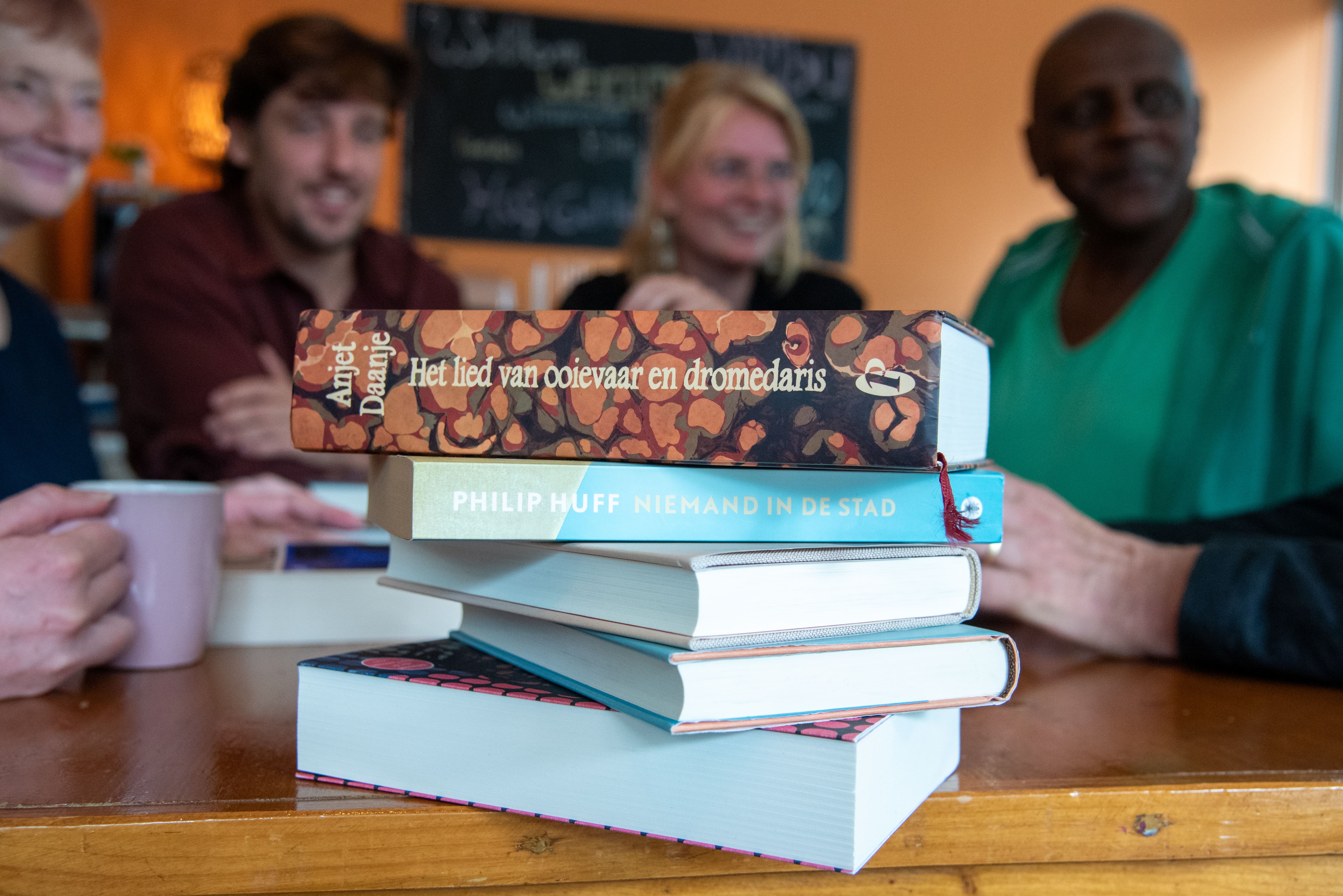
On community: “The group in Korrewegwijk reflects the city: diverse, multilingual and constantly changing. Participants vary in age and background, and bring different relationships to reading and language. Differences are present and openly discussed. Questions raised by the literature — such as where someone really comes from — often open up conversations in which multiple viewpoints exist alongside one another.”
On safe space: “Among the participants there is a willingness to go beyond the surface. When one member speaks openly, others follow. Through small, attentive gestures — sharing tea, listening without interruption — a safe space develops where personal stories can be told.”
On connection: “Meeting on Tuesday evenings, the group is a place for people to pause together. People come looking for calm and connection. Together, we use literature and poetry to help focus our attention, and to support moments of genuine encounter.”
On common interests: “Noordlaren has many overlapping networks. Buur & Boek has added another one: a group of people who connect through their common interest in stories and poems, and their curiosity and willingness to explore together.”
On engagement: “Many of the participants already know one another, but reading and discussing stories and poems creates a new kind of closeness. This closeness is valuable, and at the same time the atmosphere must also remain open and light. People feel involved in the practical aspects of the project, and also in the content, so they stay engaged.”
On shared experience: “In this group, literature is a shared experience for us. Stories and personal reflections continue to emerge and surprise all of us—including me, as the facilitator.”
.png)
On everyday life: “We have a small group of very committed readers who meet regularly. Ages range from early thirties to late seventies. Short stories and poetry provided the starting point for this group, but our conversations now move easily between discussing literature and everyday life.”
On sharing: “Over time, our relationships have deepened. Participants begin to share more of themselves, they exchange books, they offer reading suggestions to each other. Some of our members have started writing, which they share with the group.”
On care: “After a few meetings, you can see a sense of care emerging in the group. Through shared attention and working together, the group has developed a kind of togetherness, and it becomes more meaningful the more we read and reflect together.”.
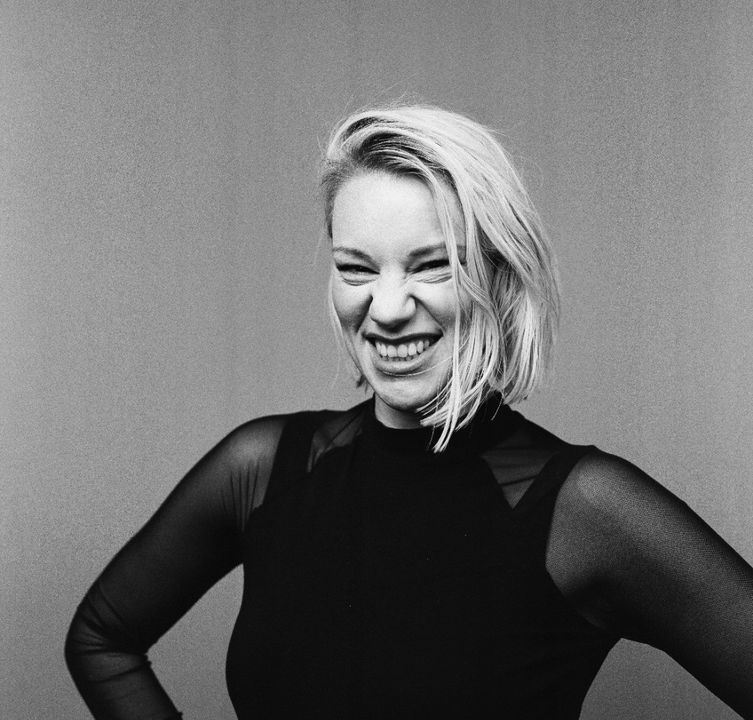
On knowing each other: “Many of the participants in the Finsterwolde group have known each other for years. The group is warm, and also has a certain reserve. Personal sharing unfolds slowly, and humour is important in this group, and laughter is common.”
On vulnerability: “Vulnerability is not something we aim for in the group, but rather the point is being together and sharing. Trust is more felt than spoken in the group, it is in the atmosphere, and in all the ways they are patient, attentive and appreciative of each other.”
On the unexpected: “Unexpected moments arise: someone shares a poem, or two married people discover they have both started writing, but without the other realising it. These wonderful moments are met with caring and gradually more space opens for writing and sharing, guided by the rhythm of the group.”
%20copy%202.png)
.png)
“At first, the hospital felt like an overwhelming maze. I began by observing, getting to know staff, and finding moments for art breaks. Some weren’t keen to make art yet I soon felt welcome, especially among the doctors, whose openness encouraged collaboration. Working with healthcare staff felt like finding a missing puzzle piece, connecting my artistic practice with my background in a family of care workers. I translated my experiences into poems and visual works, discovering parallels between art and care, such as precision, repetition, and dedication. Together we created by drawing lines without looking, pulling threads, cutting, gluing, and reflecting on how the past, present, and future meet in care”
“At the start of the project, I shadowed different people from the HPB department, from observing liver transplants to joining nurses in their patient meetings. I quickly learned how flexible everyone had to be with their time and decided to claim ten minutes in the weekly team meetings for my own artistic moments, which I called Emma’s Dilemmas. Finding time and space for art wasn’t always easy, and in the beginning, I sometimes felt unnecessary among people with “real” jobs. But as I grew closer to the team, I felt more at ease. Watching a liver transplantation struck me as an artwork in itself, the precision, rhythm, and silent collaboration between surgeons almost felt like a choreography. Seeing everyone create blackout poems together was one of the highlights of the project. In those moments, I noticed small signs of connection and vulnerability as people revealed something of themselves beyond their professional roles.”
%20copy.png)
“Chaplains occupy a unique position in the hospital: one of great freedom and of deep attentiveness to the humanity of each patient. Initially, I had expected to accompany them during patient visits, but for privacy reasons that wasn’t possible. This felt limiting at first but then became a source of inspiration. I realized that their work often goes unnoticed within the hospital structure, they are literally and figuratively invisible. Once, I even went on a small quest through the hospital to find their workspace, only to discover that few people knew where it was. That invisibility became central to the project: how could we make their work visible and tangible? We are now creating an artistic representation of the safe space they build with patients—a space where everything can be said and nothing has to be solved. I’ve come to feel at home within the hospital, part of a team whose quiet presence spreads like ink in water”
.jpg)
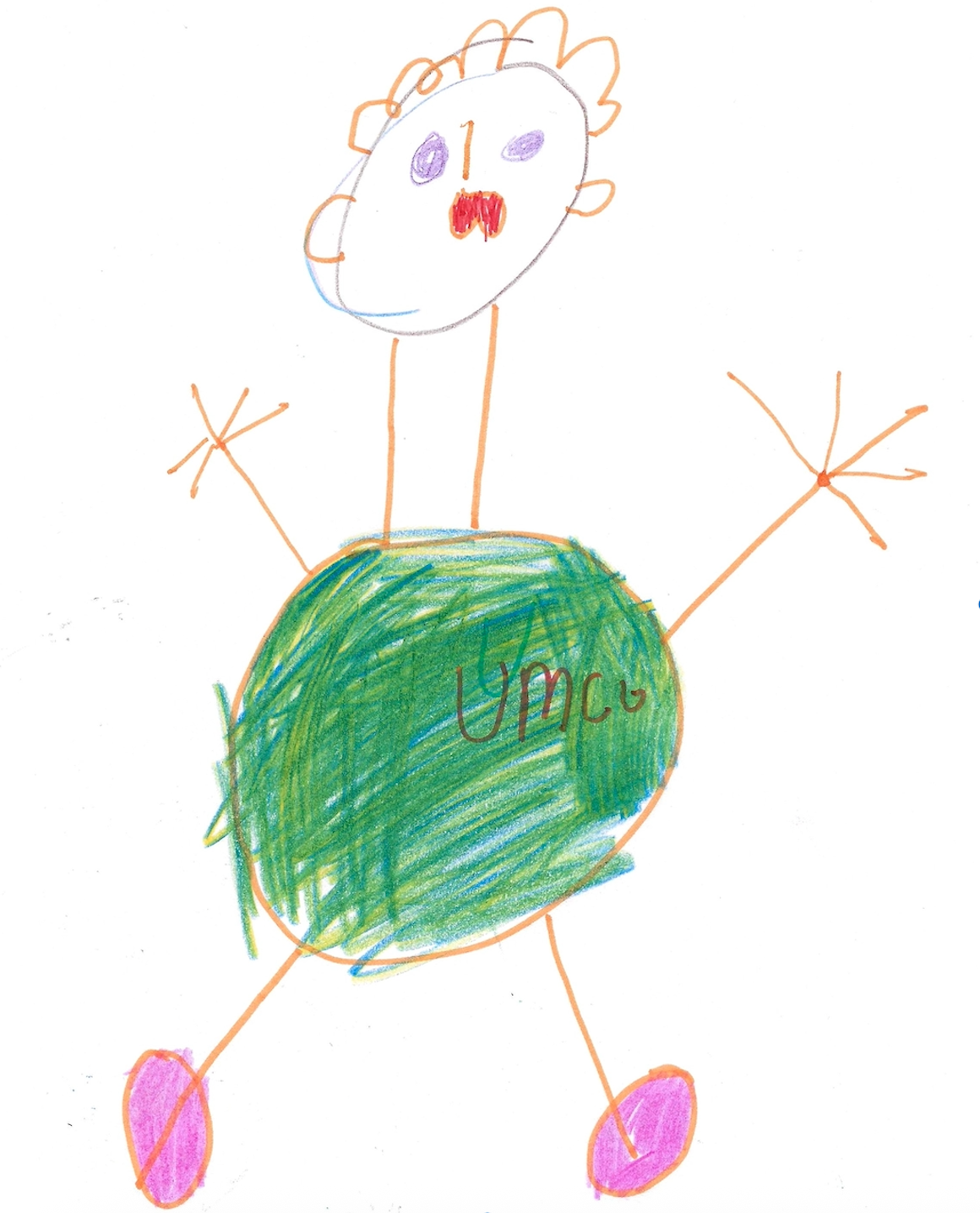
“I began by shadowing nurses, physicians, and palliative care professionals to understand their workload, rhythms, and perspectives on care. This helped me shape an arts-based project that would not interfere with their routines and could unfold through their own initiative. My aim was to bring a sense of playfulness and enjoyment into their busy workday. What truly struck me was how strict many staff members were about their own creativity. So in the first activity, I invited them to draw themselves, or a colleague, as a child might: using bright colours and imagination, creating space for art that did not need to be ‘perfect’. The drawings that emerged were surprising and full of play. This activity also sparked curiosity about how patients perceive their caregivers. That led to a second assignment in which staff asked patients to draw them. I was often present during these drawing moments, and it was moving to see how such a simple request created moments of connection, distraction, and joy. It encouraged caregivers to sit with patients without a medical reason, and to experience a shift in roles by becoming the ones observed.”
“In the communications department, I’ve been exploring how creativity can ease work pressure without disrupting daily routines. We found that short, pre-planned creative sessions worked best. At first, many employees were hesitant, saying things like “I can’t do this,” but by the end of the sessions, their attitudes often shifted completely. These workshops became moments of connection, and word soon spread that they were fun, relaxing, and a great way to meet colleagues from other teams within the same department. Often staff felt too busy or didn’t see the value at first, but over time, curiosity drew more people in. The process took patience as I was keen on letting it happen organically. For me, the conversations during the workshops were the most powerful aspect. People felt safe enough to open up, not only about work, but also about personal things. And for me as an artist, it was deeply rewarding to see participants surprise themselves with their own creativity.”