Where the music finds you
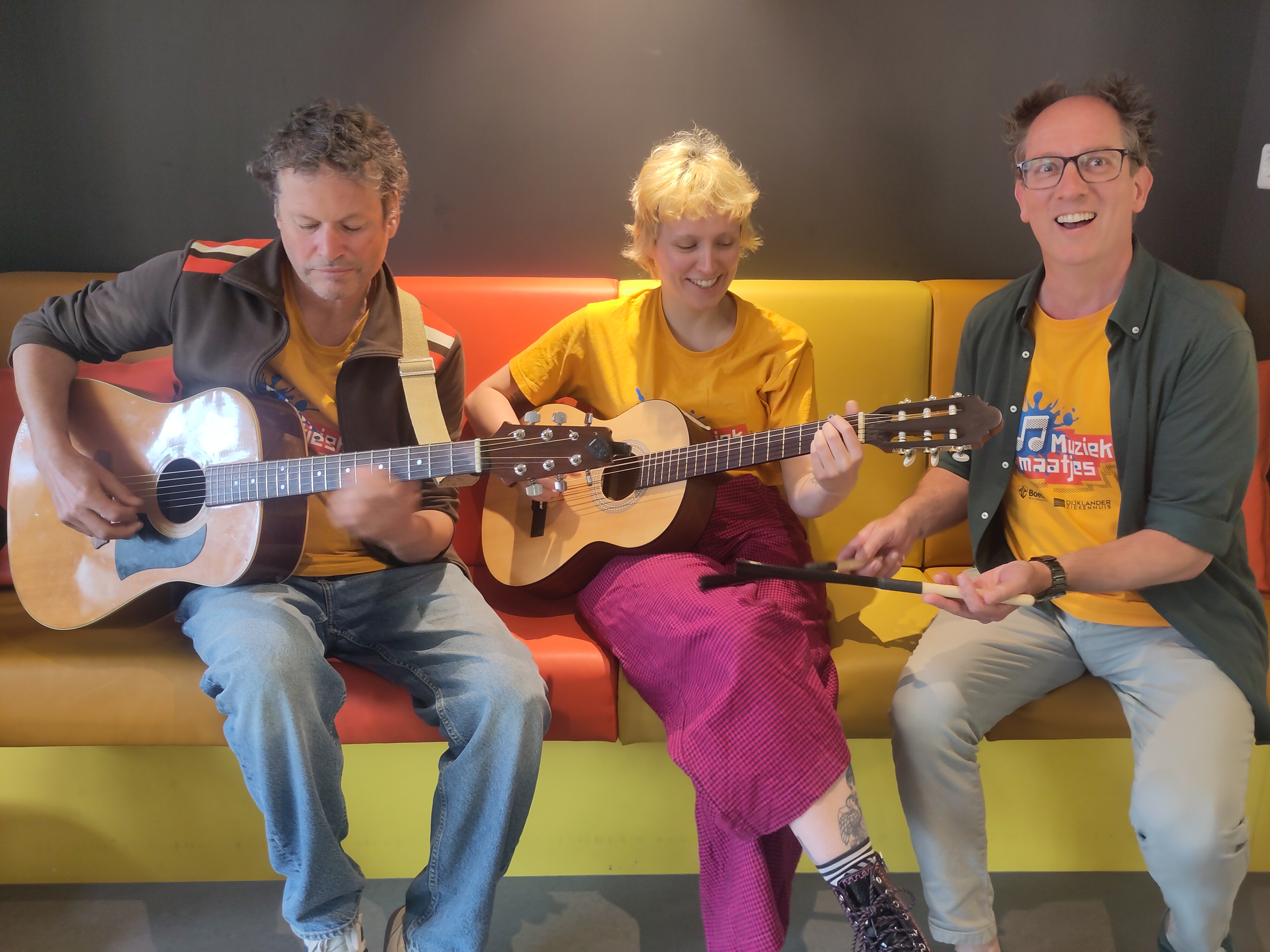
Guitarist Sergio sings the children's song called, ‘Little Fish in the Water’ for a young patient and her father. The song is known to many Dutch children, but this particular patient and her father do not seem to know it. Without stopping, Sergio switches to an improvisation of the melody in an Arabic scale. The patient and her father smile.
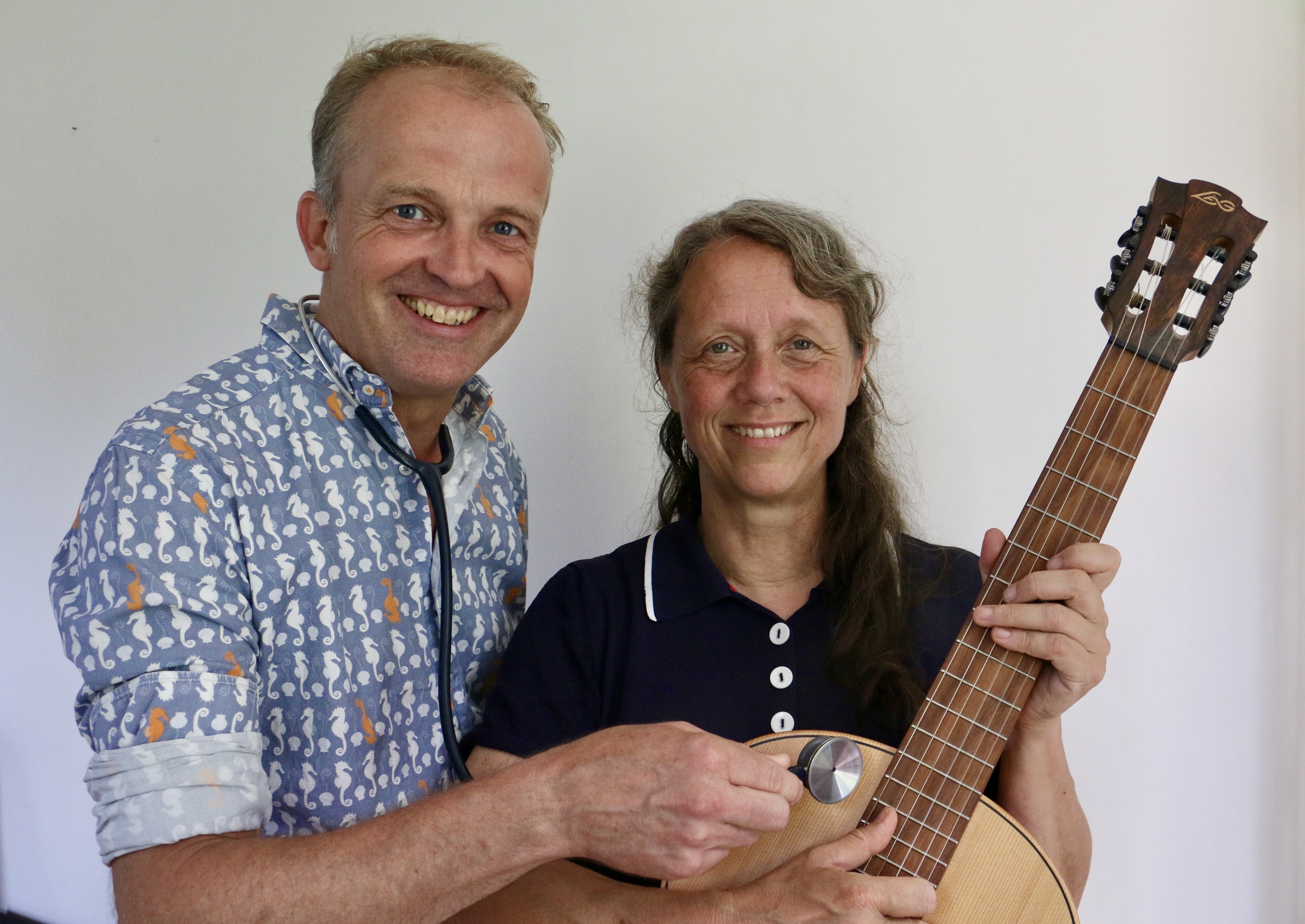
"We try to find out what resonates, without asking too many questions," says Ciska Ruitenberg, who leads Muziekmaatjes (Music Buddies), an Arts in Health program at the Dijklander Hospital in Hoorn. The Muziekmaatjes program started over a year and a half ago at Dijklander, with music twice a week in the Neonatology and Pediatric Outpatient Clinics. Recently, the program has been expanded under the name Muziekmaatjes+ to geriatrics, kidney dialysis, oncology, and neurology.
Playing music for patients is a skill, and the Muziekmaatjes musicians are provided with specialised training from a team of three music therapists. The musicians can play any sort of music that patients might want to hear, but they are also trained to be attentive and flexible, and to 'read the room' as a healthcare worker might. “We are not there to perform,” Ruitenberg says. “We’re there to connect with people through music. And if it isn’t the right moment to play, we withdraw.”
Dijklander staff pediatrician Dr. Noud Drewes explains that the musicians always ask permission to enter a room. As he describes it, the musicians do not “Thunder into a department to do their thing and then leave", but rather "are very much looking for interpersonal contact, and tuning in to the situation."
The idea for the Muziekmaatjes program came to Drewes suddenly one evening over a year ago. He was taking a singing lesson in the community, taught by Ruitenberg. Drewes shared his idea cautiously: "I said something like, 'Wouldn't that be something?'" Ruitenberg immediately saw inspiration in the idea, and the program’s potential. Soon, the two were scheduling meetings to develop the Muziekmaatjes pilot.
It might be difficult to imagine musicians in a hospital room, until you picture the experience from the perspective of a child and their parents, suddenly confronted with a diagnosis and living with uncertainty about the future, or from that of a patient lying alone in a hospital room, feeling as though the world outside continues without them. The musicians offer each patient a moment that is 100% for the patient. This can humanise the patient’s experience of healthcare. Although scientific research shows that music can contribute to a number of positive health outcomes, Muziekmaatjes was designed simply to help patients feel comfortable and more fully alive in the alienating atmosphere of a hospital.
When Drewes and Ruitenberg first proposed the program to the hospital, there were skeptics. "Music, fine, as long as it isn't too loud," Drewes recalls one colleague saying. After the first year of Muziekmaatjes, though, his colleagues were convinced. "When employees see that the people in their care are comfortable, smiling, and interacting, it lifts the mood for everyone," Drewes says.
These days the musicians play for the staff almost as often as the patients, Ruitenberg says, adding that being there every week helps to build relationships with staff. "The musicians and staff have to know what they can expect of one another," Ruitenberg says. "Building that trust takes time."
Looking back on the first year of the program, Drewes sees the role of art in care within the transition currently underway in Dutch healthcare. 21st-century healthcare must encompass more than just the treatment of illness: it must also provide space for prevention and for the well-being of the whole person. For Drewes, Muziekmaatjes helps make that possible. With the program, "I can connect with my patients in a much more human way."
The first year of the Muziekmaatjes program was evaluated in a report created by Arts in Health Groningen. Here you find both the executive summary (ENG) and the full report (NL). The staff at Dijklander Hospital and the musicians were pleased to hear that the program has been extended by two years and expanded to four other departments. Drewes says of Muziekmaatjes: "They are truly part of what we are doing now, and we miss them on their days off."
Back on the pediatric ward, the father and daughter are still smiling while Sergio and the other musician finish their improvised song. The patient and her father ask the musicians to come back tomorrow.