Thank you! Your submission has been received!
Oops! Something went wrong while submitting the form.
Arts in health wordt onderzocht vanuit verschillende wetenschappelijke tradities.
In de levenswetenschappen gaat het om wat kunst doet voor gezondheid. Bijvoorbeeld wat livemuziek betekent voor een patiënt die herstelt van een operatie, of wat creatieve beweging kan betekenen voor iemand met dementie.
In de sociale wetenschappen gaat het om wat kunst in de zorg betekent in het dagelijks leven van mensen. Hoe beïnvloedt een gezamenlijk museumbezoek de manier waarop iemand met chronische pijn die pijn ervaart? Wat betekent meedoen aan een koor voor mensen met dementie, en voor de mensen die voor hen zorgen?
In de geesteswetenschappen ligt de nadruk op reflectie en betekenis. Denk aan de rol van de kunstenaar in de zorg, vragen rond ethiek en esthetiek, en wat het betekent om kunst te maken als je ziek bent of voor iemand zorgt.
In de levenswetenschappen gaat het vaak over wat kunst doet voor gezondheid. Denk aan onderzoek naar de invloed van livemuziek op ziekenhuispatiënten of naar wat creatieve beweging kan betekenen voor mensen met dementie. Dit soort studies vindt meestal plaats in medische contexten, met empirische data en in gecontroleerde of semi-gecontroleerde situaties.
De sociale wetenschappen kijken vaker naar bredere maatschappelijke vragen. Helpt een museumbezoek bijvoorbeeld om pijn anders te ervaren bij mensen met chronische klachten? En welke rol speelt sociale cohesie in welzijn? Ook onderwerpen zoals burn-out bij mantelzorgers komen hier aan bod.
In de geesteswetenschappen verschuift de focus naar reflectie en duiding. Hier gaat het bijvoorbeeld over publieksdeelname, de rol van de kunstenaar in de zorg en vragen rond zorgethiek en zorg-esthetiek. Ook kunsthistorische perspectieven op medische geschiedenis maken hier deel van uit.
In 2024 werd aan de Erasmus School of Health Policy & Management een leerstoel arts in health ingesteld, gefinancierd door zorgorganisatie Cordaan en het Museum van de Geest. Later dat jaar volgde een tweede leerstoel aan de Erasmus School of History, Culture and Communication, gericht op Arts & Wellbeing.
Onderzoekers in Nederland werken aan een nationale onderzoeksagenda voor de komende tien jaar. De vragen die daarin richting geven: hoe kunnen programma’s blijven bestaan na een eerste projectfase? Hoe maak je effecten zichtbaar? En wat betekent arts in health voor zorgprofessionals en het medisch onderwijs?
Onderzoek in dit veld wordt onder meer ondersteund door ZonMw, het SPRONG Creating Cultures of Care-project, het Fonds voor Cultuurparticipatie, Lang Leve Kunst en Welzijn op Recept.
Werk je als onderzoeker? Sluit aan bij wat er al gebeurt, binnen én buiten je eigen vakgebied. Waar kan jouw expertise een bestaande vraag verder brengen, of juist een nieuwe vraag openen? Samenwerking tussen disciplines, en tussen onderzoek en praktijk, zorgt voor een rijkere en meer samenhangende kennisbasis.
Er wordt internationaal veel gepubliceerd over arts in health. Deze bronnen helpen je om het veld verder te verkennen:
Wil je bijdragen aan de ontwikkeling van arts in health-onderzoek in Nederland? Binnenkort kun je je aansluiten bij de alliantie. Schrijf je in voor de nieuwsbrief om op de hoogte te blijven.
.jpg)
Buur & Boek was een pilot van NOORDWOORD en Arts in Health Groningen, waarin het plezier van samen lezen en creatief schrijven centraal stond. Van oktober 2025 tot en met maart 2026 kwamen bewoners uit verschillende wijken en dorpen in de provincie Groningen samen om te lezen, te schrijven, te praten en te reflecteren op korte verhalen, poëzie en romans. Deze bijeenkomsten vonden plaats in vijf lokale gemeenschappen, op vertrouwde en toegankelijke plekken in de buurt. De groepen kwamen tweewekelijks samen in de Korrewegwijk, Beijum, Finsterwolde, Noordlaren en Feerwerd, onder begeleiding van vier workshopleiders, die ieder een eigen achtergrond en werkwijze meebrachten binnen creatief lezen en schrijven.
Het project had als doel om lezen en schrijven in te zetten als middel om verbinding en aandacht binnen gemeenschappen te versterken, en om nieuwe groepen te laten ontstaan. Er was geen literaire ervaring of voorbereiding nodig om deel te nemen. Mensen met uiteenlopende achtergronden deden mee en ervaarden samen wat shared reading, creatief schrijven, aandachtig luisteren en reflectieve gesprekken kunnen betekenen.
Arts in Health Groningen faciliteerde een tweewekelijkse leergemeenschap ter ondersteuning van de workshopleiders en de projectcoördinator. Binnen deze leergemeenschap was ruimte voor uitwisseling, reflectie, gezamenlijke planning en waar nodig coaching. Ook werd wetenschappelijke literatuur besproken over de effecten van lezen en schrijven op gezondheid en welzijn, ter verdieping van de praktijk. Daarnaast was er aandacht voor zelfzorg en voor de ethische aspecten van community-based werken.
De bijeenkomsten van Buur & Boek creëerden ruimte voor ontmoeting op een andere manier. Lezen en schrijven vormden het vertrekpunt voor aandachtige gesprekken, vertraging en het delen van inspiratie. Gaandeweg ontstonden nieuwe sociale verbindingen of werden bestaande relaties verdiept. “We ontmoeten buurtgenoten om via literatuur en poëzie over het leven te spreken,” vertelt een van de workshopleiders. “We lezen en praten, en als mensen dat willen, maken we ook iets. Alles mag, niets hoeft.” Een andere workshopleider vult aan: “Het gaat er niet om dat iedereen hetzelfde vindt, maar dat je durft te spreken én te luisteren.”
De workshopleiders – Charlotte Beerda, Gemma Jissink, Lieke van den Krommenacker en Willemijn van de Walle – brachten ieder hun eigen ervaring mee op het gebied van literatuur, performance en community-based werk. Benieuwd wie zij zijn en hoe zij werken?
Aan het einde van de pilot kwamen de groepen samen tijdens vier mini-festivals in hun eigen gemeenschap, georganiseerd door de projectcoördinator van Buur & Boek. Tijdens deze mini-festivals deelden deelnemers en workshopleiders hun ervaringen en wat er in de tussentijd was ontstaan. Elk festival kreeg een eigen vorm, met activiteiten variërend van interviews met Nederlandse auteurs tot voordrachten in de open lucht, poëzie wandelingen en het schrijven van haiku’s in een koeienstal. Deze momenten boden ruimte om stil te staan bij de gesprekken, ervaringen en verbindingen die in de loop van de maanden zijn gegroeid.
Voor Arts in Health Groningen maakt Buur & Boek deel uit van een breder programma waarin kunst wordt ingezet om reflectie, dialoog en sociale verbondenheid te stimuleren, en daarmee bij te dragen aan welzijn. Door plekken te creëren waar mensen elkaar ontmoeten rond gedeelde nieuwsgierigheid en creativiteit, draagt Buur & Boek bij aan verbeeldingskracht en gemeenschapsgevoel in het dagelijks leven.
Deelname aan Buur & Boek was gratis. Het project liep van oktober 2025 tot en met maart 2026 en werd georganiseerd door NOORDWOORD in samenwerking met Arts in Health Groningen en lokale partners in de betrokken gemeenschappen. De pilot werd mede mogelijk gemaakt door het Nederlands Letterenfonds, VSBfonds, Fonds voor Cultuurparticipatie, Gemeente Groningen, Provincie Groningen, Aletta Jacobs School of Public Health, University of Groningen en het Nationaal Programma Groningen.

De effecten van lezen op welzijn worden al decennialang onderzocht binnen de geesteswetenschappen, sociale wetenschappen en gezondheidswetenschappen. Uit onderzoek blijkt dat lezen niet alleen ontspanning of kennis oplevert, maar ook bijdraagt aan psychisch en sociaal welzijn. Fictie lezen wordt vaak beschreven als een vorm van mentale simulatie, waarbij sociale cognitie, empathie en Theory of Mind worden aangesproken [1, 2]. Deze vaardigheden spelen een belangrijke rol in sociaal en psychologisch functioneren. Voor dergelijke effecten is het belangrijk dat lezers zich actief verhouden tot de tekst en reflecteren op wat zij lezen [3]. Vanuit deze inzichten worden shared reading-programma’s ingezet om eenzaamheid te verminderen, gesprekken op gang te brengen en het gevoel van verbondenheid te versterken, met name tussen mensen met verschillende achtergronden of van verschillende generaties [bijv. 4; 5].
Ook expressief en reflectief schrijven – zoals dagboeken, korte verhalen of brieven – blijkt positieve effecten te hebben op zowel mentale als lichamelijke gezondheid [6, 7, 8]. Er zijn aanwijzingen dat schrijven kan bijdragen aan het verminderen van depressieve klachten [9] en posttraumatische stresssymptomen [10], en dat het mensen helpt om met verlies en rouw om te gaan [11]. Daarbij is het essentieel dat schrijfsessies plaatsvinden in een veilige en vertrouwde omgeving [12].
Referenties

Interesse in duurzame Arts in Health programma's groeit in Nederland. Het toenemende aantal succesvolle Arts in Health projecten stimuleert bestuurders, financiers, overheden, onderzoekers en kunstenaars om de rol die kunst kan spelen in zorg en ziektepreventie te onderzoeken.
Arts in Health Nederland heeft een whitepaper geïnitieerd om de huidige situatie in kaart te brengen en de agenda voor de toekomst te bepalen. De whitepaper gaat in op de structuren die in Nederland nodig zijn om Arts in Health programmering systematisch te ondersteunen, mensen op te leiden en om onderzoek en beleidsvorming te stimuleren. De white paper is een eerste stap op weg naar een duurzaam veld van Arts in Health.
De whitepaper:

Arts in Health Nederland stelde een stuurgroep samen van koplopers in het veld, waaronder vertegenwoordigers van de Rijksuniversiteit Groningen, Leyden Academy on Vitality and Ageing, Universitair Medisch Centrum Groningen, Vrije Universiteit Amsterdam en Landelijk Kennisinstituut Cultuureducatie en Amateurkunst (LKCA).
Om bekendheid te geven aan het initiatief en een breder netwerk van partners erbij te betrekken, organiseerde de stuurgroep in oktober 2022 een startbijeenkomst op het ministerie van Volksgezondheid, Welzijn en Sport (VWS).
Het eerste concept van de white paper werd opgesteld door de stuurgroep en co-auteurs. Dat concept diende als uitgangspunt voor reflectie en discussie met een breder nationaal netwerk in drie rondetafelsessies in verschillende delen van het land. Bij elke rondetafel droegen deelnemers bij aan discussies en brainstormsessies over de praktijk, het onderwijs, het onderzoek en het beleid van Arts in Health.
Deelnemers waren onder meer zorgprofessionals, kunstenaars, onderzoekers, beleidsmakers, managers, docenten, praktijkmensen, ervaringsdeskundigen en bestuurders, die met elkaar bespraken hoe Arts in Health een duurzaam veld kan worden in Nederland. De rondetafelgesprekken werden in juni en juli 2023 georganiseerd i.s.m. Leyden Academy, Kunstloc Brabant en Universitair Medisch Centrum Groningen.
Elk van de drie rondetafelgesprekken richtte zich op een ander domein: ziekenhuiszorg, langdurige zorg en het sociale domein. Voor impressies van de rondetafelgesprekken kunt u de samenvattingen lezen:
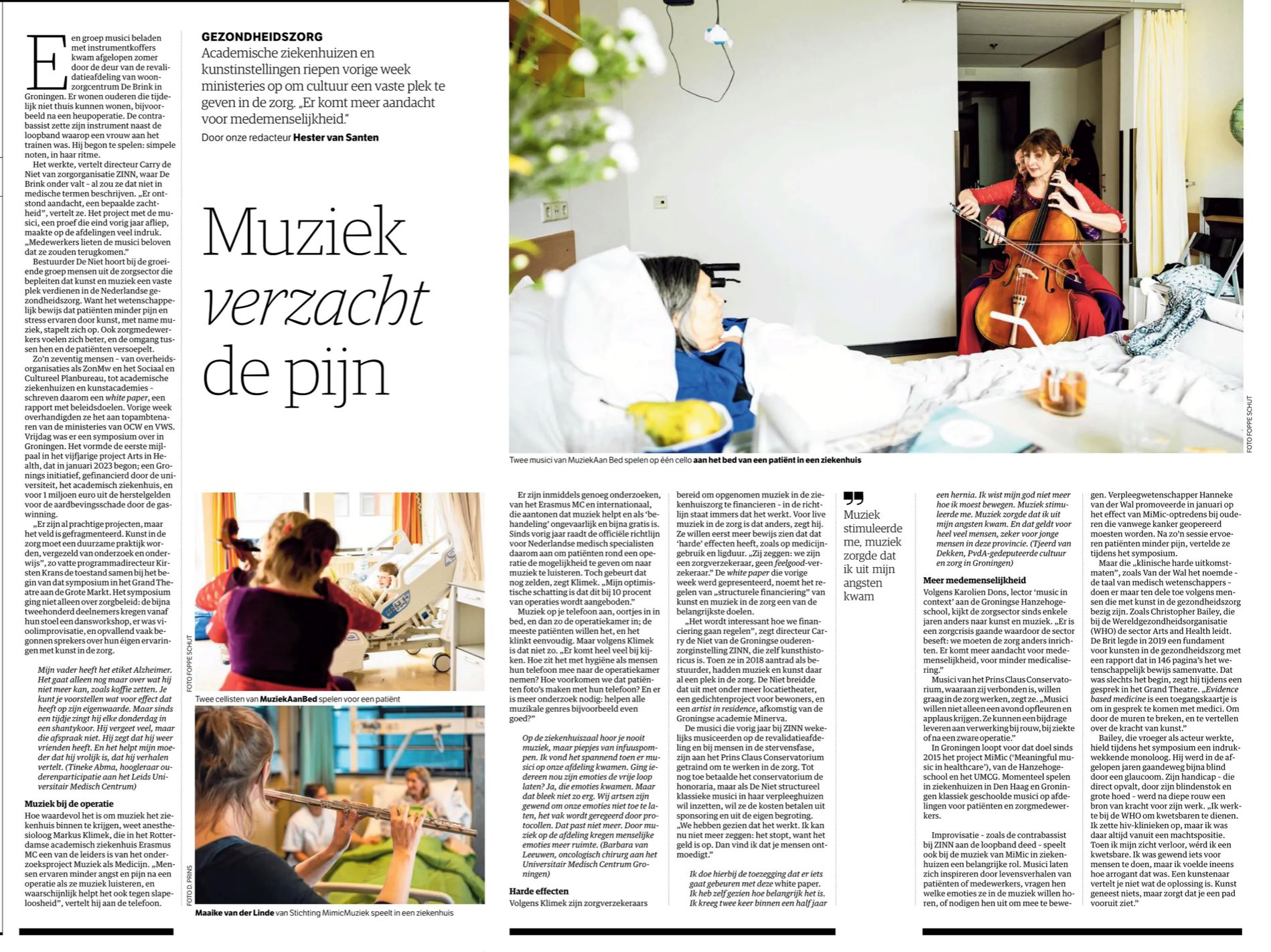
Meer dan 200 mensen hebben bijgedragen aan de uiteindelijke versie van het whitepaper. De publicatie is ontworpen door het ontwerpbureau JUST, dat ook de Arts in Health Netherlands identiteit en website ontwierp. De whitepaper is uitgegeven door de Rijksuniversiteit Groningen Pers, en publiekelijk gelanceerd tijdens het evenement Care through Creativity in het Grand Theatre in Groningen op 16 februari 2024. Dat feestelijke evenement bestond uit presentaties, optredens en inspirerende voorbeelden uit praktijk en onderzoek. De NRC schreef een artikel over het evenement.

Tijdens Care Through Creativity werd het whitepaper officieel overhandigd door de WHO Arts in Health Lead, Christopher Bailey, aan de wethouder van de provincie Groningen die verantwoordelijk is voor Kunst & Cultuur en Gezondheid & Welzijn. Tijdens een preview evenement in Den Haag werd het whitepaper overhandigd aan de directeur-generaal curatieve zorg van het ministerie van Volksgezondheid, Welzijn en Sport (VWS) en de directeur Erfgoed & Kunst van het ministerie van Onderwijs, Cultuur en Wetenschap (OCW).

De whitepaper Arts in health in Nederland: een nationale agenda is open access gepubliceerd door de University of Groningen Press, zowel in het Nederlands als Engels.
Arts in Health Netherlands, een landelijk netwerk van partners, heeft de krachten gebundeld om kunst en cultuur structureel te integreren in de Nederlandse zorg- en welzijnssector. Onderzoek toont aan dat kunstparticipatie positieve gevolgen heeft voor de gezondheid, zoals beter welzijn, minder medicatiegebruik en langere zelfredzaamheid bij ouderen. Dankzij een subsidie van het Ministerie van Onderwijs, Cultuur en Wetenschap kan het netwerk starten met het realiseren van de ambities uit het whitepaper Arts in Health in Nederland: Een nationale agenda.
"Dit is waar we jaren naar hebben toegewerkt," aldus Kirsten Krans, een van de initiatiefnemers van Arts in Health Netherlands. "Het is fantastisch om samen de volgende stap te zetten om kunst en cultuur structureel te integreren in onze gezondheidszorg”. De nationale agenda van Arts in Health Netherlands sluit aan bij de transitie van zorg naar gezondheid, waar de aandacht ligt op persoonsgerichte zorg en positieve gezondheid.
Het landelijke netwerk brengt een unieke coalitie samen van organisaties uit zorg, welzijn, kunst & cultuur, onderwijs en onderzoek. Vertegenwoordigers van onder andere Kunsten '92, Universitair Medisch Centrum Groningen, Codarts, Erasmus Universiteit Rotterdam, Landelijk Kenniscentrum Cultuureducatie en Amateurkunst (LKCA), AxionContinu, Kunstloc Brabant, ROC Amsterdam, Gemeente Tilburg, Vilans, Cultuur Oost, Raad van Twaalf, Rijksuniversiteit Groningen, Vrije Universiteit Amsterdam, Hogeschool van Amsterdam en de Aletta Jacobs School of Public Health werken samen om dit veld te verder te ontwikkelen.
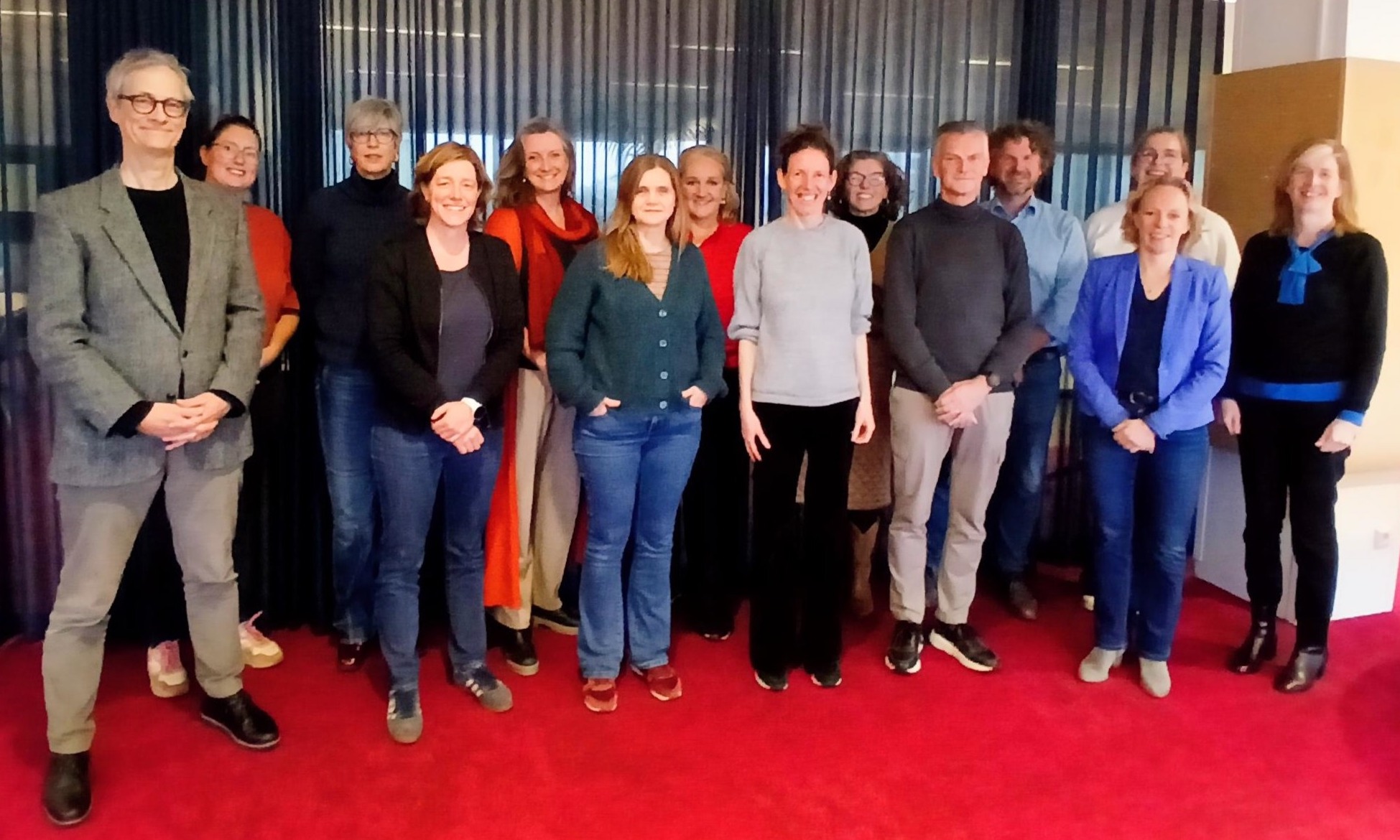
Tijdens een landelijke lanceringsbijeenkomst op 28 november 2025 lag de focus op het ontwikkelen van een gedeelde visie voor de toekomst van het veld. De diverse groep van betrokken experts – van zorgprofessionals en kunstenaars tot onderzoekers en beleidsmakers – richt zich op ‘vier pijlers’ om het veld te ondersteunen: beleid, praktijk, onderwijs en onderzoek.
De betrokken experts benadrukten met name de noodzaak van intersectorale samenwerking tussen gezondheidszorg en cultuur. Terwijl het zorgdomein zich steeds meer richt op mensgerichte en compassievolle zorg, pleit het cultuurdomein voor een nieuwe maatschappelijke relevantie van de kunsten. Arts in Health Netherlands versterkt beide domeinen en helpt bruggen te bouwen tussen beide.
Het langetermijndoel van het netwerk is om kunst op een duurzame manier te integreren in ons nationale gezondheidszorgsysteem. Om dit te bereiken zijn vier werkpakketten ontwikkeld, die elk een van de vier doelstellingen van de nationale agenda (beleid, praktijk, onderwijs en onderzoek) aanpakken. De komende maanden gaan de vier werkpakketten actief aan de slag. Van het opzetten van een nationaal kennisplatform en het definiëren van professionele competenties tot het formuleren van beleid en het opstellen van een nationale onderzoeksagenda voor het veld.
Organisaties die geïnteresseerd zijn in Arts in Health netwerk en willen aansluiten, kunnen contact opnemen via: info@artsinhealth.nl
Social prescribing is a strategy to help people with health conditions that do not require clinical treatment. A person suffering from grief, loneliness, addiction, or unemployment (for example), can be referred to a trained ‘wellbeing coach’ who helps that person make a personalized plan to engage in activities, events or training with community groups, non-profits, workshops, cultural institutions, and others. Participatory arts practice can be one of the ‘prescriptions’.
The UK is widely implementing social prescribing programmes, and the Netherlands and other countries are exploring it as well. The Dutch pilot programmes was implemented nationwide with some promising results and encouragement from insurers, primary care physicians, and patients. Read more about the Dutch version of social prescribing within the project Welzijn op Recept.
Social prescribing
The social prescribing strategy shows promise for supporting certain arts in health practices in the community. However, that is only one aspect of the field, and does not address the role that arts in health can plan in care institutions, for example.
One of the goals of the National Agenda is to “Develop a diverse and unified field of education and practice”. An action item attached to that goal is to build ‘consensus on a common terminology’ for the arts in health field. To that end, we offer a set of glossary terms. Note that many of these terms have quite different implications or meanings in different sub-areas of arts in health. This list is offered as a starting point for developing a common terminology.
Administrators - These are the directors or managers of programmes, organisations, and institutions that have a health interest. Administrators could come from the private sector, though most often they are in public-focused institutions and organisations.
AiH continuum of practices - This refers to the diversity of practices that make up the field of arts in health, all of which focus on care and support for wellbeing. This includes participatory arts, arts therapy, design for health, and others.
Arts in health - The use of creative art-making to support health and wellbeing.
Bedside art-making - Facilitating active art-making with patients with patients who are in bed, in care facilities. This can be either a non-therapeutic participatory activity, or a creative arts therapeutic intervention. The term distinguishes this type of practice from staff-focused art-making, and community-based arts in health, and others.
Care - This important term refers to the support for a person’s wellbeing that is provided or supported by arts in health practice. Care is the characteristic distinguishing arts in health from other types of arts activities. In creative arts therapies, care can focus on treatment and predictable health outcomes, whereas in participatory arts in health, care focuses more on general support for wellbeing or supporting care by some other provider. Care is delivered not only in the creative practice, but also in the ethics and professionalism of the practitioner.
Care aesthetics - The study of the aesthetic aspects of care.
Compassion fatigue - Emotional and/or physical exhaustion experienced by formal and informal caregivers leading to diminished ability to empathise, inability to work, depression and other negative health outcomes.
Community-based arts - Arts activities based in community settings, most often projects and programmes directly involving community members.
Creative expression - The use of various art forms to express oneself creatively, sometimes used in describing arts support for mental and emotional wellbeing.
Creative arts therapies - Art-making as a medium for healing and self-expression, practiced by licensed therapists with specialised therapeutic training.
Cultural participation - Community participation in cultural activities, for example attending concerts or festivals, museums, community events, as well as participation in amateur art-making.
Cultural programmes in long-term care - Arts and cultural activities designed to enhance the quality of life of residents in long-term care.
Ethical and care protocols - Guidelines and standards for ethical behavior and care practices in care settings. These are likely different depending on whether the professional is doing participatory arts or arts therapies.
Expressive or creative movement - Similar to dance, these are movement-based arts activities supporting health and wellbeing.
Funders - These may include governments at any level, institutions (for example schools, insurers, etc.) and organisations (e.g., non-profits or community organisations). Funders include some private sector organisations (health insurers, for instance) as well as the public sector.
Intersectoral collaboration - Efforts between public institutions (healthcare, arts education, etc.) to achieve common goals. May take the form of projects, programmes, or policies to address issues and pursue goals across social sectors, for example the arts and healthcare.
Medical humanities - An interdisciplinary humanities field (arts, literature, philosophy, etc.) in medical education and practice.
Participatory arts - In AiH practice, activities that actively involve both participants and artists in art-making. Participatory practice also has implications for the inclusion of marginalised people.
Patient activation - Encouraging patients to engage actively in their own wellbeing and health care.
Person-centred care - Healthcare that focuses on the individual's specific health needs and desired health outcomes.
Positive health - A health concept that emphasizes the ability to adapt and self-manage in the face of social, physical, and emotional challenges.
Practitioners - Arts in health practitioners are skilled in using arts practices to support wellbeing. Practitioners build participation in art-making, working with participants who have no experience in art-making, or helping people who want to make art at higher levels of skill.
Resilience - The ability to resist illness or harm, and/or the capacity to recover from illness or harm. Resilience can be applied to individual wellbeing, or to groups, places, or populations.
Resources - This might refer to person hours, money, useful physical things like office space or equipment, but also experience, ideas, useful documents, databases, etc.
Science - This term refers to existing and recent literature, most often in peer-reviewed journals. The terms could refer to health sciences research, but also social sciences, and also humanities research.
Scientific research - This most often refers to the production of new knowledge, and peer-reviewed publications. The term ‘research’ is technically appropriate to describe programme evaluation, though in practicethis can be confusing.
Social inclusion - Activities in support of including marginalised individuals or groups.
Spiritual care - A holistic, person-centred approach to care, allied with arts in health, that supports psychological, social, and existential wellbeing.
Support for caregivers - Arts in health strategies aimed at providing relief and support to both formal and informal caregivers.
Support for care recipients - Arts activities aimed at improving the wellbeing of individuals receiving care, in hospitals, long-term care facilities, and home care.
Therapeutic goals - Specific health outcomes that are goals in creative arts therapies.
Value-based healthcare - An economic model of healthcare delivery that attempts to shift the value of healthcare from the healthcare provider to the patient, emphasizing outcomes and patient satisfaction as goals.
We are excited to launch the Arts in Health Netherlands (AiHN) website! Our graphic identity, our publications, and our website were all developed with the Den Haag design agency JUST.
The idea of participation inspired the design process. “Arts in health there is a whole continuum of practices, and participation is key to them all,” says AiHN Director of Science and Education Ferdinand Lewis. “Participation is what makes creativity good for you, when you say ‘Yeah, okay, I’ll jump in, I’ll try that.”
But how to design with that core idea in mind? “We knew we needed professional design, but we needed to find designers who understood the participatory spirit of arts in health”, Lewis adds.
After a long search process Just was chosen, but they were the clear frontrunners. “These are experienced designers with serious corporate clients, but they also have this commitment to the public interest,” Lewis says. “Plus, everyone on the team was quite passionate about how arts in health works, and how to embody it, especially in the website.”
The team concluded that the experience of using the website, for instance, “Should not be only about consuming information” according to designer Tizian Fendt, “but instead should be like participating in a conversation”. The website design invites its users into the participatory experience of drawing on the landing page, of interacting with the page layout and color palette, and organising information in ways that are most useful to the user. The website also rewards inquisitive users with what Fendt calls “easter eggs” ––like the ticklish AiHN logo–– that reward curiosity.
“The field of arts in health is a balance between healthcare and art,” Lewis suggests. “But the balance point is active participation, which is what the website tries to embody.”


In her thesis, Emma Schönborn studied how the youth creativity programme Digital Art Factory (DAF), uses creativity to support the wellbeing of teenagers at three locations in Assen, Gieten, and Appingedam. Launched in 2016, today DAF is a successful and highly valued programme in its communities.
DAF’s early success was due to inspiration, intense creativity, and the hard work of its staff. It was not, however, guided by a clearly defined programme model. “The program had always operated intuitively, but without a clear structure,” Schönborn explains. “So it was difficult for them to evaluate or replicate the program,” she explains. In 2024, DAF’s directors wanted to prepare a strategy for the organisation’s future, and they turned to Schönborn to investigate the program’s workings.
Schönborn used methods from the ‘research-based programme evaluation’ field to interview staff, review programme documents, and observe the instructors (called “coaches”) at work. In her fieldwork she found that inspiration, creativity, and collaboration were at the heart of the program: “The instructors prioritise collaboration between the participants, and autonomy, over traditional instruction,” she explains, adding that participants “can engage with others and explore their mutual interests without fear of judgment”. Each participant sets their own learning goals and works at their own pace, pushing their imagination as far as they can.
Using the data, Schönborn developed a detailed ‘logic model’ of the programme that articulated how DAF’s inputs —skilled coaches, creative equipment, and partnerships— and its creative process, lead to enhanced social skills and emotional well-being for young people. She existing social scientific literature on mental health and creativity to inform the study. “The DAF program model is particularly effective at fostering creativity, and it also provides a foundation for social and emotional development in its participants,” she asserts.
The study, titled, Modeling a Youth Creativity and Engagement Programme for Mental Health: A Case Study of the Digital Art Factory was part of Schönborn’s 2024 thesis for University College Groningen. She hopes that the research and the programme modeling method will not only help DAF, but also other small arts-based community organisations that need to develop an evaluation strategy, or make plans for extending or expanding a programme.
“With a programme like this, it’s all about the creative process,” she says, concluding, “That encourages young people to find a sense of control, feel less isolation, and make social connections.”