Thank you! Your submission has been received!
Oops! Something went wrong while submitting the form.
European Culture and Health Hub zet kunst en cultuur op de Europese gezondheidsagenda
Nederland en Europa worden geconfronteerd met toenemende druk op de geestelijke gezondheid en het welzijn, naast stijgende niveaus van eenzaamheid, sociaal isolement en de uitdagingen van een vergrijzende bevolking. Kunst en cultuur kunnen een rol spelen bij het aanpakken van deze problemen, hoewel dit nog steeds wordt onderschat in het reguliere gezondheidsbeleid. Met de lancering van de European Culture and Health Hub, een nieuw Horizon Europe-project, zullen twintig organisaties uit dertien Europese landen de komende drie jaar samenwerken om de verbinding tussen cultuur, gezondheidszorg en het sociale domein te versterken.
Het project, gecoördineerd door de Hogeschool Turku (Finland), brengt 20 organisaties samen, waaronder 15 projectpartners en 5 geassocieerde partners, uit 13 Europese landen. Arts in Health Groningen vertegenwoordigt Nederland in het consortium.
Cultuur als onderdeel van gezondheid en welzijn
De European Culture and Health Hub sluit aan bij de aanbevelingen uit het rapport Culture and Health: Time to Act (2025), waarin de Europese Commissie, de Europese Unie en haar lidstaten worden opgeroepen om cultuur een grotere rol te geven bij het bevorderen van gezondheid en welzijn.
Onderzoek van de Wereldgezondheidsorganisatie (WHO) laat zien dat deelname aan kunst- en cultuuractiviteiten kan bijdragen aan mentaal welzijn, veerkracht en sociale verbondenheid. Ook wordt een relatie gezien tussen culturele participatie en een betere mentale en emotionele gezondheid. In Nederland wordt deze kennis steeds vaker toegepast in projecten, onderwijs en onderzoek binnen het groeiende Arts in Health-veld.
Europese samenwerking en kennisdeling
De European Culture and Health Hub brengt onderzoekers, beleidsmakers, kunstenaars, zorgprofessionals en maatschappelijke organisaties uit heel Europa samen. Samen bouwen zij aan nieuwe samenwerkingen, delen zij kennis over de rol van kunst en cultuur in gezondheid en welzijn.
De Hub wordt ontwikkeld in nauwe samenwerking met beleidsmakers, professionals, onderzoekers en lokale gemeenschappen. Daarmee sluit het initiatief aan bij concrete vragen uit de praktijk. Daarnaast brengt het project bestaande wetenschappelijke kennis in kaart, identificeert het kennishiaten en ontwikkelt het praktische hulpmiddelen voor lokale, regionale en nationale beleidsmakers. Binnen het project worden Arts in Health-initiatieven in verschillende Europese landen onderzocht, waaronder Nederland. Ook wordt gewerkt aan scholing, kennisdeling en ondersteuning voor organisaties die kunst en cultuur willen inzetten voor gezondheid en welzijn.
Project kick-off in Groningen
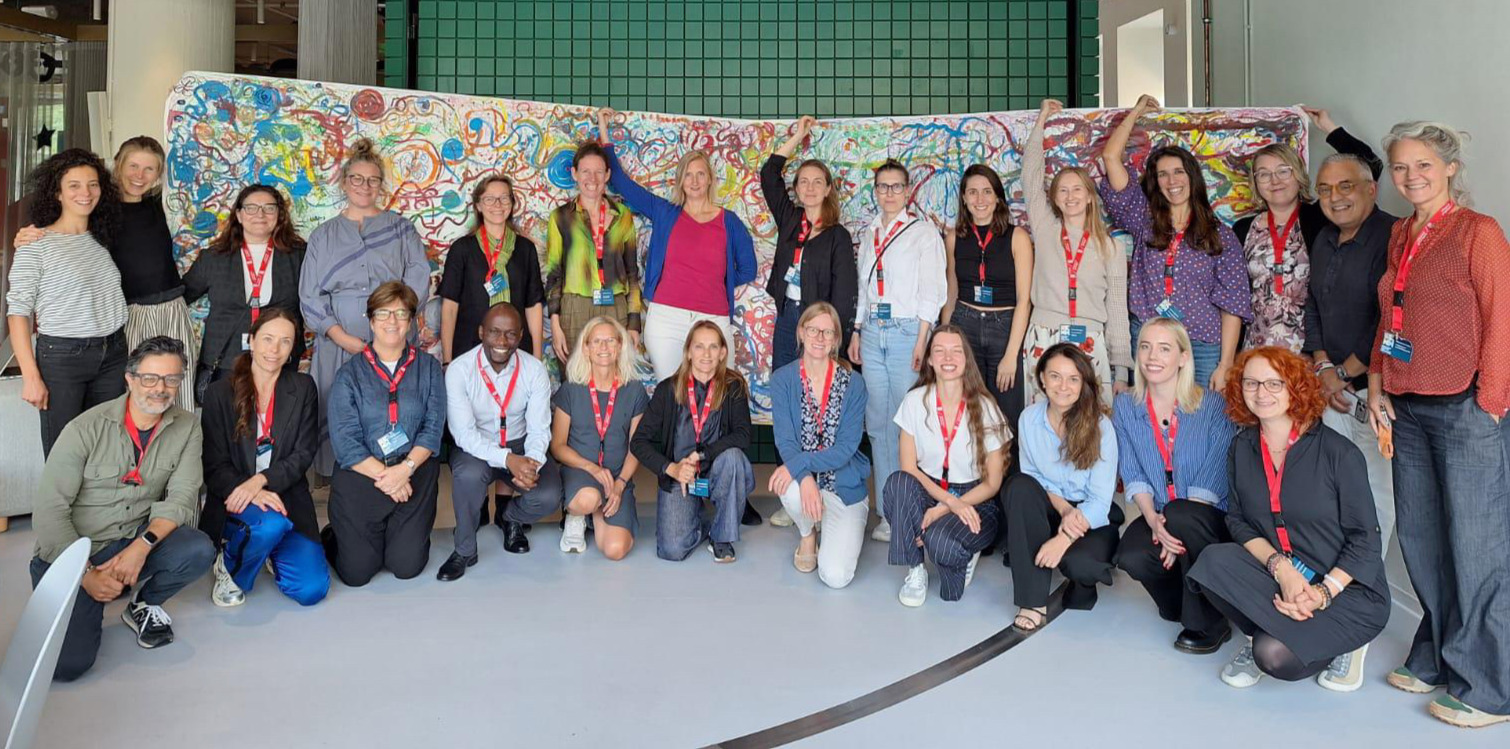
Van 1 tot en met 3 september organiseerde Arts in Health Groningen de kick-off van de European Culture and Health Hub (ECHH) in Groningen. De start van het project begon op 1 september met een openbare lezing van Daisy Fancourt, hoogleraar aan het UCL Institute of Epidemiology and Health Care, UNESCO Chair in Arts & Global Health en directeur van het Collaborating Centre on Arts and Health van de Wereldgezondheidsorganisatie. De lezing werd georganiseerd in samenwerking met Studium Generale Groningen.
Op 2 en 3 september kwamen de projectpartners samen bij de Aletta Jacobs School of Public Health van de Rijksuniversiteit Groningen. Tijdens workshops, interactieve sessies en gesprekken leerden de partners elkaar beter kennen en deelden zij hun ervaringen en perspectieven. Ook gingen zij samen aan de slag met de eerste stappen van het project en de verdere samenwerking tussen cultuur, zorg en het sociale domein. Daarbij stonden onder meer de kennisbasis, samenwerking tussen verschillende sectoren en praktische ondersteuning voor het veld centraal.
Naar een duurzame verbinding tussen cultuur en zorg
Volgens Arts in Health Groningen markeert de Hub een belangrijke stap in de verdere ontwikkeling van het Europese Arts in Health-veld.
“Besluitvorming binnen de zorg en cultuur vond lange tijd grotendeels los van elkaar plaats. Inmiddels zien beide sectoren steeds vaker dat zij dezelfde waarden delen en elkaar kunnen versterken,” zegt Ferdinand Lewis, directeur Wetenschap en Onderwijs bij Arts in Health Groningen. “Het Horizon-project en de Hub zullen een grote stap zijn naar waardevolle samenwerking tussen onderzoekers, beleidsmakers en professionals uit beide sectoren.”
Met de European Culture and Health Hub krijgt de samenwerking tussen cultuur en gezondheid een stevig Europees platform. Het project moet bijdragen aan meer kennis, sterkere netwerken en betere beleidsontwikkeling, zodat kunst en cultuur een duurzame plek kunnen krijgen binnen gezondheids- en welzijnsbeleid in Europa.
Projectpartners
Daarnaast wordt het project ondersteund door verschillende geassocieerde partners. Zij dragen bij aan expertise, beleidskennis en samenwerking tussen verschillende sectoren. Arts + Health Ireland / Réalta (Ierland), Secretariat of the Northern Dimension Partnership on Culture (Letland), United Cities and Local Governments (Spanje), UNESCO (Frankrijk), en Northern Dimension Partnership in Public Health and Social Well-being (Sweden).
Meer informatie
Op de hoogte blijven van dit project kan via dit formulier

Arts in Health ontstaat in de praktijk, maar de keuzes daaromheen bepalen of initiatieven kunnen doorgroeien. Veel projecten laten zien wat kunst kan betekenen voor gezondheid, welzijn en kwaliteit van leven. Tegelijk blijft structurele inbedding vaak lastig, doordat financiering, samenwerking en verantwoordelijkheden versnipperd zijn.
Het rapport Kunst in zorg – wegen naar verankering onderzoekt waar binnen bestaande wet- en regelgeving ruimte zit om Arts in Health duurzamer te organiseren. Van gemeenten en zorgverzekeraars tot welzijn en langdurige zorg: er blijkt vaak meer mogelijk dan gedacht. Ook maakt het rapport zichtbaar waar samenwerking tussen zorg, cultuur en beleid in de praktijk nog vastloopt.
Dit rapport is uitgevoerd door VitaValley in opdracht van Arts in Health Netherlands.

De Arts in Health Summer School laat deelnemers kennismaken met de rol die kunst en creativiteit kunnen spelen bij gezondheid en welzijn. Tijdens een intensieve week volgen deelnemers lezingen, workshops en praktijkgerichte sessies waarin theorie en praktijk van Arts in Health samenkomen.
"De Summer School brengt mensen met verschillende achtergronden samen om een gezamenlijk begrip te ontwikkelen van wat Arts in Health is en hoe het in de praktijk werkt," zegt Ferdinand Lewis, directeur onderwijs van Arts in Health Groningen. "Deelnemers verlaten de Summer School als een leergemeenschap, klaar om hun eigen bijdrage aan het veld te verkennen."
De Summer School is bedoeld voor deelnemers uit verschillende vakgebieden en op verschillende momenten in hun loopbaan. Studenten, professionals en zij-instromers met een mbo-, hbo- of universitaire achtergrond zijn allemaal welkom. Volgens Lewis vraagt een duurzame plek voor kunst binnen zorg en welzijn om professionals die kunnen samenwerken over de grenzen van sectoren, disciplines en beroepen heen.
Tijdens de Summer School maken deelnemers kennis met wetenschappelijk onderzoek naar de rol van kunst bij preventie, herstel en een gezonde leefstijl. Tegelijkertijd ervaren zij hoe Arts in Health er in de praktijk uitziet. In workshops werken zij samen met kunstenaars en professionals uit het veld. Door deze praktijkervaring te combineren met theorie en gezamenlijke reflectie ontstaat een beter begrip van Arts in Health en de mogelijkheden ervan.
Een deelnemer aan de Summer School van 2025 vertelde: "Voor mij ging het vooral om ontdekken wat er allemaal gebeurt binnen het Arts in Health-veld." Een andere deelnemer gaf aan dat de Summer School hielp om richting te geven aan haar eigen werk en toekomstige projecten.
De workshops worden verzorgd door Arts in Health-professionals van onder andere Switch2Move, Cordaan, CliniClowns, de opleiding Vaktherapie van NHL Stenden, MuzIC en het Groninger Museum. De lezingen worden verzorgd door onderzoekers van het Universitair Medisch Centrum Groningen, de master Geestelijke Verzorging van de Rijksuniversiteit Groningen en de Vrije Universiteit Amsterdam.
Na afronding van de Summer School ontvangen deelnemers een officieel 'digitaal certificaat' van de Rijksuniversiteit Groningen dat zij kunnen toevoegen aan hun cv of online profiel. Daarnaast kunnen zij deelnemen aan de Arts in Health Learning Community, een netwerk voor oud-deelnemers dat vier keer per jaar bijeenkomt om kennis te delen, actuele ontwikkelingen te bespreken en het Arts in Health-netwerk in Nederland en Europa verder te versterken.
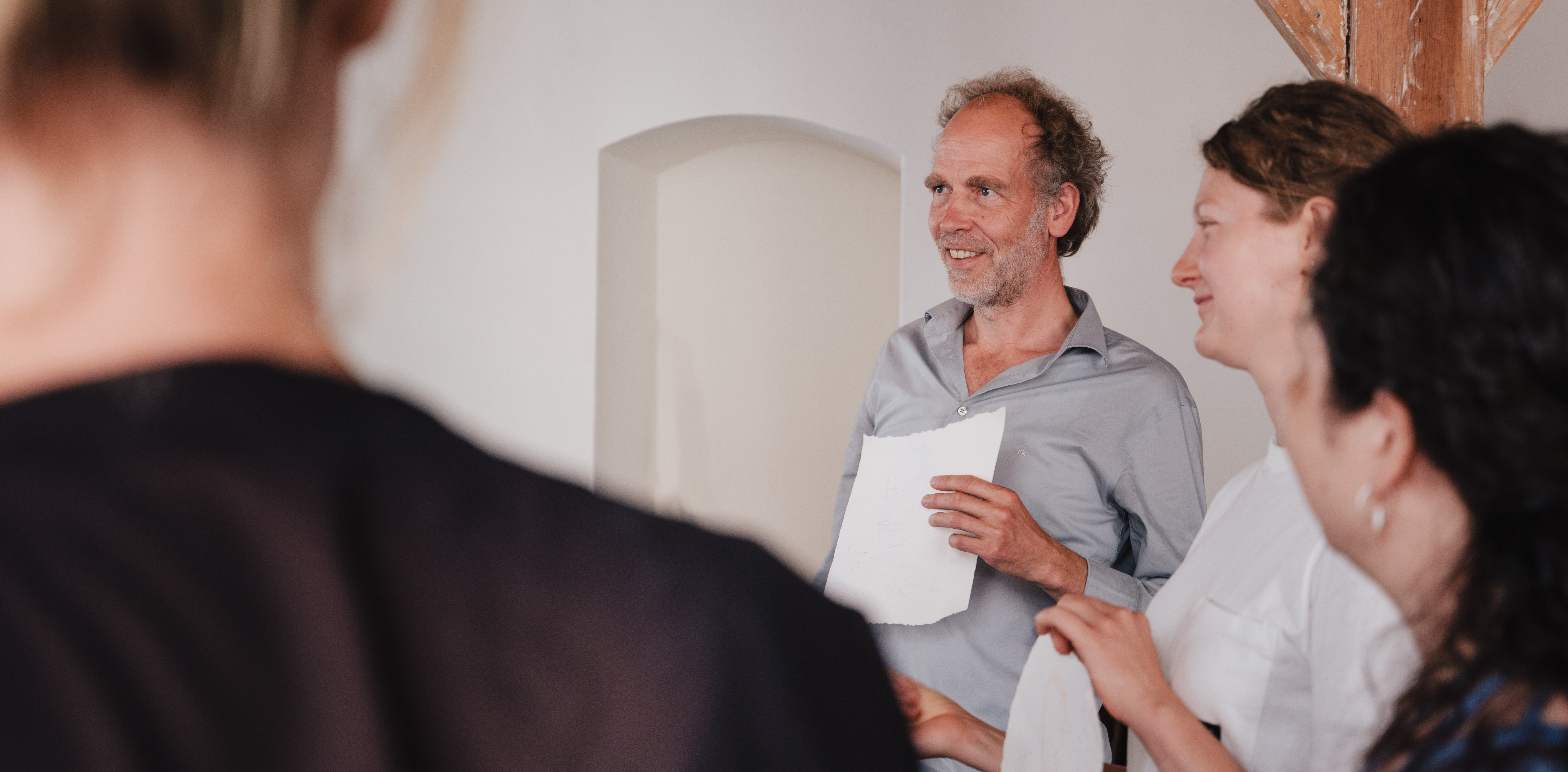
De eerste editie van de Arts in Health Summer School vond plaats in juni 2023. Voor deze pilot waren vijftien plaatsen beschikbaar, die binnen korte tijd waren gevuld.
In 2024 ontving de Summer School ondersteuning van de Rijksuniversiteit Groningen en werd het programma officieel opgenomen in het aanbod van de universitaire Summer Schools.
Jaarlijks is er plaats voor maximaal 25 deelnemers. De belangstelling is groot en het aantal aanmeldingen ligt meestal ruim boven het aantal beschikbare plaatsen. Deelnemers zijn onder meer kunstenaars, artsen, verpleegkundigen, sociaal werkers, onderzoekers, docenten, cultuurprofessionals, programmamakers, studenten, bestuurders en beleidsmakers.
"Het Arts in Health-veld heeft behoefte aan mensen met verschillende achtergronden die met elkaar willen leren en samenwerken," zegt Lewis. "De Summer School is opgezet om die ontmoetingen mogelijk te maken."
De Arts in Health Summer School wordt georganiseerd in samenwerking met de Aletta Jacobs School of Public Health, University College Groningen, de Faculteit Religie, Cultuur en Maatschappij van de Rijksuniversiteit Groningen en de Vrije Universiteit Amsterdam.
Lees meer over de Arts in Health Summer School en hoe je je kunt aanmelden.
To gain insight into how arts in health can support the healthcare transition in the Netherlands, it can be useful to see how similar initiatives have been proposed, and implemented in other countries. All the countries discussed here recognise that transformation is needed in healthcare systems. They all argue for the support that the arts can offer.
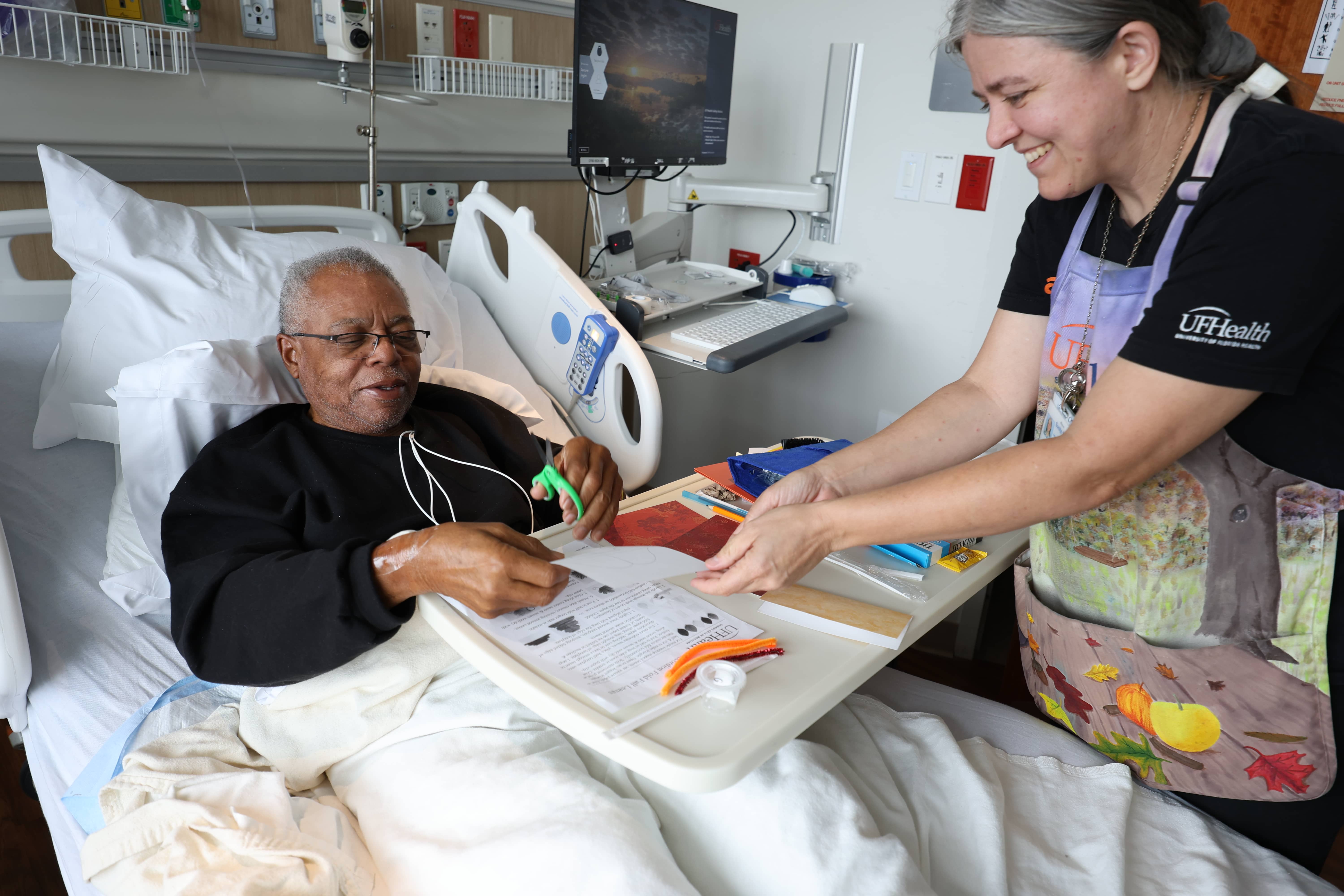
The modern field of arts in health had its start more or less in the United Kingdom in the 1960’s. Initially driven by countercultural social movements, it took some time to gain a place in mainstream institutions and policy. It is only in the last couple of decades that the field really blossomed.
A number of important projects were developed in the UK between 2004 and 2007. For example, a project called Invest to Save; Arts in Health had the goal to “develop the capacity of the North West Region’s arts and health communities, and research the impact of creativity, culture and the arts on health and economic outcomes” (Parkinson, 2009, p.43). Amongst other things, this project involved visual arts and creative writing activities for older people in rehabilitation.
Around the same time, the Arts Council England and the Department of Health published a report on the prospectus of arts and health. Although this report did not initially receive a great deal of notice, over time the cultural change it recognised began to emerge.
The Arts Council has continued its work on Creative Health and Wellbeing. In recent years the London Arts in Health movement has found some success hosting an annual Creativity and Wellbeing Week, which has seen tens of thousands of active participants. This celebration of the field includes talks, film screenings and workshops. Because that event is attended by people with a variety of backgrounds, it also encourages the intersectoral collaboration that is integral to arts in health programmes.
The arts in health field has seen some developments in other regions of the UK. The Arts Council of Wales, for example, has partnered with the Welsh NHS confederation to raise awareness of the how the arts support wellbeing. The partnership set out to “embed arts and health initiatives across the NHS in Wales”.
In 2019 the WHO commissioned a report in which they scoped over 3500 articles about the role of the arts in supporting health and wellbeing. Since then, the WHO has begun issuing policy materials and strategies for the use of arts in health for use by the member states. Importantly, these emphasise intersectoral decision-making and planning, for example between the cultural and culture sectors.
In 2023, the WHO launched the Jameel Arts & Health Lab, to encourage research and disseminate findings on arts in health. The Lab also organises events that celebrate, and advocate for, the introduction of national and regional arts in health initiatives around the world.
A report by European Commission recognises the societal value of the arts and culture for wellbeing. Policy recommendations and briefs have been issued which argue for the positive impact of the arts on wellbeing, recommending that member states implement policies to promote “long-term collaboration and mutual learning partnerships between cultural practitioners, healthcare professionals, and community organisations”. The Commission-funded organisation Culture for Health commissions research and publishes reports on culture for health, including strategic recommendations for facilitating intersectoral dialogue and action.
Other countries in Europe are introducing arts in health plans and programmes. The arts in health field has gained a strong foothold in Ireland, for instance: The Irish ‘Healthy Ireland Strategic Action Plan’ for 2021-2025 includes a commitment for local authorities to plan long-term cultural and arts involvement in promoting wellbeing.
As early as 2004, the Irish Arts Council wrote a practical handbook for setting up projects and networking for arts in health, and that handbook is still useful today. It outlines a step by step approach to developing an arts in health project, from initial ideas to project implementation.
Other EU countries working on arts and health projects and policy include Bulgaria, France, Luxembourg and Portugal. Scandinavian countries are particularly active in integrating arts in health into social systems. Finland, for instance, has a “coordinated national effort to publish local cultural wellbeing plans” and a Masters degree is offered in Creativity and Arts in Social and Health Fields. Denmark and Sweden are part of a pilot by the Interreg Baltic Sea Region, to experiment with ‘arts on prescription’, and the Nordic School of Arts and Health also runs many projects.
New Zealand’s national network for creative wellbeing, ‘Te Ora Auaha’ (Creative Wellbeing Alliance), was established in 2019 to help ensure access to arts and culture. New Zealand is also investigating arts on prescription as a way to support arts in health. Australia’s ministries of health and culture have since 2014 committed to improving the health and wellbeing of all Australians by formally recognising the role of the arts in supporting wellbeing. They have an active Arts and Health Network too, with regular meetings and several events.
Canada and the United States have active arts in health programmes and are creating national support networks, along with efforts to focus research and policy for the field.
Canada, like other countries including the UK and Finland, for example, is home to an arts in health-focused research group and offers degree programmes. Efforts to integrate research-based arts in health strategies into public policy are underway in the United States. Organisations like the National Endowment for the Arts and Americans for the Arts are now actively supporting arts in health projects. Several national projects are currently running, however funding for projects is usually not structural.
This brief introduction to arts in health in other countries is not exhaustive, but merely offers a glimpse into some of the strategies, structures, and experiences in other countries, in the hope that they will be of use to Dutch arts in health advocates. Overall, support for arts in health is increasing in many countries and major institutions.
For arts and health movements to become sustainable anywhere, local and national governments must systematically collaborate across sectors and with arts and health professionals.
The level at which strategies and projects are integrated into institutions varies widely. Furthermore, the structural funding for arts in health is not correlated with the wealth of particular countries: While the Greek ministries of Culture and Sports, and of Health, have both signed a memorandum which includes plans for intersectoral collaboration and the implementation of arts in health policies, the United States and Canada struggle to implement national, intersectoral, structural funding for arts in health.
Nor does a long tradition of arts in health funding guarantee ongoing structural support. Although the modern arts in health field largely developed in the UK, changes to healthcare funding in recent years has seriously impacted the field there.
Arts in Health krijgt pas echt een plek als het erkend wordt, betaald wordt en onderdeel wordt van de zorgpraktijk. Dat roept vragen op, zoals:
In Nederland werken ZonMw, het Fonds voor Cultuurparticipatie en programma’s zoals Welzijn op Recept aan de verdere ontwikkeling van Arts in Health. Gemeente Tilburg ondersteunt actief de samenwerking tussen kunstenaars en zorgorganisaties. Provinciale kunstorganisaties verkennen hoe Arts in Health kan bijdragen aan gezondheid en ziektepreventie. Ook op Europees niveau groeit de aandacht. De Europese Commissie ziet Arts in Health als onderdeel van de toekomstige zorg.
Werk je aan beleid binnen zorg, cultuur of welzijn? Dan kun je bijdragen door verbindingen te leggen en ruimte te maken voor samenwerking. Arts in Health vraagt niet om een nieuw systeem. Het vraagt om een plek binnen hoe de zorg zich nu ontwikkelt.
Wil je bijdragen aan de ontwikkeling van Arts in Health in Nederland? Binnenkort kun je je aansluiten bij de alliantie. Schrijf je in voor de nieuwsbrief om op de hoogte te blijven.
Arts in Health ontstaat in de praktijk, maar de keuzes daaromheen bepalen of initiatieven kunnen doorgroeien. Veel projecten laten zien wat kunst kan betekenen voor gezondheid, welzijn en kwaliteit van leven. Tegelijk blijft structurele inbedding vaak lastig, doordat financiering, samenwerking en verantwoordelijkheden versnipperd zijn.
Het rapport Kunst in zorg – wegen naar verankering onderzoekt waar binnen bestaande wet- en regelgeving ruimte zit om Arts in Health duurzamer te organiseren. Van gemeenten en zorgverzekeraars tot welzijn en langdurige zorg: er blijkt vaak meer mogelijk dan gedacht. Ook maakt het rapport zichtbaar waar samenwerking tussen zorg, cultuur en beleid in de praktijk nog vastloopt.
AxionContinu is een zorginstelling uit Utrecht (en omgeving) die kunst en cultuur inbedt in haar dagelijkse aanbod. Naast een uitgebreid muziekaanbod — zoals een koor en de populaire ‘appeltaartconcerten’ — kunnen bewoners deelnemen aan tal van activiteiten. Zo is er Museum op vrijdag, waarbij bewoners gezamenlijk een museum bezoeken. Ook werkt AxionContinu samen met studenten van de Hogeschool voor de Kunsten Utrecht (HKU) in het project We Heart Society, waarin muziekstudenten samen met bewoners liedjes maken.
In de regio Eindhoven heeft Vitalis (regio Eindhoven) een rijk kunstprogramma. Het theaterproject Trotse kameraden brengt bewoners, jongeren en wijkbewoners samen om een voorstelling te maken. Ook is er AtelierSkon, een werkplaats waar bewoners, wijkbewoners en andere geïnteresseerden van restmaterialen mooie objecten maken.
Cordaan, actief in Amsterdam, biedt zorg aan mensen met een verstandelijke beperking en aan (dementerende) ouderen. Met het programma Kunst in de Zorg willen zij de kwaliteit van leven verbeteren door middel van diverse kunstvormen. Mooie voorbeelden zijn het ambulant kunstteam en multimedia digitale kunst. Bij multimedia digitale kunst leren mensen met een verstandelijke beperking fotograferen, filmen en vormgeven. Het ambulant kunstteam — bestaande uit beeldend kunstenaars, schrijvers, dansers en andere makers — gaat creatief met cliënten aan de slag of bezoekt samen met hen een museum of een voorstelling.
Dans op Recept (Noord-Nederland en Limburg) geeft danslessen en workshops aan ouderen en mensen met een chronische aandoening, vaak op woonzorglocaties. Daarnaast trainen zij zorgprofessionals zodat zij dans kunnen integreren in hun dagelijkse routines. Het dansgezelschap Leefmeesters, dat onderdeel is van Dans op Recept, maakt voorstellingen waarin professionele dansers samenwerken met chronisch zieke mensen.
Meerdandans (Noord-Holland) biedt danslessen aan mensen met Parkinson en niet-aangeboren hersenletsel. Aanvragen uit andere regio’s worden doorverwezen naar docenten uit hun netwerk.
Het Huiskamerdanspaleis organiseert dansmomenten voor ouderen met dementie op locatie. De ruimte wordt sfeervol aangekleed en er is een dansdocent aanwezig ter begeleiding. Voor valpreventie heeft Het Huiskamerdanspaleis een speciaal programma ontwikkeld: Het Danspaleis Valpreventie.
Marc Vlemmix Dance richt zich op mensen met aandoeningen als MS, reuma en Parkinson. Tijdens de toegankelijke lessen werken deelnemers aan kracht, balans en flexibiliteit. Hoewel het geen therapie is, ervaren veel deelnemers een duidelijke verbetering van hun kwaliteit van leven.
Switch2Move combineert muziek en beweging voor mensen met de ziekte van Parkinson, dementie, MS of andere chronische aandoeningen. Er zijn open lessen in de regio Amsterdam, Tilburg en Den Bosch, maar voor mensen die aan huis gebonden zijn is het mogelijk om de danslessen via een videoverbinding te volgen.
Theater Veder speelt voorstellingen in onder andere verzorgingshuizen en maakt gebruik van de Veder Contactmethode. Deze methode leren zij ook aan zorgprofessionals om het contact met cliënten te verbeteren.
Cliniclowns bezoeken niet alleen kinderen, maar ook ouderen met dementie. Door middel van spel, improvisatie en muziek sluiten zij aan bij de belevingswereld van bewoners en creëren ze waardevol contact.
Veel musea hebben speciale programma’s op het snijvlak van kunst, zorg en welzijn, zie bijvoorbeeld Museum van de Geest, Rijksmuseum en Mauritshuis, voor meer informatie kun je ook terecht bij de Museumvereniging.
Maar er zijn ook initiatieven die het mogelijk maken voor ouderen met gezondheidsproblemen om toch van kunst te genieten, zoals MuseumPlusBus. Dat kan via een expositie op locatie — met hoogwaardige reproducties — of door vervoer naar een museum.

KOO (Den Haag) biedt diverse kunstactiviteiten aan voor mensen met een chronische ziekte. Kleurenparade laat senioren kennismaken met verschillende kunstdisciplines, terwijl Kunstknuffel creatieve activiteiten organiseert binnen zorginstellingen. Alle activiteiten worden begeleid door vakdocenten.
In de Achterhoek biedt Amphion Cultuurbedrijf, binnen het landelijke programma Lang leve de kunst, een uitgebreid aanbod van activiteiten voor zorginstellingen. Cultuur met zorg omvat diverse projecten. Zo zijn er huis-kunstenaars die wekelijks langskomen bij een woongroep, maar er zijn ook allerlei kleinschalige initiatieven zoals vilten, dansen en fotograferen onder begeleiding van een kunstenaar. Daarnaast is er een aanbod van korte theatervoorstellingen, geschikt voor bijvoorbeeld mensen met dementie.
De Wereldgezondheidsorganisatie (WHO) bracht in 2019 een uitgebreid rapport uit over de rol van kunst bij bevordering van gezondheid en welzijn. Daarin staat dat er veel onderzoek is gedaan én dat er overtuigend bewijs is voor positieve effecten van kunstbeoefening of het bekijken/beluisteren van kunst.
Een aantal bevindingen:
De ministeries van OCW en VWS werken samen met Stichting RCOAK en Fonds Sluyterman Van Loo in het programma Kunst en Cultuur in de Langdurige Zorg en Ondersteuning. Eén van de doelen is het in kaart brengen van bestaande kunstinitiatieven om te achterhalen welke succesfactoren bijdragen aan een effectief en duurzaam aanbod.
Ook sloegen Amsterdam UMC en Leyden Academy on Vitality and Ageing de handen ineen in het programma Kunst in de Zorg om onderzoek te doen naar de waarde van kunst in de langdurige zorg door bestaande kunstinitiatieven te beschrijven en de impact te evalueren.
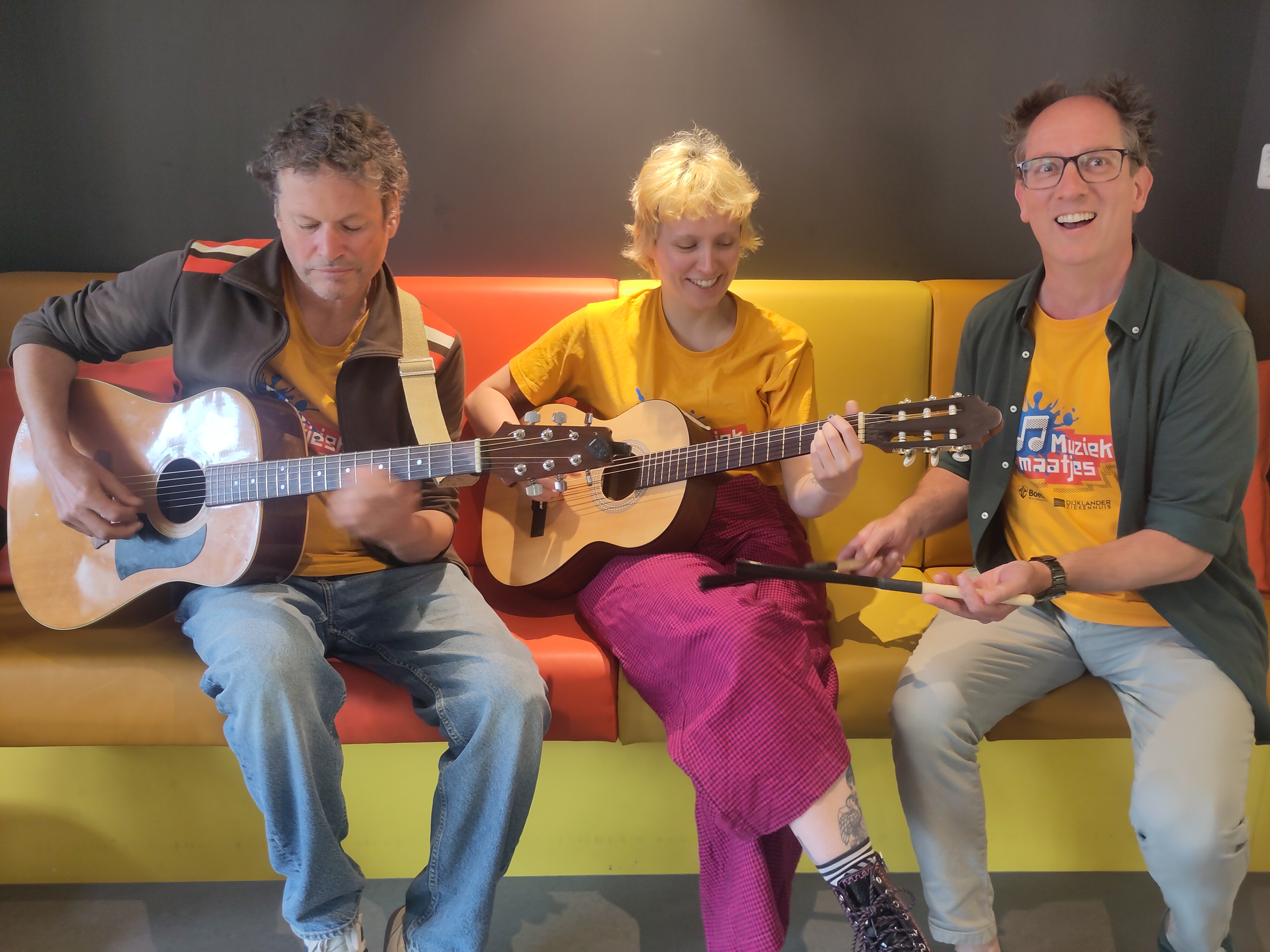
Gitarist Sergio zingt het kinderliedje De titel is ‘visje visje in het water’ voor een jonge patiënt en haar vader. Het liedje is bij veel Nederlandse kinderen bekend, maar dit kind en haar vader lijken het niet te kennen. Zonder te stoppen schakelt Sergio over op een improvisatie van de melodie in een Arabische toonladder. Het kind en haar vader glimlachen.
"We proberen erachter te komen wat aanslaat, zonder veel vragen te stellen," zegt Ciska Ruitenberg, die leiding geeft aan Muziekmaatjes, een Arts in Health programma in het Dijklander Ziekenhuis in Hoorn. Het Muziekmaatjes-programma ging ruim anderhalf jaar geleden van start in Dijklander, met twee keer per week muziek op de Neonatologie en Kinderpolikliniek. Sinds kort is het programma onder de naam Muziekmaatjes+ uitgebreid naar de geriatrie, nierdialyse, oncologie en neurologie.
Muziek maken voor patiënten is een vak, en de musici van Muziekmaatjes worden daarvoor getraind door een team van drie muziektherapeuten. Ze spelen alle stijlen die patiënten graag willen horen, maar ze leren ook om aandachtig en flexibel te zijn, en om aan te voelen wat er in de kamer speelt, zoals een zorgverlener dat zou doen. "We zijn er niet om op te treden," zegt Ruitenberg. "We zijn er om via muziek contact te maken met mensen. En als het niet het juiste moment is om te spelen, trekken we ons terug."
Kinderarts Noud Drewes van het Dijklander legt uit dat de musici altijd toestemming vragen voordat ze een kamer binnengaan. Zoals hij het beschrijft, komen de musici niet "een afdeling binnendenderen om hun ding te doen en weer te vertrekken", maar zijn ze "juist heel erg op zoek naar persoonlijk contact, en stemmen ze zich af op de situatie."
Het idee voor het Muziekmaatjes-programma kwam ruim een jaar geleden op een avond plotseling bij Drewes op. Hij volgde zangles bij Muziekschool Boedijn, gegeven door Ruitenberg. Drewes bracht zijn idee voorzichtig ter sprake: "Ik zei iets als: 'Zou dat niet wat zijn?'" Ruitenberg raakte meteen geïnspireerd door het idee en zag de mogelijkheden ervan. Al snel maakten de twee afspraken om het pilotprogramma van Muziekmaatjes te ontwikkelen.
Musici in een ziekenhuiskamer zijn misschien moeilijk voor te stellen — totdat je het je voorstelt vanuit het perspectief van een van een patiëntje en diens ouders die worden overvallen door een diagnose en leven met onzekerheid over de toekomst of vanuit een patiënt die alleen op een ziekenhuiskamer ligt en het gevoel heeft dat de wereld buiten doorgaat, terwijl hij of zij daar geen deel van uitmaakt . Het programma biedt elke patiënt een moment waarin aandacht, interactie en muziek volledig op de patiënt zijn afgestemd. Dat kan de ziekenhuiservaring menselijker maken. Hoewel wetenschappelijk onderzoek aantoont dat muziek kan bijdragen aan allerlei positieve gezondheidseffecten, is Muziekmaatjes eenvoudigweg bedoeld om patiënten zich prettiger te laten voelen en meer tot leven te laten komen in de vervreemdende sfeer van een ziekenhuis.
Toen Drewes en Ruitenberg het programma voor het eerst aan het ziekenhuis voorstelden, waren er sceptici. "Muziek, prima, zolang het maar niet te hard is," herinnert Drewes zich dat een collega zei. Na het eerste jaar van Muziekmaatjes waren ze echter overtuigd.
"Wanneer medewerkers zien dat de mensen voor wie ze zorgen op hun gemak zijn, glimlachen en contact maken, tilt dat de stemming voor iedereen op," zegt Drewes. Tegenwoordig spelen de musici bijna net zo vaak voor het personeel als voor de patiënten, vertelt Ruitenberg, en ze voegt eraan toe dat het wekelijks aanwezig zijn helpt om relaties met het personeel op te bouwen. "De musici en het personeel moeten weten wat ze van elkaar kunnen verwachten," zegt Ruitenberg. "Het opbouwen van dat vertrouwen kost tijd."
Terugkijkend op het eerste jaar van het programma ziet Drewes waar kunst in de zorg past binnen de transitie die gaande is in de Nederlandse zorg. De zorg van de 21e eeuw moet meer omvatten dan het behandelen van ziekte: ze moet ook ruimte bieden voor preventie en voor het welzijn van de hele mens. Voor Drewes helpt Muziekmaatjes om dat mogelijk te maken. Met het programma "kan ik op een veel menselijkere manier contact maken met mijn patiënten."
Het eerste jaar van het Muziekmaatjes-programma is geëvalueerd in een rapport van Arts in Health Groningen. Download hier het volledige evaluatierapport en de samenvatting. De medewerkers van het Dijklander ziekenhuis en de musici waren blij te horen dat het programma met twee jaar is uitgebreid, naar vier andere afdelingen in het Dijklander Ziekenhuis. Drewes zegt over de Muziekmaatjes: "Ze horen echt bij wat we nu doen, en we missen ze op hun vrije dagen."
Terug op de kinderafdeling glimlachen de vader en dochter nog steeds terwijl Sergio en de andere muzikant hun geïmproviseerde lied afronden. De patiënte en haar vader vragen of de muzikanten morgen terug willen komen.
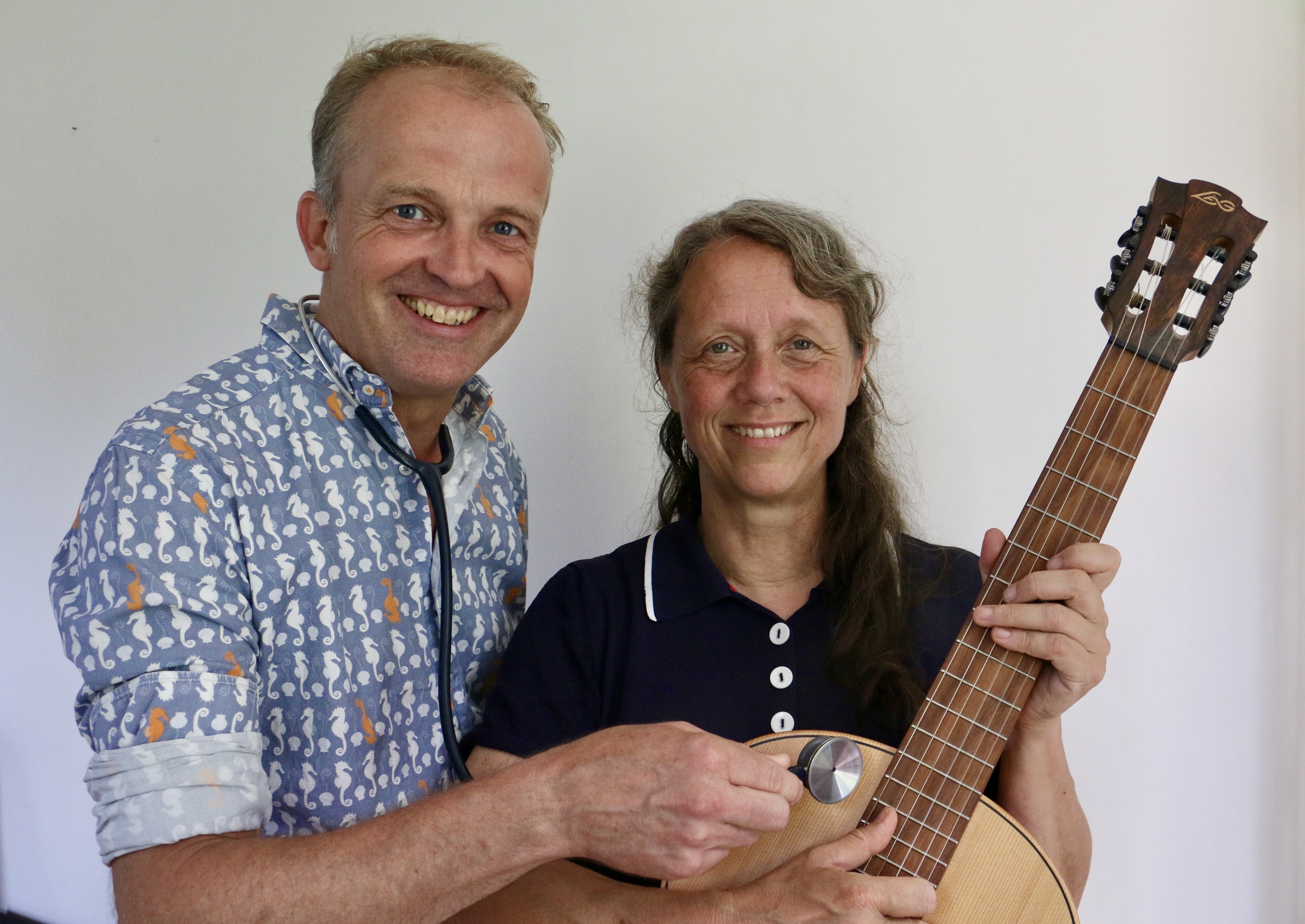
Het project Muziekmaatjes brengt live muziek naar kinderen en hun families in het Dijklander Ziekenhuis in Hoorn. Het programma ging in november 2024 van start als een pilot op de kinderafdeling en is inmiddels uitgebreid naar de afdelingen geriatrie, dialyse, oncologie en neurologie. Speciaal opgeleide muziekdocenten van Muziekschool Boedijn maken op de afdelingen muziek met en voor kinderen en hun families.
De muzieksessies vinden twee keer per week plaats. In overleg met het zorgpersoneel wordt de muziek en de interactie afgestemd op de behoeften van iedere patiënt. Zo hoort een pasgeborene rustige klanken, krijgt een achtjarige een vrolijk en energiek liedje te horen en kan een tiener een ukeleleles volgen. Ook ouders worden tijdens de sessies aangemoedigd om actief mee te doen.
Het Muziekmaatjes-programma vormt een waardevolle aanvulling op de zorg van artsen en verpleegkundigen en draagt bij aan het welzijn van zowel kinderen als hun families. Lees meer over Muziekmaatjes in het artikel van het Noordhollands Dagblad.
Projectleider Ciska Ruitenberg vertelt dat het idee voor het programma al ontstond tijdens haar deelname aan de Arts in Health Summer School in 2024. "Als docent weet ik hoe live muziek de stemming van kinderen en jongeren kan verbeteren," zegt ze. "Het idee om dat in een ziekenhuis te doen, bracht het naar een heel nieuw niveau."
Ruitenberg, een ervaren musicus en muziekdocent, was al enige tijd in gesprek met Dijklander-kinderarts Noud Drewes. Hij wilde live muziek inzetten om jonge patiënten zich tijdens hun behandeling en herstel meer mens te laten voelen. Samen met Drewes en medewerkers van het ziekenhuis werkte Ruitenberg een voorstel uit voor de pilot Muziekmaatjes. Dit voorstel werd ingediend bij het VSBfonds, dat maatschappelijke projecten ondersteunt. Het VSBfonds werkt samen met Arts in Health Groningen om de pilot te evalueren.
Het evaluatieonderzoek staat onder leiding van Ferdinand Lewis, wetenschappelijk directeur van Arts in Health Groningen, en wordt uitgevoerd door onderzoeker Nina van den Berg. In het onderzoek worden de uitvoering en de resultaten van de pilot Muziekmaatjes onderzocht. Op basis daarvan worden aanbevelingen gedaan om het programma verder te versterken en de duurzame voortzetting ervan te ondersteunen.
Lees hier het interview met Dijklander-kinderarts Noud Drewes en projectleider Ciska Ruitenberg van Muziekmaatjes.

KoffieCo | Koffie bij de coassistent is de podcast voor en door studenten Medische Wetenschappen van het UMC Utrecht.
Gewapend met een kop koffie gaan coassistenten Tessa, Tiara en Doris het hele land door om artsen te interviewen. In deze aflevering gaan ze in gesprek met Daphne Voormolen, foetaal geneeskundige en groot kunstliefhebber, over de door haar zelf opgezette Stichting Kunst Salon en haar boodschap over hoe waardevol het is om de link te leggen tussen gezondheidszorg en de culturele sector en kunst in te zetten voor het medisch onderwijs, behandeling en gezondheid en welzijn in het algemeen.
Aflevering 127: Kunst in de zorg

Podcastserie Amsterdam UMC | Waarom kunst in het ziekenhuis?
9 afleveringen
Waarom raakt een kunstwerk je als je in het ziekenhuis bent, kan een gedicht je tot tranen roeren, troost muziek of roept een verhaal fijne herinneringen op? Word je een betere dokter als je naar kunst kijkt? Waarom wil een kunstenaar graag een werk voor het ziekenhuis maken? En waarom betrekken wetenschappers kunst in hun onderzoek? Ook na een lange loopbaan als curator in het Amsterdam UMC kon Sabrina Kamstra lang niet al die vragen zelf beantwoorden. Daarom vroeg ze patiënten, kunstenaars, curatoren, artsen, wetenschappers en studenten te reageren vanuit hun eigen invalshoek en achtergrond. Dit monde uit in het boek Waarom kunst in het ziekenhuis? met essays van verschillende auteurs en hun reflecties in de gelijknamige podcastserie.
In deze podcastserie komen patiënten, medewerkers, bezoekers en kunstenaars aan het woord. De geselecteerde kunstenaars hebben allen in opdracht een werk voor het Amsterdam UMC gemaakt.
Luister via
Spotify
Apple podcasts
Springcast
.webp)
London Arts and Health | 6 episodes on social prescribing
The series from London Arts and Health uncovers arts in health practices across the city of London, speaking to practitioners, funders, artists and participants about how they are working and benefitting from arts and health. The podcast has been created to celebrate the launch of the Arts and Culture: Social Prescribing Myth Buster. The myth buster aims to help everyone understand the role of arts and culture in social prescribing.
Listen via
Spotify
Apple podcasts

The Arts for the Health of it podcast features more than 90 episodes.
Why do humans turn to the arts in times of crisis? How do the arts impact our health and well-being? What role do the arts play in the future of society?
Hosts Catherine Particini and Andrea Sanderson (VOCAB) help you integrate the arts into everyday health and wellness practices through information, tips, how-to’s, and expert-led interviews on the subject.
The show explores the role of the arts in society, with special attention to the function of the arts in wellbeing. In one episode you might hear a lighthearted discussion about the health benefits of laughter; another introduces you to a local programme that brings artists together for community projects. Especially if you want to learn more about projects in America, or you are interested in the workings of ‘arts on prescription’ programmes for instance, then this show is for you!
Listen via
Spotify

Creative Health Stories | 20 episodes
This series conveys what ‘creative health’ means to different people and in different contexts; how creativity helps to keep us well at a general, preventative level and how it supports chronic and long term health conditions. It highlights creative practices – professional, amateur and those we can do at home – which are helping to keep us well, and what needs to happen so that creativity, the arts and culture are more widely accessible.
This podcast series consists of interviews with professionals and scholars about their arts in health projects, findings, and experiences. The series also takes on the larger policy and ethical issues of arts in health, for example during the July 2024 episode in which Sir Michael Marmot was interviewed. Sir Michael discussed his work on the social determinants of health, and explains his argument that health equality requires creativity be available to everyone.
Listen to the podcast series
.webp)
Kunststof aflevering - NTR - NPO Radio 1
Neuroloog en expert op het gebied van de ziekte van Parkinson, Bas Bloem, gaat in gesprek met hoogleraar ouderenparticipatie, Tineke Abma, over de heilzame werking van kunst op onze gezondheid. Het onderzoek naar kunst-als-medicijn heeft de laatste jaren een enorme boost gekregen. Nu is het volgens Abma tijd om kunst een veel grotere plek toe te kennen in de medische opleiding, in de spreekkamer en in zorginstellingen. Maar hoe?

Do arts interventions and creative engagement really make a difference in our lives and our brains? Recently, Susan Magsamen, the author of Your Brain on Art: How the Arts Transform Us, and Director of The International Arts and Mind Lab at John Hopkins University School of Medicine, was interviewed to discuss this exact question.
Listen via
This episode of When Science Finds a Way explores the science behind the arts as a tool for wellbeing, from research on singing to lived stories of healing and empowerment. In 40 minutes, we hear from leading scholar Daisy Fancourt, from a mother who participated in Breathe Melodies for Mums, and from the ever-inspiring artist Kunle Adewale.
Listen via
In deze documentaire vertellen zorgprofessionals, makers, onderzoekers en organisaties hoe kunst in de praktijk bijdraagt aan gezondheid en welzijn. De film laat zien hoe Arts in Health op lokaal niveau verbinding brengt tussen zorg, welzijn en cultuur.
Meer dan dertig jaar internationaal onderzoek laat zien dat kunst bijdraagt aan positieve gezondheid en welzijn. Het werkt preventief tegen ziektes en versterkt de sociale kwaliteit van leven.
Meer informatie vind je op: De kracht van Arts in Health

This short and informative video from the UK discusses several arts in health projects, and research about the relationship between singing and mental wellbeing. The video features the experience of people with Parkinson’s disease who are part of a project that brings them on museum visits. The video includes clips from a music and movement workshop for people with Parkinson’s. We see them singing and dancing, and exploring what they can do rather than what illness prevents them from doing.
In this TEDx talk, Jill Sonke explores the relationship between creativity and care. As a practitioner, and current Director of the Center for Arts in Medicine at the University of Florida, Sonke brings nearly three decades of experience to describing the impact of artistic expression on wellbeing. Using many engaging examples, she masterfully lays out the case for the introduction of the arts in healthcare. Dancing, live-music, and powerful anecdotes are followed up by a straightforward summary of the evidence for arts in health.
This BBC News report interviews a patient at the Bethlem Royal Hospital psychiatric institution, about the art collection made by patients. The interviewee explores how drawing helps the patient to express themselves, and even points the way toward the end of treatment. "What arts does is give somebody free reign just to go into themselves and say this is what's like for me".
The Bethlem Royal Hospital continues to use art-making activities and hosts its own art gallery now too. The art gallery connects professional artists with patients and patients with art.
One critique of arts in health research is that study sample sizes are too small, and so cannot represent a broader population. In this video, Daisy Fancourt, a leading scholar in the field, discusses her large-scale quantitative study of a range of effects of arts engagement on wellbeing. Her team’s longitudinal analysis of national data showed improved mental, physical and cognitive outcomes.